
Views: 0 Author: Site Editor Publish Time: 2026-08-03 Origin: Site


In high-volume metal fabrication, justifying the capital expenditure for new equipment requires moving beyond top-line speed metrics to calculate precise cost-per-part reductions. Traditional tube processing relies on a fragmented workflow involving sawing, drilling, milling, and deburring. This inherently creates work-in-progress bottlenecks, inflates labor hours, and increases the margin for human error and material waste on the shop floor.
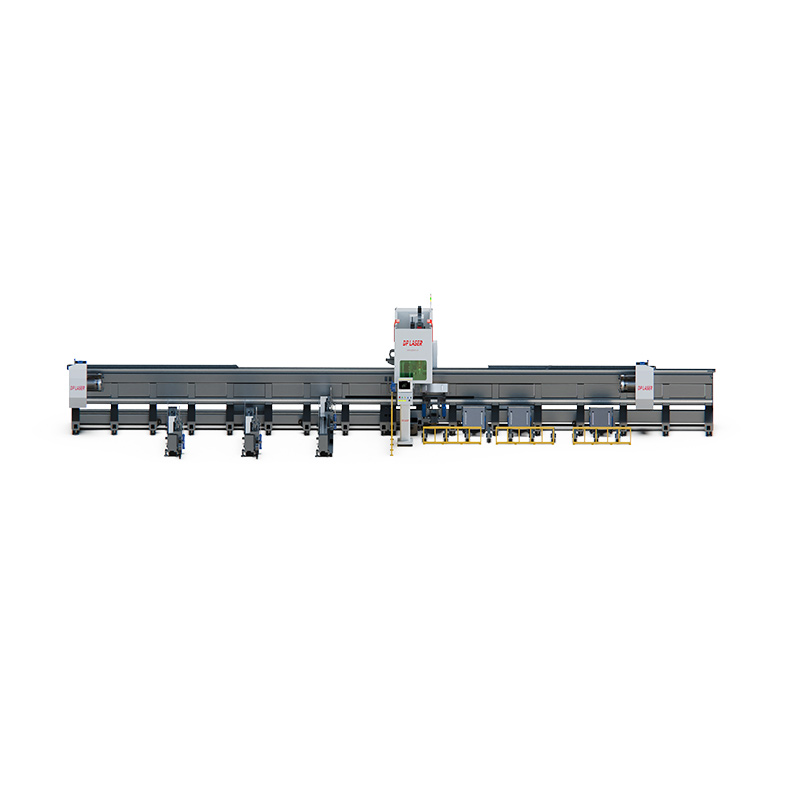
Transitioning to an integrated, automated CNC Tube Laser Cutting Machine fundamentally alters the production cost structure. This analysis breaks down the specific mechanisms through which a tube laser cutting machine drives down operational expenses, improves material yield, and accelerates ROI. We will examine the shift from discrete manual operations to continuous automated processing, detailing how modern fabrication facilities optimize their floor space and labor allocation.
Process Consolidation: Replacing multiple discrete machining steps (cutting, drilling, deburring) with a single operation drastically reduces labor hours and WIP inventory.
Tooling Elimination: Adopting laser technology removes the recurring fixed costs associated with physical punches, custom clamps, dies, and drill bits.
Material Optimization: Advanced 3D CAD/CAM nesting software maximizes material yield per tube and minimizes chuck-end scrap, directly lowering raw material procurement costs.
Throughput Economics: The high power density of modern fiber lasers allows for faster piercing and cutting speeds, increasing output capacity without expanding the facility footprint.
Establishing the baseline costs of current operations is necessary to accurately measure the financial impact of an upgrade. Success is defined by a measurable drop in cost-per-part and a defined payback period. Without a clear understanding of your current expenses, evaluating the benefits of new technology becomes guesswork. Fabrication shops often underestimate the cumulative cost of moving material between discrete workstations.
Traditional methods carry compounding hidden expenses. These include material handling between stations, setup times for different machines, and the cost of maintaining multiple pieces of legacy equipment. Every time a forklift operator moves a bundle of raw steel from the band saw to the drill press, you incur labor costs and increase the risk of material damage. The floor space dedicated to staging these partially finished goods also represents a significant overhead burden.
The shift to a Tube Laser Cutting Machine moves production from manual or semi-automated discrete processes to a continuous, automated workflow. This transition highlights the shift from variable labor costs to predictable machine-hour costs. You gain greater financial control and forecasting accuracy when a single machine handles the entire sequence from raw tube to weld-ready component.
| Process Metric | Traditional Fabrication | Laser Processing |
|---|---|---|
| Workstations Required | 3 to 5 (Saw, Drill, Mill, Deburr) | 1 (Integrated Laser System) |
| Material Handling | High (Manual transfers between stations) | Low (Automated bundle loading) |
| Setup Time | High (Multiple machine calibrations) | Low (Software-driven changeovers) |
| Edge Quality | Requires secondary deburring | Clean, weld-ready edges |
By analyzing these metrics, shop managers can identify exactly where their current processes leak capital. The goal is to eliminate the non-value-added time spent moving and staging material. When you consolidate these steps, the cost per part drops significantly, and overall factory throughput increases.
Furthermore, legacy equipment requires constant maintenance and calibration. Band saw blades wear out, drill bits break, and milling machines require regular fluid changes. These consumable costs add up over a fiscal year. Transitioning to a solid-state cutting method removes many of these mechanical failure points from your production line.
The precision of laser cutting produces clean, burr-free edges. This effectively removes the need for manual deburring, edge preparation, or secondary finishing before welding. Eliminating these secondary operations directly reduces labor costs and accelerates the production cycle. Welders receive parts that fit together perfectly, reducing the time spent grinding or filling gaps during assembly.
Removing physical tooling has a massive financial impact. Specific CAD 3D programming replaces the need for expensive, wear-prone punches, custom masks, and mechanical clamps. This eradicates consumable tooling and custom fixturing costs. You no longer need to store hundreds of custom dies or wait weeks for a machine shop to fabricate a new fixture for a prototype run.
Single-setup processing prevents capital from being tied up in partially finished goods sitting on the shop floor. By reducing work-in-progress inventory, a CNC Tube Laser Cutting Machine improves cash flow and frees up valuable floor space for other operations. You can convert staging areas into active assembly zones.
Load raw material bundles into the automated feeder.
Execute the nested cutting program via the CNC interface.
Offload finished, weld-ready components directly to the assembly staging area.
This streamlined workflow reduces the physical footprint required to process structural steel and aluminum profiles. When you eliminate the need for separate sawing and drilling departments, you effectively increase the revenue-generating capacity of your existing square footage. This operational consolidation is a primary driver of cost reduction in modern metal fabrication.
Additionally, the reduction in manual handling lowers the risk of workplace injuries. Moving heavy steel tubes between multiple machines exposes workers to potential pinch points and lifting strains. Automating this process with a bundle loader and integrated unloader creates a safer working environment, which can positively impact insurance premiums and reduce lost-time incidents.
Integrated software algorithms calculate the most efficient cutting paths and part placements on a single length of tube. Advanced 3D CAD/CAM nesting capabilities minimize offcuts, ensuring maximum utilization of raw materials and reducing procurement costs. The software analyzes the entire production run and arranges parts to leave the smallest possible skeleton.
Modern chuck configurations, such as three-chuck or four-chuck systems, reduce the un-cuttable tail-end scrap of raw tubes. This chuck design and tail-end scrap minimization saves significant material costs on high-volume runs. Traditional two-chuck systems often leave a long dead zone at the end of the tube that cannot be processed. Advanced multi-chuck systems feed the material completely through the cutting head, utilizing nearly 100% of the stock.
The narrow kerf of a laser beam compared to traditional mechanical saw blades minimizes material loss. Tighter tolerances reduce the volume of material turned into scrap, directly translating to lower raw material costs. A band saw might remove an eighth of an inch of material per cut, which adds up over hundreds of cuts. A laser beam removes a fraction of a millimeter.
Utilize common-line cutting techniques to share edges between adjacent parts.
Implement multi-chuck feeding systems to eliminate tail-end dead zones.
Leverage software to nest smaller components within the cutouts of larger structural pieces.
Track scrap rates daily to identify programming inefficiencies.
Automated CNC precision lowers the rate of human error, reducing the financial penalty of scrapped parts and rework. When an operator manually measures and drills a hole, the chance for a miscalculation exists. The laser executes the CAD file exactly as programmed, ensuring every part meets strict dimensional tolerances. This consistency is vital for downstream robotic welding applications.
Material optimization extends beyond just nesting. The ability to cut complex geometries, such as coping and slot-and-tab connections, allows engineers to design lighter, stronger structures. These self-fixturing designs reduce the need for heavy welding jigs and decrease the overall weight of the final product, saving on shipping and material costs.
Automated bundle loaders and unloaders significantly reduce operator intervention and material handling. One operator can often manage multiple CNC machines simultaneously, optimizing labor allocation and reducing overall workforce expenses. The operator transitions from a manual laborer moving steel to a technician monitoring machine performance and managing production queues.
Comparing fiber lasers to legacy CO2 systems reveals significant operational efficiency gains. The greater power density of fiber technology allows for faster piercing and cutting, particularly in thin-to-medium wall production. This drives up hourly throughput and lowers the cost per part. Fiber lasers deliver the beam through a flexible optic cable, eliminating the need for complex mirror alignments required by CO2 systems.
Assist gas selection impacts operating costs and cutting speeds across different wall thicknesses. Optimizing assist gas usage is a key cost driver. Nitrogen provides a clean, oxide-free edge ideal for powder coating, but consumes more volume. Oxygen is used for thicker carbon steel, utilizing an exothermic reaction to assist the cut. Compressed air offers a highly economical alternative for thinner materials, drastically reducing gas expenses.
| Assist Gas | Primary Application | Edge Quality | Relative Cost |
|---|---|---|---|
| Nitrogen | Stainless, Aluminum, Thin Mild Steel | Oxide-free, ready for paint | High |
| Oxygen | Thick Carbon Steel | Oxidized edge (may require cleaning) | Medium |
| Compressed Air | Thin to Medium Mild Steel, Aluminum | Slight oxidation | Low |
The shift requires transitioning from specialized machinists to cross-trained CNC operators and programmers. Modernizing the workforce skill set ensures your team can fully leverage the capabilities of the equipment. Training programs provided by the manufacturer are essential to get operators up to speed on the specific CAD/CAM software and machine controls.
Throughput economics also rely on machine uptime. Fiber laser systems have fewer moving parts and require less routine maintenance than older technologies. This reliability means the machine spends more time cutting and less time offline for servicing. Consistent, predictable output allows production managers to schedule jobs tighter and meet aggressive delivery deadlines.
Balancing the high initial investment against the reduction in daily operating expenses requires a clear framework. Matching power levels to specific production needs optimizes ROI. For thin-wall and light production, lower investment and operating costs offer fast payback for tube frames and furniture components. A 2kW or 3kW system is often sufficient for these applications, keeping power consumption low.
Heavy structural profiles require higher kW ratings to handle thick-walled tubes, balancing higher initial CapEx with dramatic reductions in processing time. A 6kW or 12kW system can pierce thick carbon steel rapidly, keeping cycle times short on heavy structural jobs. Selecting the right power level prevents over-investing in capacity you do not need or under-investing and bottlenecking your production.
Solid-state fiber lasers offer high electrical efficiency and reduced maintenance costs due to fewer moving parts and the absence of optical mirrors. Calculating the payback period involves variables like production volume, material type, and labor rates. Payback expectations differ for light-to-medium furniture components versus heavy structural tube frames. High-volume, multi-shift operations will naturally see a faster return on investment.
Audit current production volumes and material thicknesses.
Determine the required maximum tube diameter and weight capacity.
Select a laser power rating that aligns with the thickest material processed regularly.
Evaluate the necessity of automated loading based on batch sizes.
Calculate projected machine hours required to meet current and future demand.
When evaluating the equipment, consider the specific chuck configuration. A standard two-chuck system works well for basic cutting, but a three-chuck or four-chuck system provides superior support for long, heavy tubes, preventing sagging and maintaining accuracy over the entire length. The right configuration depends entirely on the specific profiles your shop processes daily.
Furthermore, consider the software ecosystem. The machine is only as effective as the programming behind it. Ensure the CAD/CAM software integrates smoothly with your existing design files (SolidWorks, AutoCAD) and can export data to your shop management software. Seamless data flow prevents programming bottlenecks and keeps the machine fed with new jobs.
Installing a large-format machine involves logistical realities, including floor space, power drops, and gas supply requirements. Addressing these facility requirements and installation downtime proactively minimizes disruption to ongoing operations. You must ensure your concrete foundation can support the weight and that you have adequate electrical service to handle the peak draw of the laser source and chiller.
The risk of a skills gap must be mitigated through upfront training on proprietary CAD/CAM software. Integrating the machine’s output data with existing ERP systems tracks true cost savings and ensures operators are fully equipped to maximize the equipment's potential. Do not wait until the machine is installed to begin software training; operators should be practicing on simulators weeks in advance.
Gas supply logistics also require careful planning. High-volume nitrogen cutting demands a bulk liquid tank or an on-site nitrogen generation system. Relying on high-pressure cylinders will result in constant changeovers and excessive downtime. Work with your gas supplier to design a delivery system that meets the flow and pressure requirements of the new equipment.
Verify floor space dimensions, including clearance for the automated loader and unloader.
Schedule electrical and pneumatic utility drops prior to machine delivery.
Establish a bulk gas supply contract or install an on-site generation system.
Designate a dedicated programmer to master the nesting software.
Finally, plan for the physical rigging and installation. These machines are massive and require specialized riggers to move them into place safely. Coordinate with the manufacturer's installation team to ensure the site is prepped and ready. A well-planned installation minimizes downtime and gets the machine producing parts faster.
By addressing these implementation risks head-on, fabrication shops can ensure a smooth transition to automated laser processing. The key is thorough preparation and clear communication between the facility manager, the equipment manufacturer, and the utility providers.
Request a customized time-study from equipment manufacturers using your highest-volume part files.
Obtain a nesting simulation to verify actual material yield improvements and scrap reduction.
Audit your facility's electrical and gas infrastructure to ensure compatibility with high-power fiber laser requirements.
Develop a cross-training schedule for your current machine operators to learn CNC programming and system maintenance.
A: The payback period varies based on production volume, material type, and labor rates, but typically ranges from 12 to 36 months for high-volume operations running multiple shifts.
A: It uses advanced 3D CAD/CAM nesting software to optimize cutting paths and modern multi-chuck designs to minimize un-cuttable tail-end scrap, maximizing yield per tube.
A: Yes, the precision of fiber laser cutting produces clean, burr-free edges, effectively removing the need for manual deburring or secondary finishing before welding.
A: Fiber lasers generally have lower operating costs due to higher electrical efficiency, faster cutting speeds, and fewer maintenance requirements since they lack complex optical mirrors.
A: Yes, specialized 3D CAD/CAM software is essential for programming complex cutting paths, nesting parts efficiently, and optimizing overall material yield.
A: Labor savings are significant. Automated loaders and unloaders allow a single operator to manage multiple machines, replacing several manual sawing, drilling, and deburring stations.
A: Thicker walls often require oxygen for cutting, while thinner walls use nitrogen or compressed air. This choice directly affects both cutting speed and hourly gas consumption costs.


