
Views: 0 Author: Site Editor Publish Time: 2026-07-31 Origin: Site


Metal fabrication equipment requires heavy capital expenditure. Under-speccing or over-speccing machinery creates severe operational bottlenecks on the production floor. Shop managers often face a disconnect between theoretical machine specifications and actual shop-floor realities. Variations in tube geometries, material types, mechanical tolerances, and daily production volumes complicate the buying decision. You need a technical evaluation guide to align your specific production workflows with the correct machine architecture, automation level, and laser technology. We will break down the mechanical and software capabilities required for your specific material mix. This ensures you select the right equipment to maximize throughput, minimize material waste, and maintain precise downstream assembly tolerances without overpaying for unused features.
Match Capacity to Geometry: The primary driver for machine selection must be your most extreme tube dimensions (maximum diameter, wall thickness, and raw material length), not just average throughput.
Power Does Not Equal Profitability: Higher wattage increases cutting speed for thick materials, but for thin-walled tubing, excessive laser power offers diminishing returns, risks thermal deformation, and inflates operating costs.
Precision Demands Structural Rigidity: Cutting accuracy and repeatability rely on the physical construction of the machine frame (e.g., cast iron vs. welded steel) and advanced motion control systems, not just the laser source.
Automation Dictates Throughput: The true bottleneck in tube cutting is rarely the laser itself; it is material handling. Evaluating automated loading/unloading systems is critical for high-volume environments.
Long-Term Expenses Outweigh Purchase Price: Factor in facility upgrades, proprietary software licensing, consumable lifespans, and vendor service level agreements (SLAs) before finalizing a purchase.
Auditing the specific materials processed daily is the foundational step in machine selection. Carbon steel, stainless steel, aluminum, brass, and copper all possess different thermal conductivity and reflectivity profiles. You must match these materials with appropriate laser wavelengths to ensure efficient energy absorption. Fiber lasers excel across this spectrum. They easily handle highly reflective materials like copper and brass, which historically caused back-reflection damage in older CO2 technologies. When you process hot-rolled carbon steel, you also have to account for mill scale. Mill scale affects the laser's piercing ability and requires specific assist gas pressures to blow the molten material through the kerf cleanly.
Wall thickness directly dictates the required laser wattage to maintain clean, burr-free cuts. Cutting thin-walled furniture tubing requires high-speed, lower-wattage processing to prevent thermal distortion. If you put too much heat into a 1.5mm wall aluminum tube, the material warps before the chuck can even advance it. Conversely, processing thick structural steel demands high wattage to pierce quickly and maintain a stable cut front. You must assess your maximum wall thickness variations to determine the baseline power requirements for your facility.
Profile complexities play a massive role in equipment selection. Evaluate the frequency of profile changes your operators handle daily. Standard round, square, and rectangular tubes are universally supported. Open profiles like C-channel, angle iron, or custom aluminum extrusions require specialized chuck clamping strategies and advanced software mapping. Identify the need for automatic weld-seam detection. This feature ensures consistent internal structural alignment. It prevents the cutting head from traversing directly through hardened weld lines, which compromises edge quality and destroys nozzles.
| Material Type | Typical Thickness Range | Recommended Laser Power | Assist Gas Preference |
|---|---|---|---|
| Carbon Steel (Mild) | 1mm - 12mm | 1.5kW - 6kW | Oxygen (Thick) / Air (Thin) |
| Stainless Steel (304/316) | 1mm - 8mm | 2kW - 6kW | Nitrogen |
| Aluminum (6061/5052) | 1mm - 6mm | 3kW - 6kW | Nitrogen / Air |
| Brass/Copper | 1mm - 4mm | 3kW+ | Nitrogen |
Differentiating between High-Mix/Low-Volume and Low-Mix/High-Volume production strategies dictates your required automation level. High-Mix environments demand rapid changeovers. You need quick-change chuck jaws and highly versatile clamping systems that can switch from a 20mm round tube to a 150mm square tube in minutes. Low-Mix environments prioritize heavy automation. You want bundle loaders and continuous feeding mechanisms to keep the laser emitting constantly without operator intervention.
Define acceptable cycle times and analyze how they impact downstream operations. A machine that cuts twice as fast is useless if the parts bottleneck at the press brake or the welding stations. You have to balance the output of the laser with the consumption rate of your assembly cells.
Audit your current manual cutting and deburring times to establish a baseline cost per part.
Calculate the projected cycle times using the laser manufacturer's software simulations.
Identify the downstream processes (bending, welding, powder coating) that will receive the cut parts.
Adjust your batch sizes to prevent work-in-progress (WIP) inventory from piling up on the shop floor.
Workflow scalability must be planned from day one. Ensure the physical machine frame and control software can support retrospective automation upgrades. You might start with a manual load system to save capital, but you need the ability to add a part-sorting conveyor or an automated bundle loader at a later date without replacing the entire machine.
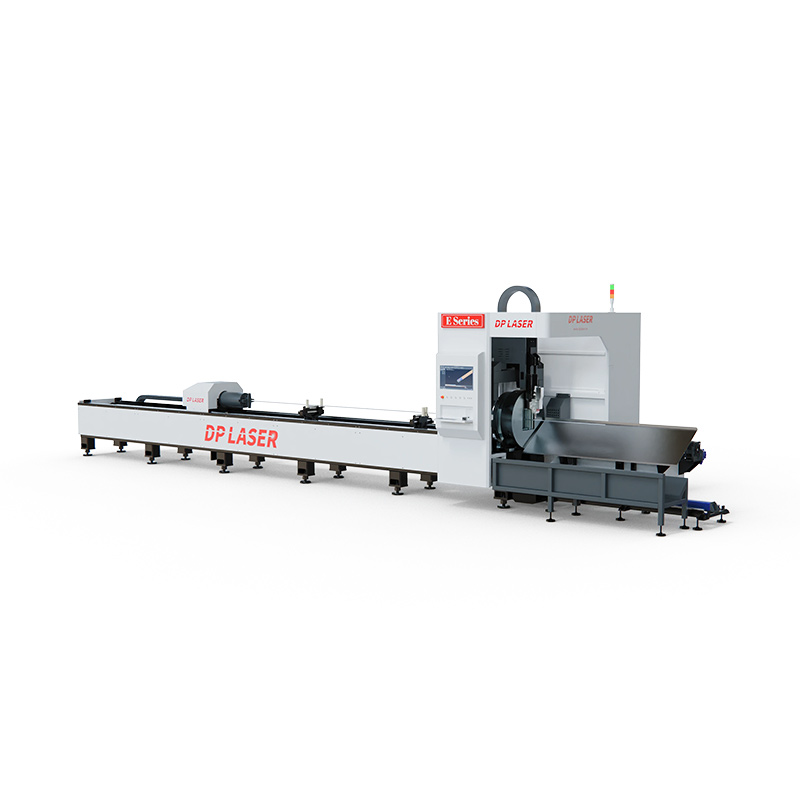
When comparing laser technologies, fiber lasers maintain absolute dominance in metal tube cutting. Their 1-micron wavelength is highly absorbed by metals. They offer lower maintenance requirements, lack the complex mirror alignments of older systems, and provide superior energy efficiency. Selecting the right wattage requires a strict framework based on your material audit. A 1.5kW to 3kW source is typically ideal for thin-wall furniture tubes. It provides rapid acceleration and clean edges without dumping excess heat into the part. Structural steel and heavy agricultural equipment processing generally require 6kW or higher to pierce thick walls efficiently and maintain a fast feed rate.
Analyzing cutting speed curves is essential. Laser wattage correlates with cutting speeds across different materials, but the relationship is not always linear. For thin materials, mechanical axis speed and acceleration often limit the cycle time before the laser's maximum cutting speed is reached. You can buy a 12kW laser, but if the gantry and chucks cannot move fast enough to utilize that power on 2mm tubing, you wasted your money. Optimize your yield by matching the wattage to your thickest common material without over-specifying power that your motion system cannot fully utilize.
Cutting accuracy and repeatability rely heavily on the physical construction of the machine frame. Heavy-duty cast iron beds offer superior vibration damping characteristics compared to stress-relieved welded plate frames. When the cutting head accelerates at 1.5G or higher, a rigid frame prevents micro-vibrations from translating into the cut edge. This ensures smooth finishes and extends the life of the motion components. A flimsy frame will flex under high acceleration, causing the laser spot to wander and creating a jagged kerf.
Evaluate positioning accuracy and repeatability metrics rigorously. A positioning accuracy of ±0.03mm and repeatability of ±0.02mm are standard benchmarks for high-quality machines. These tolerances ensure that complex intersecting cuts, such as fish-mouthing or saddle cuts, fit perfectly during downstream robotic welding. If the parts do not fit tightly, your welders will spend hours filling gaps, destroying any time savings gained by the laser.
Assess the integration of the drive systems. Rack-and-pinion systems paired with high-torque servo motors provide the dynamic axis speed and precision required for intricate geometries. Linear motors offer even higher speeds and zero backlash, but they come at a significant premium and require pristine shop environments to prevent metallic dust from fouling the magnetic tracks.
The clamping mechanism is the heart of any tube processing equipment. Pneumatic chucks offer rapid actuation and reliable grip. Electric chucks provide superior clamping precision, self-centering capabilities, and programmable pressure control. Programmable pressure is crucial for protecting thin-walled aluminum or stainless steel tubes from crushing or deformation during high-speed rotation. If you crush the tube in the chuck, the entire part is scrap.
Analyze multi-chuck configurations based on your raw material length and waste reduction goals. Dual-chuck systems are standard. Three-chuck or four-chuck systems minimize tailing waste by passing the tube entirely through the cutting zone. Multi-chuck systems also support heavy tubes over long spans. They prevent sag and improve cutting accuracy on extended workpieces. When a 6-meter steel tube sags in the middle, the focal distance of the laser changes, resulting in a lost cut.
Verify the chuck's capability to securely hold non-traditional open profiles. You need to process C-channels, H-beams, and L-angles without requiring operators to swap out specialized, custom tooling for every batch. Look for chucks with adaptive jaw designs that can grip asymmetrical profiles securely.
Determine the maximum raw tube length the machine can accept. Standard configurations accommodate 6-meter tubes. Structural applications often require 8-meter or 12-meter capacities. Ensure your facility has the physical floor space not just for the machine bed, but for the loading mechanisms and safety enclosures required for these extended lengths. You also need room for forklifts to maneuver the raw material bundles into position.
Assess the maximum weight per meter the machine's structural frame and servos can support. Heavy structural I-beams and thick-walled pipes exert massive rotational inertia on the chucks. The machine must be rated to handle these loads without sacrificing acceleration, triggering servo faults, or degrading cutting accuracy over time. Pushing a machine past its weight limit will prematurely wear out the chuck bearings and servo gearboxes.
The true bottleneck in tube fabrication is material handling. Assess bundle loaders for bulk, uniform raw materials. These systems allow operators to drop an entire bundle of steel into the magazine. The machine automatically separates, measures, and feeds each tube. Step loaders are better suited for variable profiles and short-run batches. They allow operators to stage different geometries sequentially. Choose the loading system based on your footprint and daily workflow.
Evaluate automated unloading mechanisms, part-sorting conveyors, and scrap discharge paths. When processing an Industrial Tube Laser Cutter at high speeds, finished parts accumulate rapidly. Automated drop tables and conveyors prevent finished part damage. They reduce manual labor and keep the machine running continuously. Balance the physical footprint of these automation attachments with your available floor space and forklift access routes. If parts pile up in the drop zone, the machine will fault out and stop cutting.
Dynamic cutting heads significantly reduce manual setup times. Look for autofocus capabilities and motorized zoom lenses. These automatically adjust the focal point based on the material thickness programmed into the software. Automatic nozzle changers further reduce operator intervention. They allow the machine to swap nozzles seamlessly when transitioning from oxygen cutting on carbon steel to nitrogen cutting on stainless steel.
Anti-collision protection is a mandatory feature. The cutting head must feature fast-response capacitive sensors to detect tube deformations, bowing, or unexpected tip-ups. The system must stop the machine instantly to prevent costly downtime and head damage. Real-time monitoring systems, including thermal sensors and protective window monitoring, detect optic contamination early. They alert operators before catastrophic lens failure occurs. A blown lens can contaminate the entire cutting head, resulting in massive repair bills.
The operator interface (HMI) must be intuitive. Assess the control panel for easy navigation, 3D graphical representations of parts, and rapid error-recovery protocols. Operators should be able to visualize the cutting sequence and restart the program easily if an interruption occurs. If the software is too complex, your operators will fight the machine instead of running production.
Advanced CAD/CAM and nesting software define the machine's material efficiency. Review the nesting capabilities to ensure it supports common-line cutting and micro-jointing to minimize scrap. The software must seamlessly handle complex structural intersections. It should automatically generate the toolpaths for saddle cuts and slot-and-tab assemblies. Check for open API and software compatibility to link the machine directly with existing manufacturing execution systems for real-time production tracking and inventory management.
Analyze the trade-off between a lower initial purchase price and higher long-term costs. Energy consumption, assist gas usage, and consumable wear add up quickly. A cheaper machine might use older, less efficient servo drives that draw more power. It might also have a poorly designed gas delivery system that wastes expensive nitrogen during piercing operations.
Calculate the financial return of implementing nitrogen generation systems or high-pressure air cutting. Relying on bulk liquid nitrogen for clean edge finishes is expensive. High-pressure shop air, compressed to 200 PSI and filtered properly, can cut thin-wall carbon and aluminum at a fraction of the cost of nitrogen. Evaluate the lifespan and cost of consumables associated with different brands. Nozzles, protection windows, and ceramic rings need constant replacement. Proprietary consumables from certain manufacturers can cost three times as much as standard off-the-shelf components.
Factor in the complete physical layout of the system. You have to account for the chiller, dust collector, loading/unloading racks, and safety enclosures. The dust collector alone requires significant floor space and specific ducting routes to comply with fire safety regulations. You cannot just measure the machine bed and assume it will fit in your bay.
Evaluate electrical requirements and environmental controls. A high-wattage Tube Laser Cutting Machine requires dedicated amperage drops and stable voltage. Voltage fluctuations will cause the laser source to fault. You also need to control ambient temperature, humidity, and dust mitigation. Fiber laser optics are incredibly sensitive to moisture and airborne particulates. If your shop is dirty and unconditioned, you will experience frequent optic failures.
Transitioning to 3D tube cutting introduces a significant learning curve compared to standard flatbed 2D cutting. Operators must understand rotational dynamics, weld seam positioning, and complex 3D nesting software. A flatbed operator only worries about X and Y axes. A tube laser operator has to manage the rotary axis, tube sag, and internal spatter accumulation. Acknowledge this operational complexity early in the procurement process.
Mitigate adoption risks by negotiating comprehensive on-site operator training, software certification, and post-installation support into the purchase contract. Ensure your programming team receives dedicated CAD/CAM training. They need to efficiently design parts that leverage the machine's full capabilities. Self-fixturing tab-and-slot designs eliminate the need for complex welding jigs, saving massive amounts of time in the welding department.
Machine uptime relies entirely on vendor support. Evaluate the vendor's domestic parts inventory, technical support availability, and the physical location of their field service technicians. A machine down for a week waiting on a proprietary servo motor shipped from overseas can severely impact your delivery schedules and damage customer relationships.
Demand clear SLA documentation regarding response times for machine-down situations. Look for vendors that offer remote diagnostics capabilities. Their engineers should be able to log into your machine's control system to troubleshoot software or sensor faults instantly. Preventive maintenance programs should also be clearly outlined to ensure the motion systems and laser source remain in peak condition. Regular lubrication of the rack and pinion systems and alignment checks of the chucks are mandatory for long-term accuracy.
Compile a detailed audit of your daily material mix, maximum wall thicknesses, and extreme tube lengths to establish hard specifications for your equipment search.
Request a comprehensive time study and a physical sample cut using your own CAD files and raw materials to verify the vendor's speed and accuracy claims.
Map out your facility floor plan to ensure adequate space for the machine, automated loaders, dust collectors, and forklift traffic routes.
Negotiate strict Service Level Agreements (SLAs) that guarantee fast response times and domestic parts availability before signing any purchase order.
A: Equipment costs vary widely based on laser wattage, chuck configuration, frame size, and the level of automation included. Entry-level models for thin-wall tubing require a smaller investment. Fully automated, high-wattage structural machines with multi-chuck systems and bundle loaders represent a significantly higher capital expenditure.
A: Rotary attachments on flatbed lasers are designed for occasional, low-volume tube cutting and struggle with heavy materials. Dedicated tube lasers offer continuous feeding, heavy-duty clamping, zero-tailing capabilities, and the structural rigidity required for high-volume, precise production.
A: Weld seam detection uses optical sensors or cameras to locate the internal weld seam of a raw tube. The machine rotates the tube to a designated position before cutting. This prevents structural weakness in bent parts and avoids cutting head damage caused by traversing hardened weld material.
A: Positioning accuracy refers to the machine's mechanical ability to reach a specific programmed coordinate in space. Repeatability is the machine's ability to return to that exact same coordinate multiple times consecutively under normal production conditions without deviation.
A: Oxygen is used for cutting thick carbon steel, providing an exothermic reaction to assist the cut. Nitrogen is used for stainless steel and aluminum to produce clean, oxide-free edges. Compressed shop air is increasingly used as a highly efficient alternative for thin-wall cutting across various metals.


