
Views: 0 Author: Site Editor Publish Time: 2026-08-02 Origin: Site


Metal fabricators historically relied on a fragmented, multi-step approach to process tubular profiles. Operators moved raw stock through separate stations for sawing, drilling, milling, and deburring. This traditional method creates severe production bottlenecks on the shop floor. Manufacturers constantly battle high scrap rates, inconsistent joint fit-ups, excessive labor dependencies, and slow changeovers in high-mix environments.
Modern manufacturing demands a consolidated approach. A single-step laser system eliminates these disconnected processes entirely. Investing in a Tube Laser Cutting Machine represents a strategic realignment of your production capabilities, rather than a simple capacity upgrade. You must strictly evaluate industry-specific tolerances, material types, and volume demands before integrating this technology into your workflow. Understanding how different sectors leverage these systems helps you configure the right equipment for your facility.
Consolidated Operations: Replacing multiple manual machining steps with a single tube processing laser machine drastically reduces cycle times and labor dependencies.
Industry-Specific Configurations: Machine selection (chuck size, laser power, automation level) must directly map to industry applications, from thin-wall automotive exhausts to heavy structural steel.
Material and Software Realities: Successful implementation relies heavily on raw material quality (managing tube bow and twist) and advanced CAD/CAM software integration.
Manufacturers must define baseline metrics to justify upgrading their fabrication processes. Current cost-per-part, scrap percentages, and overall lead times serve as the primary success criteria. When these metrics stall, facilities look toward advanced laser solutions to regain a competitive edge on the shop floor.
Traditional cutting tools like band saws, cold saws, and manual plasma torches present distinct limitations in a modern fabrication shop. They struggle with precision and often create large heat-affected zones along the cut edge. Complex geometries require extensive manual layout, physical templates, and secondary machining operations. A Tube Processing Laser Machine bypasses these hurdles completely. It cuts intricate patterns, holes, and precise angles in a single setup. This eliminates the need for downstream deburring or manual edge preparation before welding.
Consider the workflow for a standard saddle joint on a round tube. Using a hole saw or a plasma torch requires manual layout, a physical fixture, and significant grinding to achieve a tight fit. The laser system processes this same joint in seconds. The cut edge is clean, metallurgically sound, and ready for immediate welding. This single-step processing drastically reduces the work-in-progress inventory sitting on the shop floor.
Engineers are fundamentally changing how they design tubular assemblies. They now utilize tab-and-slot designs specifically tailored for laser capabilities. This design-for-laser approach allows components to self-fixture during assembly. It eliminates complex manual alignment jigs and significantly reduces welding preparation time. Parts fit together precisely, ensuring downstream robotic welding systems operate without interruption.
When a tube features a slot and the mating part features a corresponding tab, the assembly can only go together one way. This mistake-proofs the fabrication process. Welders spend their time laying down weld beads rather than measuring, squaring, and clamping parts. The laser system enables this level of design freedom, allowing engineers to consolidate multi-part assemblies into single, folded tube designs.
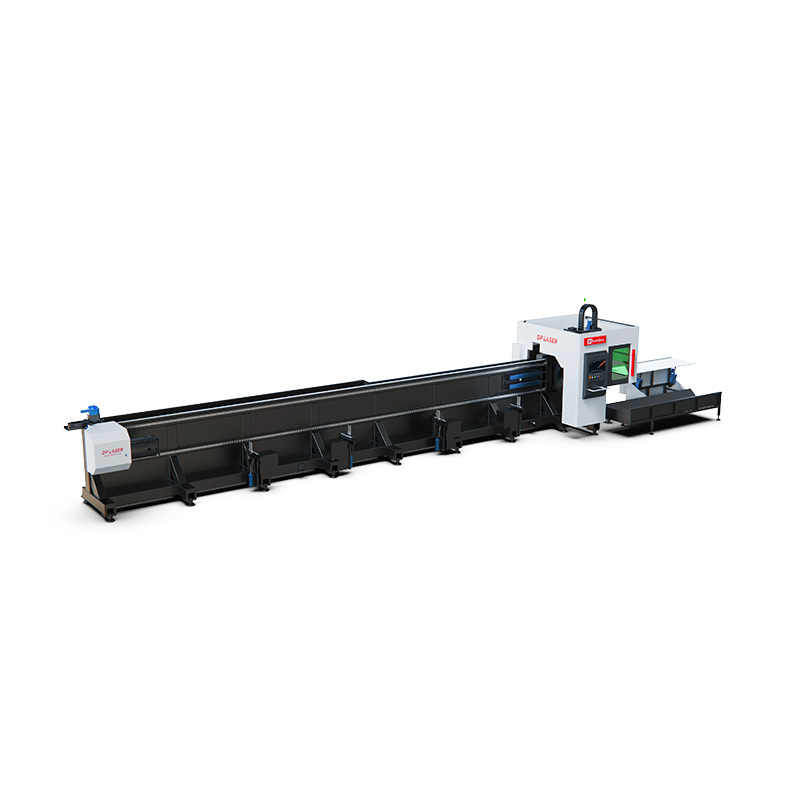
Different sectors demand unique capabilities from their laser cutting equipment. Evaluating these industry-specific requirements ensures the chosen machine configuration aligns with production realities and material specifications.
The automotive sector relies heavily on precise tubular components. Applications include exhaust systems, chassis components, roll cages, and space frames. Manufacturers evaluate machines based on high-speed processing capabilities. They frequently process thin-to-medium wall high-strength steel, advanced high-strength steels (AHSS), and aluminum alloys. Zero-distortion cutting is mandatory to ensure strict compatibility with automated robotic welding cells.
In motorsports, roll cages require complex fishmouth cuts and multi-tube intersections. The laser system calculates these intersections perfectly, accounting for the wall thickness and the bend radius of the mating tubes. This precision ensures maximum structural integrity during a crash. Exhaust manufacturers use the laser to cut sensor ports and mounting brackets into hydroformed stainless steel tubing without deforming the thin walls.
Aerospace and defense contractors manufacture seat frames, fluid routing tubes, and lightweight structural supports. Military applications involve vehicle chassis, tactical gear frames, and ruggedized armor plating attachments. This sector operates under strict compliance requirements and rigorous quality control standards. Facilities process exotic materials like titanium, Inconel, and specialized aerospace alloys.
These materials are notoriously difficult to machine using traditional methods. They work-harden quickly and destroy conventional cutting tools. The non-contact nature of the laser process eliminates tool wear. The system provides minimal heat input, preventing metallurgical changes in the base material. Absolute dimensional repeatability is required under high-stress conditions, and the laser delivers this consistency part after part.
Structural engineering demands robust processing power and massive material handling capabilities. Applications include structural building supports, roof trusses, architectural facades, and customized metal framework. Evaluators prioritize long-tube production capabilities to process large-format raw stock directly from the steel mill. They require high-wattage power sources to cut heavy structural steel shapes.
Processing I-beams, H-beams, and heavy channels requires specialized 3D cutting heads. The machine must cope the ends of the beams, cut access holes for plumbing and electrical routing, and prep the edges for full-penetration welds. Doing this manually with an oxy-fuel torch or a plasma cutter requires hours of grinding. The laser system performs these operations in minutes, leaving a weld-ready edge that meets strict structural building codes.
Heavy machinery manufacturing involves fabricating crane booms, agricultural implement frames, and material handling systems. This industry requires high-wattage power sources to penetrate thick-walled carbon steel and high-yield-strength materials. Heavy-duty chucks and robust material handling systems are necessary to support and rotate long, heavy profiles without introducing deflection during the cutting process.
A crane boom, for example, utilizes high-strength rectangular tubing. The laser system cuts the lacing holes and the pivot points with extreme accuracy. If these holes are out of alignment by even a fraction of a millimeter, the boom will not assemble correctly. The laser ensures perfect alignment across the entire length of the tube, eliminating the need for post-weld line boring operations.
Food processing and agricultural machinery require conveyor systems, processing frameworks, and custom attachments. Sanitary piping is a major focus in the food and beverage sector. Facilities process 304 and 316 stainless steel to meet strict hygiene and sanitary welding standards. The equipment must handle complex, non-standard geometric profiles without causing surface contamination or leaving burrs.
Sanitary welds require perfect fit-ups with zero gaps. Any gap in the joint can harbor bacteria, leading to product contamination. The laser system cuts these tubes with zero burrs and perfect squareness. Operators use nitrogen as an assist gas to prevent oxidation on the cut edge, ensuring the stainless steel retains its corrosion resistance. This eliminates the need for chemical passivation after the cutting process.
Consumer-facing products demand flawless aesthetics and smooth edges. Applications range from gym equipment and hospital beds to retail fixtures and high-end office furniture. Manufacturers evaluate machines based on their ability to produce pristine cosmetic cuts. The process must leave no burrs, sharp edges, or micro-cracking that could injure an end-user.
Machines in this sector must handle various shapes, including oval, flat-sided oval, and rectangular profiles. They must protect delicate surface finishes, such as pre-polished stainless steel or brushed aluminum. The chucks use specialized non-marring rollers to grip the material without scratching the surface. This allows manufacturers to process pre-finished tubes, eliminating the need for polishing after fabrication.
Job shops handle high-mix, low-volume custom orders across multiple sectors. Machine agility is the primary evaluation lens for these facilities. Operators need rapid changeover times between different tube shapes, whether round, square, rectangular, or open profiles. Versatile CAD/CAM software is critical for fast programming and maximizing machine uptime.
A job shop might cut thin-wall aluminum in the morning and heavy carbon steel in the afternoon. The machine must adapt quickly. Automated setup features, such as programmable chuck pressures and automatic nozzle changers, allow the operator to switch between jobs in minutes. This flexibility is the key to maintaining profitability in a high-mix manufacturing environment.
Selecting the right hardware configuration dictates your production efficiency. You must match the machine's specifications directly to your material profile and daily throughput requirements. Over-specifying the machine wastes capital, while under-specifying it creates permanent production bottlenecks.
| Component | Configuration Options | Best Suited For |
|---|---|---|
| Chuck System | Pneumatic vs. Hydraulic | Pneumatic for delicate/thin-wall; Hydraulic for heavy structural steel. |
| Laser Source | Fiber (3kW - 6kW) | Thin automotive parts, furniture, and sanitary stainless piping. |
| Laser Source | Fiber (8kW - 15kW+) | Thick heavy equipment frames, structural I-beams, and crane booms. |
| Cutting Head | Standard 2D vs. 3D Bevel | 2D for standard profiles; 3D for countersinking and complex weld prep. |
| Automation | Bundle Loaders vs. Step Loaders | Bundle loaders for high-volume rounds; Step loaders for heavy/open profiles. |
Chuck design directly impacts cut quality and material yield. Pneumatic chucks offer precise clamping force control. This prevents deformation on delicate, thin-walled tubes used in furniture and automotive applications. Hydraulic chucks provide the massive gripping power needed to rotate heavy structural profiles without slipping. Advanced chuck designs minimize dead zones, reducing the length of wasted tailings at the end of each raw tube.
The number of chucks also matters. Standard machines use two chucks (a main feeding chuck and a front stationary chuck). Advanced systems utilize three or four chucks. These multi-chuck systems pass the tube through the cutting zone, supporting it on both sides of the cut. This eliminates tube whip on long parts and allows the machine to cut the tube with virtually zero scrap.
Fiber laser technology dominates modern tube processing due to its speed, efficiency, and low maintenance requirements. Wattage requirements map directly to material thickness. A 3kW source efficiently processes thin automotive exhaust tubing and furniture frames. It provides excellent speed and edge quality on materials up to 6mm thick.
Conversely, cutting thick-walled structural steel for heavy equipment requires significantly more power. Facilities processing 12mm to 20mm carbon steel require 8kW to 15kW sources to maintain acceptable cutting speeds and edge quality. Higher wattage also allows the machine to use nitrogen assist gas on thicker materials, producing an oxide-free edge that is ready for immediate welding or painting.
Standard 2D cutting heads handle perpendicular cuts on standard profiles. They are perfect for cutting holes, slots, and straight cut-offs. However, structural and heavy equipment applications often require extensive weld preparation. A 3D bevel cutting head features additional rotary axes that allow the laser nozzle to tilt up to 45 degrees.
This 3D capability allows the machine to perform countersinking, chamfering, and complex angled cuts. It can create K-bevels and Y-bevels directly on the machine. This eliminates secondary machining steps before welding. Welders receive parts that are fully prepped, allowing them to achieve full-penetration welds without manually grinding bevels onto heavy steel plates.
Material handling dictates overall throughput. A fast laser is useless if it spends most of its time waiting for raw material. Bundle loaders automate the feeding of standard round, square, or rectangular tubes for high-volume runs. The operator loads an entire bundle of raw stock into the magazine, and the machine automatically separates, measures, and feeds each tube into the chucks.
Step loaders are better suited for open profiles, heavy structural shapes, or high-mix environments where the operator changes materials frequently. Processing extra-long raw stock, sometimes up to 12 meters, requires specialized automated unloading systems. These outfeed systems use programmable support arms to catch the cut parts and lower them gently to a conveyor, preventing part damage as pieces drop.
Modern CNC control platforms act as the brain of the operation. Look for systems featuring integrated self-correcting alignment algorithms. These systems use automatic seam detection cameras to locate the weld seam on raw tubing. The CNC then rotates the tube to orient the seam correctly before cutting, ensuring the seam does not interfere with critical holes or bends.
Real-time power modulation adjusts the laser output dynamically based on the cutting head's speed. When the head slows down to navigate a sharp corner on a square tube, the CNC automatically reduces the laser power. This prevents heat buildup and melting on the corners, ensuring a sharp, clean profile regardless of the geometry.
Deploying advanced laser technology introduces specific operational risks to your facility. Proactive mitigation strategies ensure a smooth transition from traditional manual fabrication to automated CNC processing. You must address material quality, operator training, and facility infrastructure before the machine arrives on your floor.
Processing commercial-grade tubes presents a significant challenge. Raw materials often exhibit bow, twist, and dimensional inconsistencies straight from the mill. A tube that is bowed will wobble as it rotates in the chuck, causing the laser to lose focus and ruin the cut.
Advanced machines utilize tactile sensors and capacitive height-sensing cutting heads to mitigate this risk. The capacitive sensor maintains a precise standoff distance between the nozzle and the material surface, adjusting up and down as the tube rotates. The software dynamically compensates for twist and bow in real-time, ensuring the cut path remains accurate despite poor material quality.
Transitioning staff from manual fabrication to CNC laser operation involves a steep learning curve. 3D tube CAD/CAM software requires specific spatial reasoning skills. Operators must understand how to nest parts efficiently, manage common-line cutting, and program micro-joints to keep parts stable during the cut.
Identify operators with strong computer skills and a background in CNC machining or drafting.
Send these operators to the machine vendor's facility for intensive, hands-on training before the machine is installed.
Implement a standardized file management system to ensure the correct CAD revisions are sent to the machine.
Establish a daily maintenance checklist to keep the cutting head, optics, and chucks in optimal condition.
Laser cutting requires a continuous supply of assist gas, primarily nitrogen, oxygen, or compressed air. Gas shortages will immediately halt production. Facilities must evaluate their expected consumption rates based on the materials they process. Cutting thick stainless steel with nitrogen consumes massive volumes of gas.
High-volume operations often find that installing on-site nitrogen generation systems provides better reliability than depending on bulk liquid delivery schedules. A nitrogen generator pulls air from the atmosphere, separates the nitrogen, and compresses it to the required cutting pressure. This eliminates delivery delays and provides a fixed, predictable cost for assist gas.
Upgrading to automated tube processing transforms facilities previously constrained by manual fabrication bottlenecks. Success depends entirely on matching the machine's configuration to your specific industry's material and volume profile. When shortlisting vendors, prioritize local service availability and software usability. Demand vendors demonstrate successful time studies using your actual production parts to prove the equipment can handle your specific geometric complexities.
Request a comprehensive time study comparing your current manual process to the proposed laser cycle times.
Schedule a live cutting demonstration using your most complex, challenging tubular parts.
Conduct a thorough audit of your facility's floor space, power, and gas infrastructure before issuing an RFP.
Evaluate your raw material supply chain to ensure tube quality meets the automation requirements of the new system.
A: Maximum thickness depends entirely on the laser source wattage. A standard 3kW fiber laser typically cuts up to 8mm carbon steel. High-power systems featuring 12kW to 15kW sources can effectively process carbon steel walls exceeding 20mm, making them suitable for heavy structural applications.
A: Advanced machines utilize specialized chuck jaws and step-loading automation to grip open profiles like channels or angles. The CNC software uses capacitive sensors to map the exact dimensions and twist of the open profile, adjusting the cutting path dynamically to maintain precision.
A: Yes, modern fiber lasers handle highly reflective metals exceptionally well. The wavelength of a fiber laser absorbs easily into copper, brass, and aluminum. This prevents back-reflection damage to the cutting head and ensures clean, precise cuts on these challenging materials.
A: Yes, provided the machine is configured for heavy structural work. It requires robust hydraulic chucks, a high-clearance cutting enclosure, and specialized 3D cutting heads to navigate the complex internal corners and flanges of H-beams and I-beams.
A: Installations typically require reinforced concrete foundations to handle the machine's weight and prevent vibration. You will also need high-capacity electrical drops, upgraded ventilation for fume extraction, and robust assist gas plumbing, often requiring bulk nitrogen tanks or on-site generators.
A: Tailings represent the un-cuttable end of the tube held by the chuck. Traditional machines waste 150mm to 200mm per tube. Advanced multi-chuck systems can pass the tube between chucks, reducing the dead zone and minimizing tailings to as little as 40mm to 60mm.


