
Views: 0 Author: Site Editor Publish Time: 2026-09-04 Origin: Site


The manufacturing shift from traditional TIG and MIG processes to laser welding offers massive speed and quality gains. However, this transition introduces a new technical hurdle. You must decipher laser specifications and match them directly to actual production needs. Selecting the wrong equipment carries high stakes for your fabrication floor. Underpowering leads to a lack of fusion, weak joints, and rejected parts. Overpowering results in unnecessary capital expenditure, burn-through on thin materials, and excessive facility infrastructure costs. We provide a technical, evidence-based breakdown of how to evaluate power tiers, beam delivery types, and material compatibility. This ensures you select the optimal Handheld Fiber Laser Welding Machine for your specific fabrication environment and production goals.
Match Wattage to Material Thickness: Lower power units (500W–700W) excel at thin foils, DIY/prosumer applications, and delicate assemblies; industrial fabrication (2mm–4mm) requires 1200W or higher.
Account for Material Reflectivity: Highly reflective metals like aluminum and copper demand higher peak power to initiate the weld pool compared to carbon or stainless steel.
Evaluate the Laser Source and Beam Type: Raw wattage is only part of the equation; the brand of the laser source (e.g., IPG, Raycus) and the beam mode (Continuous vs. Pulsed) heavily dictate power stability and precision.
Facility Infrastructure Dictates Feasibility: High-power machines require robust thermal management (water chillers) and specific electrical infrastructure (often 220V/380V 3-phase power).
Safety Scales with Power: All fiber lasers are Class 4 devices, but higher wattages increase the severity of back-reflection hazards and require stricter enclosure and PPE compliance.
Understanding handheld laser welder power requires looking beyond the sticker wattage. Raw continuous wave (CW) wattage measures the total energy emitted by the laser source per second. Energy density dictates actual welding performance. Energy density is the amount of power concentrated into a specific area, determined by the spot size and the beam parameter product (BPP). A machine outputting 1000W with a highly focused, pristine beam profile will achieve deeper penetration than a 1500W machine with a scattered, poorly focused beam.
Spot size manipulation allows operators to control the heat-affected zone (HAZ). A smaller spot size increases energy density, facilitating deep keyhole welding where the beam vaporizes the metal and penetrates deeply into the joint. A larger spot size spreads the energy, which is useful for conduction welding on thinner materials where you only want to melt the surface. Raw wattage is only half the equation. You must evaluate how efficiently the optical delivery system concentrates that power onto the workpiece to achieve deep, structurally sound penetration.
The focal length of the collimating and focusing lenses inside the welding gun also plays a major role. A shorter focal length creates a smaller, more intense spot but reduces the depth of focus. This means the operator must hold the gun at a very precise distance from the metal. A longer focal length provides a wider spot and a more forgiving depth of focus, which is often preferred for manual handheld operations where human movement introduces slight variations in standoff distance.
Beam delivery type fundamentally alters heat input and precision. Continuous Wave (CW) lasers emit an uninterrupted stream of energy. This provides maximum heat input and allows for incredibly fast travel speeds on thicker materials. CW delivery can overwhelm thin materials, leading to severe distortion or catastrophic burn-through. Modulating a high-power CW laser into a pulsed or Quasi-CW (QCW) mode solves this problem.
Pulsed delivery emits energy in rapid, controlled bursts. This allows the material to cool slightly between pulses, drastically reducing the overall heat input while maintaining the peak power necessary to melt the metal. Using QCW modes allows operators to weld thinner materials without distortion. This capability effectively expands the versatility of higher-wattage machines, allowing a single unit to handle both heavy structural plates and delicate sheet metal assemblies.
When setting up a pulsed weld, operators adjust the peak power, pulse duration (how long the laser is on), and pulse frequency (how many pulses per second). A high peak power with a very short duration can punch through surface oxides on aluminum without putting too much total heat into the surrounding metal. This level of control is what makes modern fiber lasers vastly superior to older technology.
Establishing clear success criteria is mandatory before selecting a wattage tier. Matching your power output to specific application requirements prevents common welding defects. Underpowered machines fail to reach the root of the joint, causing porosity, cold welds, and structural failure. Overpowered machines applied incorrectly cause burn-through, severe metallurgical distortion, and undercut.
Penetration Depth Verification: The machine must consistently reach the required depth to meet structural engineering codes for the specific joint type.
Travel Speed Minimums: The power level must support a travel speed that meets or exceeds your daily production quotas. A low-power machine might penetrate 3mm steel, but if it requires a painfully slow travel speed, it fails the throughput test.
Visual Bead Acceptance: The final weld must meet aesthetic requirements without excessive post-weld grinding or cleaning.
The baseline rule for equipment selection is straightforward. You must specify power based on the thickest material welded in daily production, not rare edge cases. If 95% of your work involves 2mm stainless steel, optimize your purchase for that thickness. Buying a massive power source for a job that occurs once a year compromises your efficiency on daily tasks and unnecessarily inflates your infrastructure requirements.
A 500W laser welder occupies a highly specialized niche in the fabrication landscape. These units are engineered specifically for precision applications where heat input must be strictly minimized. Ideal use cases include welding thin sheet metal under 1mm, sealing electronics enclosures, manufacturing medical devices, and executing delicate repair work. They are highly popular for high-end DIY and prosumer projects due to their compact size.
The limitations of this power tier are strict. A 500W unit lacks the energy density required for thick structural components. Attempting to weld 3mm steel with this machine guarantees cold welds and lack of fusion. It struggles significantly with highly reflective metals like aluminum or copper, as the initial beam energy is often reflected away before a melt pool can form. Operators using 500W systems must ensure perfect joint fit-up, as there is not enough power to generate a large weld pool to bridge gaps.
Stepping up to a 700W laser welder provides a versatile bridge between delicate precision work and standard light fabrication. These machines are ideally suited for joining 1mm to 1.5mm stainless steel, carbon steel, and galvanized sheets. They are common in HVAC fabrication, signage manufacturing, and light automotive body repair.
The primary advantage of the 700W tier is the balance it strikes. It offers moderate penetration capabilities while keeping power consumption relatively low. Many machines in this category can operate effectively with advanced air-cooling systems, eliminating the need for bulky water chillers. This makes the equipment highly portable and easier to deploy in cramped workshops or field repair scenarios. You can easily move an air-cooled 700W unit across a large shop floor without dragging heavy coolant lines.
For general fabrication shops, a 1200W laser welder serves as the true industrial standard. This power tier comfortably handles 2mm to 4mm materials, making it ideal for kitchenware manufacturing, heavy automotive repair, and custom metal fabrication. It provides the necessary thermal energy to achieve deep, consistent keyhole welds across a wide variety of joint configurations.
1200W provides enough raw power to handle reflective materials like aluminum consistently. It overcomes the initial reflectivity barrier without stalling production speeds or causing defects. This tier represents the sweet spot for most job shops, offering high throughput and versatility without pushing into the extreme infrastructure requirements of ultra-high-power systems. Operators can run a 1200W machine on 11-gauge steel all day with excellent stability and minimal thermal distortion.
When production demands shift to thick plates up to 6mm and beyond, you require a heavy-duty metal welding machine operating between 1500W and 3000W. These systems are designed for structural steel, heavy equipment manufacturing, and high-speed continuous automated or semi-automated production lines. The travel speeds achievable at these power levels drastically outpace traditional arc welding methods.
The implementation reality of these machines is demanding. Operating at 2000W mandates strict facility requirements. You cannot run these units on standard wall outlets; they require high-amperage electrical circuits. The massive heat generated by the laser source necessitates heavy-duty, integrated water chillers to prevent thermal shutdown and protect the internal optics. These are stationary units designed for dedicated welding bays, not portable field work.
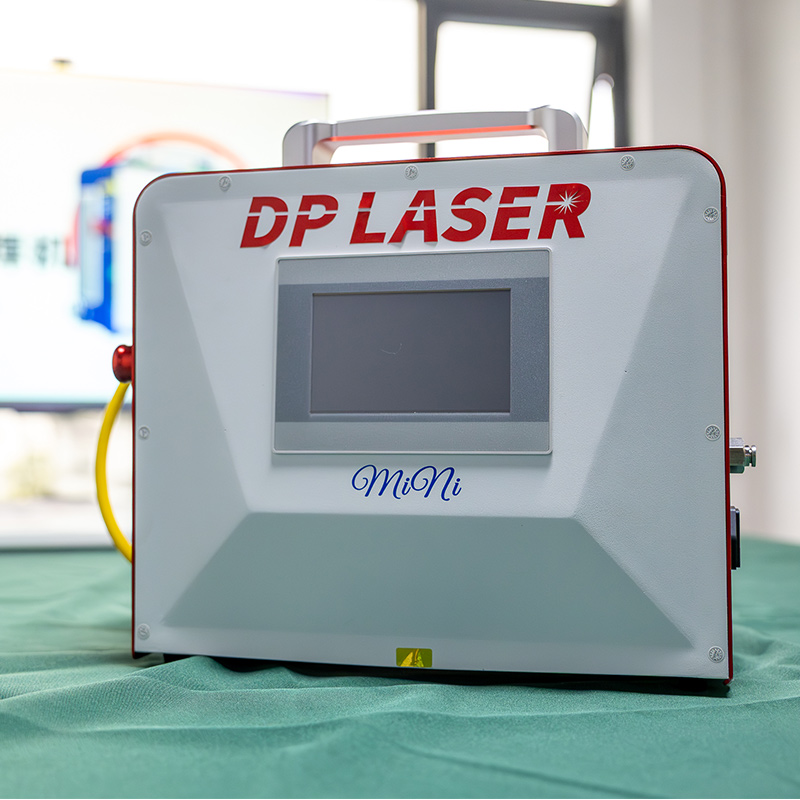
Carbon steel and stainless steel are the most common materials processed with fiber lasers, and they respond predictably to specific wattage tiers. Standard wattage-to-thickness ratio guidelines dictate that 1000W to 1200W is typically optimal for single-pass welding of up to 3mm stainless steel. Pushing beyond 3mm requires stepping up to 1500W or utilizing specific joint preparations like beveling.
Thermal conductivity heavily impacts power parameters and travel speeds for these metals. Stainless steel has lower thermal conductivity than carbon steel, meaning it retains heat locally within the weld zone. This allows for faster travel speeds at a given wattage but increases the risk of warping on thin sheets. Carbon steel dissipates heat more rapidly, requiring slightly higher energy input to maintain the same penetration depth. When welding carbon steel, operators often need to adjust their shielding gas flow to prevent oxidation in the weld pool, as the higher heat input can draw in atmospheric contaminants.
Welding reflective metals introduces complex physics into the fabrication process. Aluminum, copper, and brass naturally reflect the 1064nm wavelength emitted by standard fiber lasers. To weld these materials, the laser must deliver a high enough peak power to instantly melt the surface, breaking the reflectivity and establishing a keyhole weld. Once the keyhole forms, the material absorbs the laser energy highly efficiently.
If a machine is underpowered, it fails to penetrate the surface. This creates a severe risk of back-reflection. The laser beam bounces off the workpiece and travels back up the fiber optic cable. This back-reflection can catastrophically damage the delivery fiber and the core laser source. Welding copper or aluminum safely requires higher wattage tiers and built-in back-reflection protection sensors. Aluminum also has a very high thermal conductivity, meaning the heat rapidly bleeds away from the weld zone. You need a high-power machine just to keep the puddle fluid enough to move forward.
Joining metals with different melting points and thermal conductivities requires precise power modulation. Welding copper to stainless steel is a common requirement in battery manufacturing and electrical busbar fabrication. The laser beam must be biased toward the material with the higher thermal conductivity or higher melting point. If the beam is centered perfectly on the joint, the copper will dissipate the heat while the stainless steel overheats and degrades.
Advanced power control, including pulse shaping and wobble functions, is required here. Operators must fine-tune the energy delivery to ensure both materials reach a liquid state simultaneously, allowing the weld pool to mix properly without creating brittle intermetallic compounds. We often offset the beam slightly onto the copper side, using the copper's thermal conductivity to draw the heat across the joint into the stainless steel.
| Material Type | Thickness (mm) | Recommended Power Tier | Cooling Requirement |
|---|---|---|---|
| Stainless / Carbon Steel | 0.5 - 1.0 | 500W - 700W | Air or Light Water |
| Stainless / Carbon Steel | 1.5 - 3.0 | 1000W - 1200W | Water Chiller |
| Stainless / Carbon Steel | 4.0 - 6.0+ | 1500W - 2000W+ | Heavy-Duty Water Chiller |
| Aluminum / Brass | 1.0 - 2.0 | 1200W - 1500W | Water Chiller |
| Copper | 1.0 - 2.0 | 1500W - 2000W | Heavy-Duty Water Chiller |
| Galvanized Steel | 1.0 - 2.0 | 1000W - 1200W | Water Chiller |
The core laser source is the engine of the machine, and the manufacturer heavily dictates actual power stability, machine durability, and overall performance. Leading brands like IPG Photonics, Raycus, and MAX Photonics offer different tiers of reliability and beam quality. The laser source determines how consistently the machine delivers its rated wattage over a continuous eight-hour shift.
A premium 1000W source often outperforms a budget 1500W source in real-world precision and longevity. Budget sources may suffer from power degradation as they heat up, causing the penetration depth to fluctuate unpredictably during a long weld. High-quality sources maintain strict power stability, ensuring the first weld of the day is identical to the last. Investing in a reputable laser source prevents costly downtime and inconsistent part quality. You also need to consider the lifespan of the pump diodes inside the source, as cheaper diodes degrade faster, leading to a gradual loss of output power over a few years.
Power output directly dictates thermal management requirements. Fiber lasers generate significant waste heat that must be dissipated to protect the diodes and optics. Lower power units, specifically in the 500W to 700W range, can often utilize advanced air-cooling technology. This relies on high-velocity fans and heat sinks, making the machine lighter and virtually maintenance-free regarding coolant.
Once you cross the 1000W threshold, water cooling becomes strictly mandatory. Integrated water chillers circulate distilled or deionized water through the laser source and the welding head. While highly effective, chillers introduce maintenance implications. You must monitor water levels, change filters, and ensure ambient temperatures do not cause condensation on internal optics. Water-cooled systems also have a larger physical footprint on the shop floor. If you run a water-cooled system in a freezing environment, you must use specialized laser-safe antifreeze to prevent the internal lines from rupturing.
Raw power is useless if the joint fit-up is poor. Standard laser beams have a tiny spot size, making it nearly impossible to bridge gaps wider than 0.2mm. An adjustable wobble head solves this by rapidly oscillating the beam in various patterns, such as lines, circles, or figure-eights. This effectively widens the weld pool without requiring a massive increase in raw power.
The wobble function compensates for poor fit-up tolerances, bridges larger gaps, and maximizes the effectiveness of the chosen power level. It improves weld aesthetics by creating a smoother, more uniform bead profile. When evaluating machines, verify the maximum wobble width and the available oscillation frequencies, as these parameters dictate how well the machine handles imperfect sheet metal preparation. A high-frequency wobble allows you to move the gun faster while still maintaining a wide, stable puddle.
Duty cycle defines how long a machine can operate at a specific power level before it must rest to cool down. You must evaluate the operational reality of your production floor. Running a 1200W machine at 50% capacity continuously places far less thermal stress on the internal components than pushing a 700W machine to 100% capacity for hours on end.
Operating a machine constantly at its maximum limit accelerates component degradation, specifically stressing the cooling system and the optical lenses. Sizing up your power tier slightly provides a thermal buffer. Operating at 60% to 70% of maximum capacity ensures the machine runs cooler, maintains better power stability, and significantly extends the lifespan of the laser source. Thermal saturation of the focusing lenses can cause the focal point to shift during a long weld, leading to inconsistent penetration. Running below maximum capacity prevents this thermal shift.
Integrating high-power laser equipment requires immediate verification of your facility's electrical infrastructure. The transition from standard single-phase power to three-phase power is a bottleneck for many shops. Some low-wattage units can operate on standard 220V single-phase power, making them relatively easy to plug in and use immediately.
Industrial systems operating at 1500W or higher almost universally require 220V or 380V three-phase power to handle the amperage draw of the laser source and the integrated water chiller. Failing to verify your electrical capacity before equipment delivery results in expensive facility upgrades, delayed deployment, and potential damage to the machine from voltage drops. You must consult with a licensed electrician to ensure your breaker panels can handle the continuous load without tripping during long production runs.
All handheld fiber lasers, regardless of wattage, are classified as Class 4 laser devices. This is the highest hazard category, meaning the direct beam and scattered reflections can cause instant, permanent eye damage and severe skin burns. Safety compliance is non-negotiable and scales with power output. Higher wattages increase the severity of back-reflection hazards.
Implementation requires strict adherence to safety protocols. You must utilize light-tight enclosures or certified laser safety barriers to protect bystanders. Door interlocks must be wired to shut off the laser instantly if someone enters the welding area. Operators must wear specialized OD6+ laser safety glasses calibrated specifically for the 1064nm wavelength. The process generates metallic fumes, necessitating robust fume extraction systems to maintain a safe breathing environment. Standard welding curtains used for MIG or TIG will not stop a fiber laser beam; you must purchase certified laser-rated barriers.
To ensure optimal performance and safety on your fabrication floor, follow these immediate next steps:
Audit your current production materials to identify the thickest metal you process daily, and use this measurement as your baseline for wattage selection.
Inspect your facility's electrical panels to confirm whether you have the necessary three-phase power capacity to support industrial-grade water-cooled systems.
Establish a dedicated, light-tight welding bay equipped with proper interlocks, laser safety barriers, and fume extraction before the equipment arrives.
Procure certified OD6+ safety glasses specifically rated for the 1064nm wavelength for all operators and personnel in the vicinity of the welding operation.
A: No, a 1000W machine lacks the energy density to achieve full penetration on 1/4-inch (6.35mm) steel in a single pass. Welding material of this thickness requires a minimum of 2000W to 3000W, or extensive joint preparation like deep beveling combined with multiple passes using filler wire.
A: Aluminum is highly reflective to the 1064nm wavelength of fiber lasers and has exceptionally high thermal conductivity. It reflects the initial beam and rapidly dissipates heat. You need higher peak power to instantly melt the surface, break the reflectivity, and establish the keyhole weld pool.
A: Running any machine at absolute maximum capacity continuously generates excessive heat. This stresses the cooling system, accelerates the degradation of optical lenses, and can shorten the lifespan of the laser source. It is better to buy a higher-wattage machine and run it at 70% capacity.
A: It depends on the specific machine design. Many modern 700W units utilize advanced air-cooling systems, making them highly portable and maintenance-light. If you operate in an environment with high ambient temperatures, a water-cooled variant provides better thermal stability.
A: The wobble function rapidly oscillates the laser beam, effectively widening the weld pool. This allows lower-power machines to bridge wider gaps and compensate for poor fit-up tolerances without requiring a massive increase in raw heat input.
A: Absolutely not. Standard auto-darkening welding helmets protect against UV and IR light from arc welding, but they do not block the specific 1064nm wavelength of a fiber laser. You must use specialized OD6+ safety glasses designed specifically for fiber lasers.


