
Views: 0 Author: Site Editor Publish Time: 2026-07-14 Origin: Site


Upgrading to or adding a new cutting system is a major capital expenditure. It is never just a routine tooling swap. Today, fabrication shops face constantly tightening margins. Customers demand faster turnaround times on complex orders. Meanwhile, a severe shortage of skilled labor makes scaling production incredibly difficult.
A modern fiber laser system directly addresses these industry bottlenecks. It offers unmatched speed on thin-to-medium gauge metals, driving your throughput higher. The solid-state beam delivery requires essentially zero maintenance compared to older technologies. Furthermore, it gives you the ability to cut highly reflective materials legacy machines cannot process safely.
In this guide, you will learn exactly how these systems function on the shop floor. We will explore core applications, implementation realities, and how to evaluate machine specifications to match your exact production needs.
Many shop owners wonder what capabilities they actually gain by adopting solid-state laser technology. The reality is quite distinct from legacy cutting methods. A modern fiber laser cutting machine radically alters what you can process and how fast you can process it.
Older laser technologies struggle significantly when processing reflective materials. CO2 lasers utilize a 10.6-micrometer wavelength. This longer wavelength reflects off materials like aluminum, brass, and copper. Those reflections can bounce back into the cutting head and destroy internal optics. Fiber lasers solve this issue entirely. They utilize a 1.064-micrometer wavelength. Reflective metals absorb this shorter wavelength easily. You can safely and rapidly cut copper busbars, brass fixtures, and aluminum enclosures without risking catastrophic machine damage.
Rapid blanking of sheet metal represents the primary use case for most fabricators. You can process thin to medium gauge metal (up to 1/2 inch) at blistering speeds. A typical setup can cut thin-gauge steel three to four times faster than a traditional CO2 equivalent. Though modern high-wattage machines can tackle thicker plates, their real financial advantage shines in high-volume, thin-material blanking operations. Throughput increases dramatically, clearing your floor of work-in-progress inventory much faster.
Edge quality often dictates a part's true manufacturing cost. Fiber lasers produce a micro-kerf width. This incredibly narrow cut allows for intricate geometric designs and tight nesting tolerances. More importantly, this precision yields a flawless business outcome. It produces parts featuring extremely clean edges. You effectively eliminate secondary finishing, grinding, or deburring operations. Parts can move directly from the laser bed to the press brake or welding station.
Flat sheet processing is not the only application. Equipped models feature specialized rotary axes designed to handle structural tubing. They can process round, square, and rectangular pipe. This capability adds a lucrative secondary revenue stream for fabricators. It replaces manual band saws and separate hole-punching operations, consolidating tube fabrication into a single automated step.
Transitioning to new technology requires clear financial justification. Fabricators are rapidly phasing out older machines because the economic and operational advantages of fiber optic technology are simply too large to ignore.
The shift away from CO2 lasers centers on maintenance and energy consumption. CO2 machines rely on complex internal mirror networks and continuous gas purges. These mirrors require frequent alignment and meticulous cleaning. Solid-state delivery eliminates this entirely. The beam travels from the diodes to the cutting head through a flexible fiber optic cable. There are no mirrors to align. Furthermore, fiber technology boasts a wall-plug efficiency of approximately 30%. CO2 lasers hover around 10%. This difference slashes your monthly utility bills drastically.
Plasma cutting remains superior for heavy, thick plate operations exceeding one inch. It powers through structural steel efficiently. However, plasma generates a massive heat-affected zone and a wider kerf. For thinner materials, fiber lasers emerge as the definitive winner. They hold vastly superior tolerances. They deliver unmatched edge quality. If your shop processes primarily sheet metal under 3/4 inch, a fiber laser will outperform plasma in precision, part quality, and secondary processing costs.
Waterjet cutting handles extremely thick or highly heat-sensitive materials perfectly. It introduces zero thermal distortion. However, the process is incredibly slow. It also incurs high operating costs due to continuous abrasive garnet consumption and intense pump maintenance. Fiber technology offers infinitely higher speeds and substantially lower hourly operating costs. While you still need a waterjet for specialized aerospace composites or ultra-thick titanium, a fiber laser dominates daily metal fabrication tasks.
| Cutting Technology | Primary Advantage | Major Limitation | Best Use Case |
|---|---|---|---|
| Fiber Laser | Extreme speed, low maintenance | Initial capital cost | Thin-to-medium sheet metal, high precision |
| CO2 Laser | Smooth edges on thick plates | High maintenance, low efficiency | Non-metals, legacy thick plate cutting |
| Plasma | Fast on thick materials | Poor edge quality on thin metal | Heavy plate steel (1 inch+) |
| Waterjet | No heat-affected zone | Very slow, high consumable cost | Heat-sensitive or ultra-thick materials |
Purchasing the right equipment demands a careful evaluation of your current and future production needs. You must align the machine specifications directly with your specific shop floor realities.
You must employ a grounded framework when selecting wattage. It is very easy to over-buy power. A 3kW to 4kW machine is highly profitable for HVAC shops or those primarily processing thin-gauge materials. It provides excellent speed without excessive upfront costs. Conversely, if your core business involves cutting 3/4-inch heavy plate steel daily, you will absolutely require a 10kW+ system. Higher wattage directly correlates to thicker cutting capabilities and faster piercing times. Match the kW rating to your highest-volume material, not the rare outlier job.
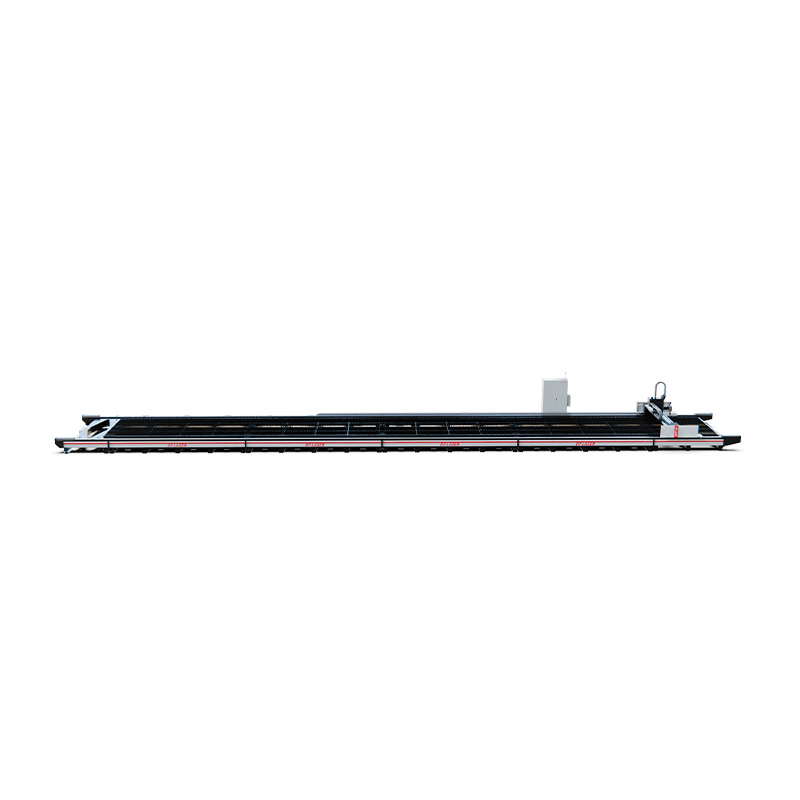
Machine footprints vary widely. Standard industrial sizes typically include 5x10 feet and 6x12 feet. You must discuss bed size in relation to your local raw material suppliers. If your steel vendor primarily stocks 6x12 sheets, buying a 5x10 machine forces you to shear material before loading it. This wastes labor and generates unnecessary scrap. Evaluate your most common sheet sizes and match the cutting bed accordingly to maximize material yield.
An incredibly fast laser metal cutting machine is completely useless if manual loading becomes your new shop bottleneck. You must evaluate material handling options carefully. Pallet changers are a minimum requirement for continuous production. One pallet cuts while the operator unloads the other. For higher volumes, consider auto-loading towers. These systems feed raw sheets automatically. For peak efficiency, part-sorting automation can completely remove human labor from the unloading process. Invest in automation if operator pacing slows down machine throughput.
Hardware represents only half of the production equation. Modern nesting software is critical for profitability. The software must integrate seamlessly with your existing shop floor ERP system and drafting programs. Advanced nesting algorithms pack parts tightly onto a sheet. This maximizes material utilization and dramatically reduces scrap metal. Ensure the machine's control software supports common file types and offers intuitive interface navigation for your operators.
Bringing advanced cutting technology into a facility requires more than just floor space. You must plan for substantial infrastructure upgrades and strict safety compliance measures. Ignoring these realities leads to delayed installations and unexpected expenses.
Before signing any purchase agreement, audit your facility's electrical capacity. High-wattage lasers draw significant power. The attached water chillers also require stable, high-amperage electricity. These machines typically demand a dedicated three-phase power supply. If your shop only has single-phase power, or your current electrical panel lacks available amperage, you will face costly utility upgrades. Consult a commercial electrician to verify your building can handle the load spikes during piercing operations.
Assist gases represent a major ongoing operational expense. You must break down these costs carefully. Nitrogen provides incredibly clean cuts and high speeds, preventing edge oxidation. However, bulk nitrogen is expensive. Alternatively, high-pressure compressed air offers excellent cost-efficiency. It drastically lowers per-part costs. Yet, cutting with air requires a substantial upfront investment in specialized rotary screw compressors, high-grade filters, and desiccant dryers. The air must remain perfectly dry and oil-free to protect the cutting head.
Solid-state lasers operate at a wavelength that can instantly cause permanent eye damage. You cannot run an open-bed system safely in a busy shop. OSHA and international standards mandate strict compliance.
Do not underestimate the learning curve. Moving from manual fabrication to CNC operation changes the required skill set entirely. The role relies heavily on software proficiency rather than manual cutting skill. Your team must learn how to adjust focal lengths, manage gas pressures, and optimize cutting parameters for different alloys. Plan for comprehensive vendor-supplied training. Expect reduced throughput during the first few weeks as your operators build confidence.
When you sit down to compare vendor quotes, you must look beyond the initial sticker price. True profitability comes from consistent, optimized daily operation. You must build a highly accurate financial model to justify the purchase.
Instruct your purchasing team to evaluate vendors based on the guaranteed cost-per-part. The initial machine price tells a very incomplete story. You need to calculate the ongoing costs of assist gas consumption, electrical draw, consumable parts, and raw processing speed. A slightly more expensive machine that uses 20% less assist gas and cuts 15% faster will generate significantly higher profit margins over a five-year period.
Never rely on generic brochure specifications. Demand a live time study from your shortlisted vendors. Provide them with your specific CAD files and your target raw materials. Force them to physically cut your parts while timing the operation. Ask them to document the exact gas consumption and parameter settings used. Inspect the physical cut sample for edge quality and dross accumulation. This physical proof is mandatory before you sign a purchase order.
Machine downtime immediately halts your production revenue. Emphasize the importance of a strict Service Level Agreement (SLA). Investigate the vendor's local technician availability. Ask where they stock their spare parts inventory, specifically focusing on critical consumables like cutting nozzles and protective lenses. Furthermore, ensure the machine features remote diagnostic capabilities. Many software or parameter issues can be fixed remotely by a technician within minutes, preventing days of costly downtime.
Adopting advanced laser technology transitions a shop from labor-intensive manual processing to highly predictable, automated production. You eliminate costly secondary finishing steps, increase throughput, and unlock the ability to process highly reflective metals with ease. The investment fundamentally changes your production ceiling.
Your next steps should focus heavily on internal data gathering. Audit your current scrap metal rates. Calculate your monthly expenses on secondary finishing labor. Review your outsourced laser-cutting bills. Use these concrete numbers to build a customized internal ROI model. Once you understand your true current costs, evaluating machine wattage and automation features becomes a straightforward, data-driven process.
A: Cutting thickness scales directly with machine power. A standard 2kW machine can efficiently cut up to 1/2-inch mild steel. Conversely, high-power systems rated at 15kW or more can easily process 1-inch thick plate or thicker. However, edge quality and piercing speeds will always vary depending on the specific material alloy.
A: The primary ongoing expenses include assist gases like Nitrogen and Oxygen. On the hardware side, you will routinely replace protective windows (lenses) that shield the internal optics, as well as the copper cutting nozzles that direct the gas flow into the kerf.
A: No, you do not need a clean room. Modern industrial systems are highly robust and fully enclosed for tough shop environments. However, the cutting head internal optics and your compressed air lines do require strict moisture and oil filtration during routine maintenance.


