
Views: 0 Author: Site Editor Publish Time: 2026-07-18 Origin: Site


The manufacturing sector has rapidly moved away from traditional fabrication methods. Factories now rely heavily on solid-state optical technology to stay competitive. Transitioning to advanced cutting systems represents a core operational upgrade for any metalworking business. It completely redefines how fast you can deliver finished products. However, buying this machinery is a massive capital expenditure. You must carefully align the machine's capabilities with your specific production bottlenecks. A miscalculation here can tie up funds without solving actual workflow issues. Many shops buy too much power or too little automation. This article moves beyond basic definitions. We provide a clear, evaluation-focused framework to help you understand real-world applications. You will learn about system limitations and implementation realities to guide your purchasing decision. We want you to evaluate equipment like an experienced manufacturing engineer.
What exactly drives an industrial fiber laser cutting machine? The process starts with a sophisticated solid-state fiber optic setup. Pump diodes emit bright light directly into specialized optical fibers. These fibers contain rare-earth elements like erbium or ytterbium. These elements actively amplify the light as it travels. This system delivers a highly concentrated, incredibly intense beam directly to the cutting head. It does this entirely without the complex mirrors found in older technologies. The beam path remains fully enclosed and secure.
Why does this physical process matter for cutting metals? The answer lies in the specific wavelength produced. The beam operates at exactly a 1.064-micrometer wavelength. Metals absorb this specific wavelength incredibly well. This absorption rate makes it perfect for processing challenging materials. You can effortlessly slice through highly reflective metals. Copper, brass, and aluminum yield easily to this focused energy. Older systems simply reflect this energy back and suffer internal damage.
These technical advantages create tangible, profitable business outcomes. You achieve much tighter tolerances on highly complex part geometries. The highly focused beam creates exceptionally narrow kerf widths. This narrow kerf allows you to nest parts closer together. You save significant money on raw material costs. You also get exceptionally clean, dross-free cut edges. This high edge quality eliminates the need for secondary finishing processes. You skip the grinding and deburring stages entirely. You save valuable time and reduce heavy labor expenses.
Modern manufacturing relies heavily on these advanced systems across multiple demanding sectors. Let us look at where they truly excel and why they dominate these fields.
This sector sees the most dramatic improvements from solid-state technology.
Vehicle manufacturing requires a delicate balance of speed and structural safety.
These industries tolerate zero errors and demand absolute perfection.
You can see how versatile this production technology is. It adapts easily to both heavy industrial fabrication and highly delicate medical manufacturing.
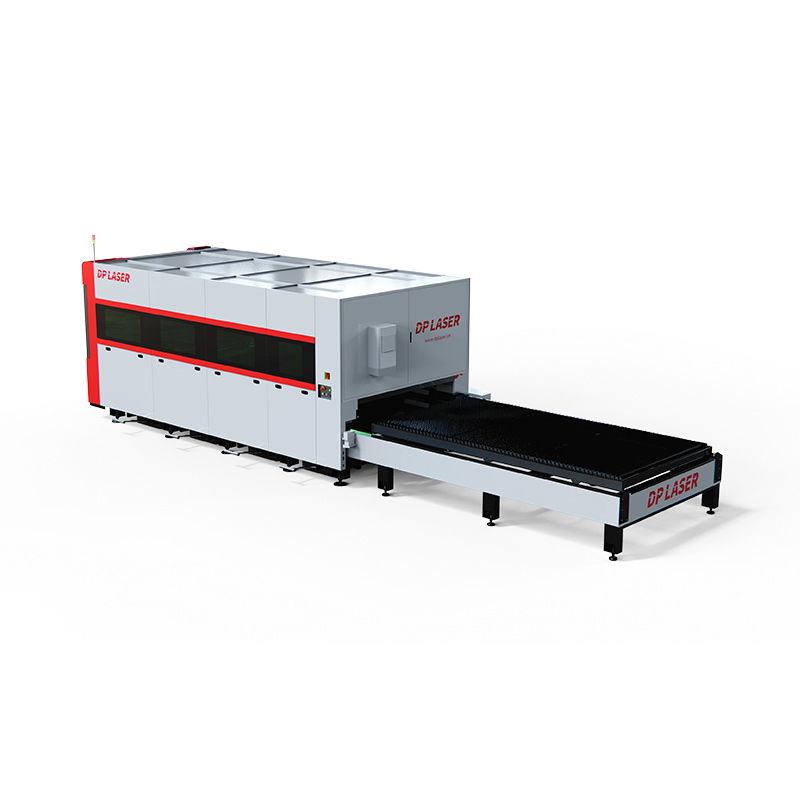
The metal fabrication industry is clearly moving away from older CO2 systems. However, we must remain transparent about where legacy technologies still work. CO2 remains somewhat dominant for cutting non-metals like wood, thick acrylic, and heavy fabric. But for modern metalworking, you need modern solutions. Investing in up-to-date industrial laser cutting equipment changes your entire production dynamic.
Let us carefully compare cutting speeds on thin-to-medium gauge metals. Fiber systems operate two to three times faster than their older CO2 equivalents. They fly through thin sheets of steel and aluminum. They also completely change the daily maintenance landscape. You no longer worry about manually aligning fragile optical mirrors. You can forget about servicing expensive blower turbines. You no longer need to constantly replace costly lasing gases. This mechanical simplicity leads directly to much higher overall machine uptime. Your machine spends more hours actually cutting parts.
We also see a massive, measurable difference in electrical efficiency. Fiber lasers successfully convert up to 30 percent of their input power directly into laser energy. CO2 systems typically hover around a meager 10 percent conversion rate. This means you consume far less expensive electricity to do the exact same amount of work.
| Performance Feature | Fiber Laser Technology | Legacy CO2 Laser |
|---|---|---|
| Optimal Material Suitability | Metals (including highly reflective) | Non-metals and very thick mild steel |
| Cutting Speed (Thin to Medium) | Extremely High (2x - 3x faster) | Moderate to Slow |
| Electrical Energy Efficiency | Up to 30% power conversion | Roughly 10% power conversion |
| Routine Maintenance Level | Low (Solid-state, no mirrors) | High (Frequent mirror alignment) |
| Consumable Gas Requirements | Assist gas only (Cutting) | Lasing gas and Assist gas |
Selecting the perfect system requires a hard, honest look at your actual production data. You must evaluate several critical factors before making a purchase decision.
Power levels completely dictate your daily cutting capabilities. Lower power systems ranging from 1kW to 3kW are excellent investments. They handle thin gauge, high-speed applications perfectly. High power systems ranging from 6kW up to 20kW handle heavy industrial tasks. They pierce very thick plate steel with remarkable ease.
Common Mistake: We strongly warn against over-specifying your machine wattage. Buying a 12kW system simply to cut thin aluminum dramatically inflates your initial cost. You will not see a proportionate return on investment if you primarily process thin materials. Buy the power you actually need.
Your new machine will cut metal parts incredibly fast. You must honestly assess your need for automated material handling. Consider adding automated pallet changers to keep the laser beam constantly cutting. Tower storage systems feed raw metal sheets continuously over long shifts. Part-sorting integrations help prevent the fast machine from entirely outpacing your manual loading team. A fast machine waiting for an operator is a wasted investment.
Robust hardware is only half the production equation. You absolutely need seamless CAD/CAM software compatibility. Good software handles highly efficient part nesting automatically. It optimizes your material yield and drastically reduces costly scrap metal. You want a control system that integrates smoothly into your current shop floor workflow.
Bringing this advanced machinery into your facility involves much more than simply clearing floor space. You must thoroughly prepare for several implementation realities before delivery day.
First, consider your facility and specific infrastructure requirements carefully. The physical installation process carries several hidden expenses. You will definitely need industrial water chillers to manage extreme system heat. Localized exhaust and high-capacity fume extraction systems are completely mandatory for safe indoor air quality. You also must provide a dedicated, highly stabilized high-voltage power supply. Voltage spikes can severely damage the sensitive solid-state electronics.
Next, you must strictly address safety and workplace compliance. These modern machines operate at a specific, highly dangerous invisible wavelength. Strict industrial regulations absolutely require Class 1 safety enclosures. You must use specialized, certified laser-safe viewing glass on all access doors. Never compromise on these critical safety features to save a little money.
Finally, evaluate your current operator skill levels honestly. CNC operation is highly automated today. However, your operators still require very specific technical training. They must learn proper, delicate optical maintenance procedures. Keeping protective glass windows and copper cutting nozzles perfectly pristine is vital. Poor routine maintenance here directly leads to catastrophic, expensive cutting head failures.
An industrial fiber laser cutting machine is not just a simple replacement tool. It is a massive production multiplier for serious modern metal fabricators. We have explored how it transforms everything from cutting speed to edge quality. You must remember the golden rule of heavy equipment procurement. Always match your machine wattage and automation features to your actual daily production data. Do not buy expensive equipment based on theoretical maximums you rarely ever use.
Your immediate next step should be practical, hands-on validation. We strongly encourage you to schedule a professional time study. Ask your chosen vendor to perform a live sample cut. Provide them with your specific, most difficult part geometry. This proves the machine's real-world performance conclusively before you move forward with procurement.
A: It depends strictly on the machine's wattage. For example, a high-power 12kW system can efficiently pierce and cut 1-inch thick mild steel. However, the final edge quality often varies significantly when you push any machine to its absolute upper material limits.
A: Yes. Older CO2 lasers often suffer from severe back-reflection damage when cutting these materials. Fiber lasers do not have this optical vulnerability. They safely and efficiently process highly reflective materials on a daily basis without risking internal component damage.
A: The main operational consumables include assist gases like pure oxygen, nitrogen, or compressed air. Hardware consumables include replaceable copper cutting nozzles, insulating ceramic rings, and the clear protective cover lenses that shield the expensive cutting head optics.


