
Views: 0 Author: Site Editor Publish Time: 2026-07-09 Origin: Site


Transitioning from legacy CO2 lasers or mechanical methods like plasma and waterjet involves significant strategic planning. You face high initial capital expenses during this transition. You must justify this substantial investment against long-term operational efficiency and output gains. We cannot view a Fiber Laser Cutting Machine merely as a standalone metalworking tool. It operates as a highly automated production cell. It ultimately dictates your entire facility's throughput, turnaround times, and daily production rhythm. This comprehensive guide provides operations managers, procurement teams, and manufacturing directors with an evidence-based evaluation framework. You will discover exactly how to assess technical mechanics, categorize various equipment options, and navigate hidden implementation risks. We will help you confidently shortlist equipment systems and thoroughly vet vendors for your factory floor.
Understanding the fundamental physics behind these systems reveals exactly why they dominate modern metal fabrication. We must bridge the gap between technical definitions and tangible business outcomes.
The generation process begins deep inside specialized hardware components. Pump diodes emit highly concentrated light into an active fiber. Manufacturers dope this active fiber using rare-earth elements. Common elements include erbium and ytterbium. These elements capture the emitted light. They amplify the light seamlessly into a powerful, coherent beam. This entire process requires absolutely no gas cavity. It happens completely within a solid-state medium. Operators benefit massively from this design. You eliminate bulky resonator tanks. You remove complex gas mixing procedures from your daily workflow entirely.
These specialized systems operate at a specific wavelength of approximately 1.064 micrometers. This exact measurement represents a massive operational advantage. The shorter wavelength produces exceptional energy absorption rates. Highly reflective metals historically caused severe problems on fabrication floors. Materials like copper, brass, and aluminum reflect longer wavelengths back into the cutting head. This dangerous reflection destroys sensitive internal optics instantly.
Solid-state beams avoid this catastrophic issue completely. Conductive metals absorb the 1.064-micrometer wavelength instantly upon contact. Operators achieve significantly faster travel speeds across the metal sheet. They also produce remarkably cleaner kerfs. You spend less time grinding rough edges in the finishing department.
Let us compare this technology directly against older CO2 models. We must analyze this through a strict business lens.
Power efficiency differences dictate your monthly utility consumption. Solid-state models achieve impressive wall-plug efficiency ratings. They convert roughly 30% to 40% of consumed electrical power into raw cutting energy. Legacy CO2 platforms struggle to reach a 10% efficiency rating. You waste massive amounts of electricity generating the same beam power.
Maintenance reductions provide another massive financial lever. Traditional machines rely heavily on flying optics. These delicate moving mirrors direct the beam across the gantry. Technicians spend hours performing complex beam alignment procedures. Mirrors degrade constantly under high heat. They require frequent manual cleaning. They demand costly routine replacements. Solid-state beam delivery uses a single, flexible fiber optic cable instead. You bypass all optical realignments completely. This structural advantage returns hundreds of active production hours to your annual manufacturing schedule.
| Metric | Solid-State Technology | Legacy CO2 Technology |
|---|---|---|
| Beam Delivery | Flexible optical cable | Fragile moving glass mirrors |
| Alignment Needs | Zero alignment required | Frequent manual realignment |
| Wall-Plug Efficiency | 30% - 40% | 8% - 10% |
| Mirror Degradation | Not applicable | High risk of thermal degradation |
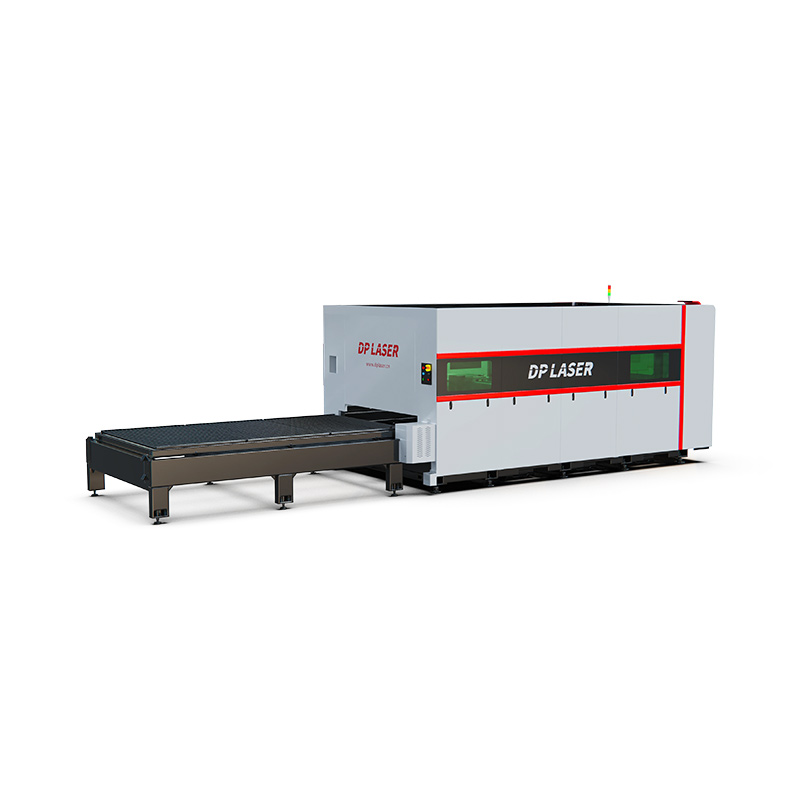
You must categorize equipment options carefully. This categorization helps buyers match machine specifications directly to specific fabrication bottlenecks.
Flatbed configurations handle high-volume sheet metal processing. You load flat sheets onto a rigid cutting table. Buyers must evaluate bed sizes carefully. A standard 5x10 foot bed suits most commercial sheet metal dimensions. Larger facilities prefer a 6x12 foot bed. It accommodates oversized metal plates easily. Pallet changer speeds matter immensely here. A fast pallet changer swaps processed sheets for raw materials in mere seconds. It keeps the beam active and minimizes idle time.
Tube and pipe cutters serve entirely different structural needs. These complex machines integrate a heavy-duty rotary axis. This equipment handles structural steel components effortlessly. You feed square, round, or rectangular tubing directly into the mechanical chuck. The machine rotates the material continuously. It processes complex intersections, saddle cuts, and bolt holes perfectly.
Choosing the right power class dictates your production speed and material capability.
Trust Warning: Higher kilowatt ratings do not linearly equal better production yields. Material handling easily becomes your primary facility bottleneck. A 15kW beam might slice a metal sheet in twenty seconds. However, if your manual labor team takes five minutes to unload the finished parts, the expensive high-power laser simply sits idle. You waste the core advantage of the high-speed system.
| Power Class (kW) | Primary Material Focus | Ideal Thickness Range | Common Industry Use Cases |
|---|---|---|---|
| 1kW - 3kW | Thin Carbon / Stainless | Under 3mm | HVAC, Signage, Light Enclosures |
| 4kW - 6kW | Mixed Metals | 3mm to 10mm | Automotive Parts, Appliance Housing |
| 8kW - 15kW+ | Heavy Plate / Armor | 10mm to 25mm+ | Heavy Machinery, Shipbuilding, Defense |
Procurement teams need strict decision frameworks. You must map physical machine features directly to desired operational outcomes.
The cutting head acts as the absolute brain of the operation. You want advanced autofocus capabilities integrated immediately. The focal length must adjust dynamically as material thickness changes across different jobs. Collision protection remains an absolute non-negotiable feature. Cut parts occasionally tip up during processing. The head must detect this unexpected crash instantly. It should break away magnetically from the gantry mount. This breakaway feature prevents catastrophic mechanical damage to the main gantry. Sealed internal optics are also crucial. They prevent ambient metallic dust contamination from ruining expensive internal focusing lenses.
Assist gas selection alters your cut quality and daily operating logistics dramatically.
You must evaluate software packages rigorously. Avoid proprietary software lock-ins at all costs. Closed software ecosystems force you to buy expensive upgrades continuously. Look for an open architecture instead. The machine software must integrate seamlessly into your existing ERP and CAD systems. Exceptional nesting software minimizes your daily material scrap. It automatically rotates and packs parts tightly onto the digital sheet. It calculates the absolute most efficient cutting paths automatically.
Purchasing a standalone manual machine limits your future scalability. You must evaluate automation readiness during the initial procurement phase. Automated load and unload systems eliminate manual lifting bottlenecks entirely. Massive material storage towers hold multiple different types of raw metal sheets. They feed the laser continuously over long weekends. Part-sorting robots pick finished pieces directly from the skeletal scrap web. They stack them neatly onto specific shipping pallets. These crucial upgrades help you eventually achieve true lights-out manufacturing operations.
Experience-driven insights reveal the hidden challenges of heavy equipment adoption. You must prepare your facility physically and culturally.
Modern systems move incredibly fast. High-speed gantries pull over 2G of physical acceleration during complex movements. This violent mechanical movement shakes standard warehouse concrete floors. You need an isolated, reinforced concrete foundation. A properly engineered pad absorbs the immense kinetic energy. This rigid foundation maintains your strict micron-level cutting tolerances over years of heavy use.
You cannot simply plug these massive systems into standard warehouse grids. They require dedicated, highly conditioned commercial power lines. Slight voltage drops crash the sensitive CNC controller instantly. You also need industrial-grade water chillers installed nearby. Chillers keep the main laser source and cutting head precisely at optimal operating temperatures. Stable thermal control ensures consistent beam delivery across long production shifts.
Transitioning to optical technology introduces entirely new safety paradigms.
Shifting your operators from manual mechanical setups to software-driven optics requires significant cultural adjustments. Operating a legacy plasma table is a largely manual, hands-on process. Operating a modern solid-state system is an entirely software-driven endeavor. Your manual operators must become skilled digital technicians. They monitor precise gas flows, adjust micro-focus parameters, and troubleshoot complex nesting layouts on large screens. You must negotiate comprehensive, vendor-led training programs directly into your final purchase contract.
Navigating the crowded vendor landscape requires strict shortlisting logic. You must protect your massive capital investment aggressively.
Never finalize a purchase based on glossy marketing brochures. You must validate all performance claims physically. Demand detailed physical time-studies from every prospective vendor. Send them your actual, complex DXF production files. Ask them to cut your specific, unique grades of material. This physical benchmark proves real-world capabilities undeniably. It exposes exaggerated marketing claims immediately.
You must determine how the vendor sources their components. Find out if the manufacturer builds their own core laser sources. Brands like IPG, MAX, or Raycus dominate the market. Check if they engineer their own proprietary cutting heads. Many smaller companies act purely as parts integrators. Integrators simply bolt different external brands together. They often face serious finger-pointing during warranty claims. The laser source company blames the cutting head company. You get stuck in the middle waiting for critical repairs.
Evaluate their post-sale service network rigorously.
A modern solid-state beam delivery system transforms your entire metalworking operation. It functions less as a standalone workstation and much more as a facility-wide operational upgrade. The speed of this machine sets the daily pace for your bending, welding, and final assembly departments downstream.
Before issuing a formal Request for Quote (RFQ), take immediate action on these concise next steps:
A: These systems strictly require highly conductive materials to absorb the 1.064-micrometer wavelength. They are inherently unsuited for non-metals. You cannot process wood, acrylic, glass, standard plastics, or masonry. Attempting to cut these materials results in melting, burning, or complete beam pass-through. You must use traditional CO2 lasers or waterjet systems for non-conductive fabrication.
A: The core solid-state pump diodes feature an industry-standard lifecycle of approximately 100,000 operational hours. However, real-world longevity depends entirely on strict maintenance habits. Maintaining absolute optical cleanliness and adhering to rigorous water chiller maintenance schedules dictates how long the system truly performs at peak capacity.
A: Capital expenditure varies drastically based on power and size. Entry-level, low-kilowatt flatbed models typically start around $50,000. High-power, multi-kilowatt automated cells with material towers easily exceed $500,000. Buyers must remember that advanced automation handling and proprietary nesting software often comprise up to 30% of the total system cost.


