
Views: 0 Author: Site Editor Publish Time: 2026-07-12 Origin: Site


Purchasing an industrial fiber laser represents a massive capital expenditure for any modern fabrication shop. Buying a system underpowered for your needs creates immediate production bottlenecks. Conversely, over-specifying your equipment wastes valuable capital and artificially inflates day-to-day operating expenses. The current equipment market is heavily saturated. Buyers constantly navigate through varying wattages, divergent component brands, and aggressive performance claims. Decision-makers require a strict technical framework to objectively evaluate these competing options.
This guide provides an evidence-based roadmap for your next equipment acquisition. You will learn how to accurately match machine specifications to your actual production demands. We also explore the critical steps required to properly vet manufacturing partners. By leveraging these practical strategies, you can secure reliable machinery optimized for your specific shop floor environment.
Before you examine specific machine parameters, you must establish a clear production baseline. Manufacturers often make the mistake of buying equipment based on future hypothetical needs rather than current verified data. A solid baseline relies on understanding your exact material flow.
First, audit your material matrix. You need to document your current and projected material mix meticulously. Fiber lasers excel at processing carbon steel, stainless steel, aluminum, brass, and copper. However, different materials absorb laser wavelengths differently. Reflective materials like copper require specialized beam reflection protection to prevent damage to the laser source. You must categorize your inventory by material type to ensure the machine can handle your specific alloys.
Next, map your thickness limitations using the 80/20 rule. Evaluate the maximum material thickness you cut daily. You should size your machine for the materials that make up 80 percent of your workload. Outsource the remaining 20 percent of outlier jobs. Buying a massive machine just to handle a 1 percent edge case wastes immense capital. It also reduces processing efficiency on your thinner, more common materials.
You must also evaluate your throughput and automation needs. Assess whether your production volume justifies an automated pallet changer or if manual loading suffices. Calculate your required cycle times. This data determines if the equipment will sit idle for hours or run continuously across three shifts. High automation requires a larger initial investment but drastically reduces operator fatigue and idle time between cuts.
Finally, account for the spatial footprint. The machine size extends far beyond the cutting bed. You must plan for the complete system footprint.
Once you define your baseline, you can evaluate the technical specifications that actively drive production outcomes. When evaluating a Fiber Laser Cutting Machine, power dictates both your speed and your maximum piercing capabilities.
Laser source power generally falls into three distinct categories:
The brand of your laser source matters deeply. You should compare established Tier-1 sources against budget-friendly alternatives. Established brands often deliver better beam stability over thousands of hours. Evaluate these options based on their documented warranty length and expected diode degradation rates. A cheaper source might save money upfront but lose 20 percent of its cutting power within three years.
Cutting head technology requires equal scrutiny. Demand autofocus cutting heads for any machine over 1.5kW. Autofocus eliminates manual focal adjustments, reducing operator error during material changeovers. Check specifically for contamination-resistant designs. Sealed optics prevent microscopic shop dust from settling on internal lenses, which prevents catastrophic thermal lens failures.
Machine frame construction is another critical variable. The debate usually centers on cast iron versus welded steel. Heavy, stress-relieved beds are mandatory. High-speed traversing generates massive G-forces. A lightweight frame will vibrate, causing jagged edge quality and lost dimensional tolerances. A properly annealed heavy frame absorbs these vibrations entirely.
Look closely at the drive systems and motors. Precision requires high-quality servo motors and robust rack-and-pinion systems. Industry best practices suggest utilizing Japanese or German-engineered drive components. These systems ensure long-term positioning accuracy and tight repeatability, even after years of aggressive mechanical movement.
| Power Range (kW) | Primary Application Focus | Optimal Mild Steel Thickness | Typical Automation Level |
|---|---|---|---|
| 1kW - 3kW | HVAC, Signage, Thin Sheet Shops | Up to 1/4" (6mm) | Manual or Single Pallet |
| 4kW - 8kW | Versatile Job Shops, OEM Parts | Up to 3/4" (19mm) | Dual Pallet Changer |
| 10kW - 20kW+ | Heavy Plate, Structural Steel | 1" (25mm) and above | Full Tower / Automated Sorting |
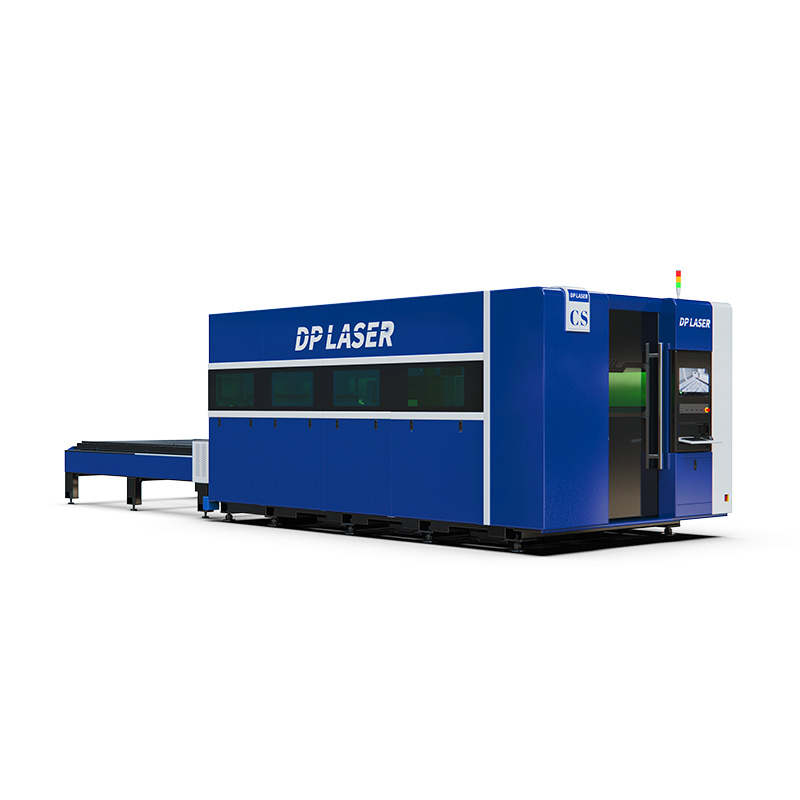
To run your machine profitably, you must understand your daily operational inputs. Assist gas strategy remains the largest ongoing variable in laser cutting. The type of gas you choose directly impacts cut speed, edge quality, and utility usage.
Oxygen cutting acts as a cost-effective solution for thick carbon steel. The gas creates an exothermic reaction that burns away the metal. It uses relatively low pressure, making it cheaper to supply. However, oxygen cutting is inherently slower than nitrogen. It also leaves an oxidized layer on the cut edge. You must mechanically grind off this oxide layer before painting or welding the part.
Nitrogen cutting operates differently. It uses high pressure to blow away molten metal without creating a chemical reaction. This process yields a perfectly clean, oxide-free edge that is immediately ready for downstream powder coating. The downside involves high consumption rates. Nitrogen requires immense pressure and volume, requiring bulk liquid tanks or on-site nitrogen generators.
Compressed air provides a highly cost-effective alternative for thin materials. It blends the characteristics of both oxygen and nitrogen. However, successful air cutting requires a significant upfront investment. You must install a dedicated high-pressure air compressor coupled with strict filtration systems. Even trace amounts of moisture or oil in the air line will instantly destroy your cutting head optics.
Consumables represent another constant variable. You must map the replacement frequency for common wear parts. Copper nozzles require frequent changes to maintain perfect gas flow dynamics. Protective lenses shield the expensive internal optics from metal spatter and need regular inspection. Ceramic rings act as the sensor interface for the height controller. Keeping a local inventory of these parts prevents unexpected downtime.
Finally, calculate the electrical draw of the entire system. Do not just look at the laser source. You must calculate the peak power consumption of the source, the water chiller, and the high-vacuum exhaust system combined. Understanding this peak load allows you to size your electrical infrastructure correctly.
Even top-tier equipment will fail your production schedule without robust vendor support. Evaluating the manufacturer requires as much diligence as evaluating the machinery itself. A reliable partner ensures your equipment remains operational year after year.
First, analyze their service infrastructure. Do they employ direct field service engineers located in your specific time zone or region? Ask for their guaranteed Service Level Agreement (SLA) regarding machine-down scenarios. A vague promise of "fast support" is unacceptable. You need a contractual commitment stipulating on-site response times within 24 to 48 hours for critical failures.
Parts availability is equally vital. Relying on overseas shipping for standard replacement parts causes unacceptable operational delays. A reputable fiber laser cutting machine supplier must warehouse critical components locally. Before signing a contract, verify that they keep cutting heads, servo drives, and proprietary control boards stocked in a domestic facility.
Installation and training scopes must be explicitly detailed. Clarify exactly what the purchase price covers. Rigging the machine into place, leveling the bed, and initial setup require specialized knowledge. Furthermore, demand multiday operator and software training. A brief four-hour orientation rarely prepares your staff to handle advanced nesting software or troubleshoot minor alarms effectively.
Examine the software ecosystem provided with the machine. Assess the included CAD/CAM and nesting programs. Ask if the software integrates cleanly with your existing ERP or engineering platforms. Open-architecture software allows you to import standard DXF or STEP files seamlessly. Proprietary, locked-down systems often create frustrating bottlenecks in the engineering department.
Preparing your facility properly prevents disastrous delays during equipment installation. Many buyers overlook the rigid environmental and infrastructural demands of high-power laser systems. Addressing these risks early ensures a smooth commissioning phase.
Electrical requirements demand immediate attention. Most industrial machines require a stable 480V 3-phase power supply. You must verify your facility's exact amperage capacity before finalizing any shortlists. Do not assume your current transformer can handle a sudden 100-amp continuous draw. Hire a certified electrician to assess your main breaker panels. If you need a new electrical drop or a step-up transformer, order it months in advance to avoid holding up the installation.
Environmental controls play a surprising role in machine longevity. These systems remain highly sensitive to ambient temperature fluctuations and humidity levels. If your shop floor lacks climate control, high humidity combined with cold chiller lines leads to internal condensation. Condensation forming on internal optical components causes immediate, unrepairable damage to the laser source.
Compliance and safety protocols protect your workforce and your liability. You must implement several safety standards:
Neglecting these facility readiness steps usually results in the machine sitting idle on your floor while you scramble to schedule contractors.
Choosing the correct equipment requires balancing power, precision, and partnership. By understanding your specific material matrix, you avoid the common trap of over-specifying machinery. Evaluating the technical components—from the laser source down to the servo motors—ensures you acquire a robust tool built for longevity. Furthermore, rigorously vetting your vendor guarantees you have the necessary service infrastructure to maintain maximum uptime.
We highly recommend building a machine shortlist based strictly on your 80 percent use case. Send your specific CAD files to your top suppliers. Ask them to perform live time-studies and test-cuts using your exact material grades. This empirical data strips away marketing hype and reveals actual machine performance.
Take action today by requesting a customized production evaluation from a certified vendor. Schedule a comprehensive test-cut demo to see the cutting speed and edge quality firsthand before committing your capital.
A: Match the wattage to your most frequently cut material thickness. Use supplier cutting charts to determine the minimum kW required to achieve a clean cut at your target production speed. Buying based on the 80/20 rule prevents overspending on excess power you rarely utilize.
A: No. Fiber lasers operate at a 1.06 µm wavelength, which safely passes through clear materials and simply burns wood. The beam requires metallic density to cut effectively. You need a dedicated CO2 laser machine to process non-metals like wood, acrylic, or plastics.
A: High-quality solid-state fiber laser sources generally have an estimated lifespan of 100,000 hours before significant power degradation occurs. This timeline assumes you execute proper maintenance routines, keep the optics clean, and ensure the chiller operates at optimal temperatures.
A: Standard machines pulled from domestic inventory can typically be installed in 2 to 4 weeks. Custom builds or high-kW machines shipped directly from overseas factories usually require 8 to 16 weeks. Use this waiting period to fully prep your facility's electrical and exhaust infrastructure.


