
Views: 0 Author: Site Editor Publish Time: 2026-07-31 Origin: Site


Purchasing a fiber laser cutter represents a major capital expenditure for any modern manufacturing facility. However, the machine itself only accounts for half of the success equation. The ultimate operational viability of this equipment depends heavily on the integration, training, and ongoing support provided by your chosen partner. For active fabrication shops, unexpected equipment downtime directly translates to severe lost revenue and missed production deadlines. Evaluating a potential vendor requires looking far beyond basic marketing brochures and spec sheets. You must carefully assess their actual capacity for risk mitigation and seamless production continuity. This guide outlines the critical evaluation criteria needed for selecting an industrial partner. We explore how to ensure your vendor functions as a long-term operational ally rather than a merely transactional seller. You will learn specific strategies to validate technical capabilities before ever signing a purchase order.
The pre-sale consultation phase sets the trajectory for your entire investment. Many shop owners mistakenly assume higher wattage automatically equals better performance. This assumption frequently leads to wasted capital. A trustworthy fiber laser cutting machine supplier never defaults to selling the most powerful unit available. They meticulously analyze your unique production line first.
Vendors must evaluate your primary material types closely. Cutting thin-gauge aluminum requires vastly different parameters than piercing thick mild steel plates. They examine your average sheet thicknesses and daily batch sizes. They use this specific data to recommend the optimal power level. They also suggest the correct table configuration for your available floor space. A 6kW machine might process intricate geometries just as efficiently as a 12kW machine due to axis acceleration limits.
Consumables dictate your daily operating expenses. Demand transparent models for these ongoing costs. Focus closely on nozzles, protective windows, and focusing lenses. You also need precise assist gas consumption models. Nitrogen, oxygen, and compressed air have vastly different flow rates and pricing structures. Your specific shift schedules determine these volumes. An honest partner provides realistic hourly consumption rates based on your exact material mix.
Proof of concept remains absolutely mandatory in this industry. Do not accept generic speed charts from marketing materials. Require vendors to perform verifiable cycle times. They should use your actual DXF files for these tests. They must cut your actual material samples. This process validates edge quality and confirms true cycle times.
Best Practice: Always attend the sample cutting session in person or via live video. Watch how the machine handles pierce routines and sharp corners.
Common Mistake: Buying a high-wattage laser solely because competitors bought one. This causes rapid over-specification and drains resources unnecessarily.
Industrial laser systems demand strict environmental controls. They cannot operate reliably in fluctuating shop conditions. Implementation support serves as a massive differentiator between average vendors and true partners. The vendor must provide comprehensive documentation early in the purchasing process.
You need precise concrete foundation guidelines before delivery. Certain machines require isolated concrete slabs. These thick slabs prevent external vibration transfer from nearby punch presses or forklifts. Micro-vibrations cause severe edge serration on cut parts. Ambient temperature controls also matter significantly. Chillers require proper placement to vent heat efficiently. If your shop temperatures exceed 100°F (38°C) in summer, improperly placed chillers will fail.
Electrical drops must meet strict voltage stability requirements. Minor voltage variations cause severe power supply damage over time. You need clear guidance on exhaust and dust collection routing. Fume extraction systems require specific CFM ratings, especially when cutting galvanized steel. Bulk gas delivery systems need carefully planned piping to maintain consistent pressure at the cutting head.
Detailed plans for offloading prevent installation day disasters. Positioning and calibrating heavy machinery takes meticulous planning. You must handle potential facility risks carefully. Narrow bay doors often complicate equipment entry. Low ceilings or crane weight limits might require specialized rigging teams.
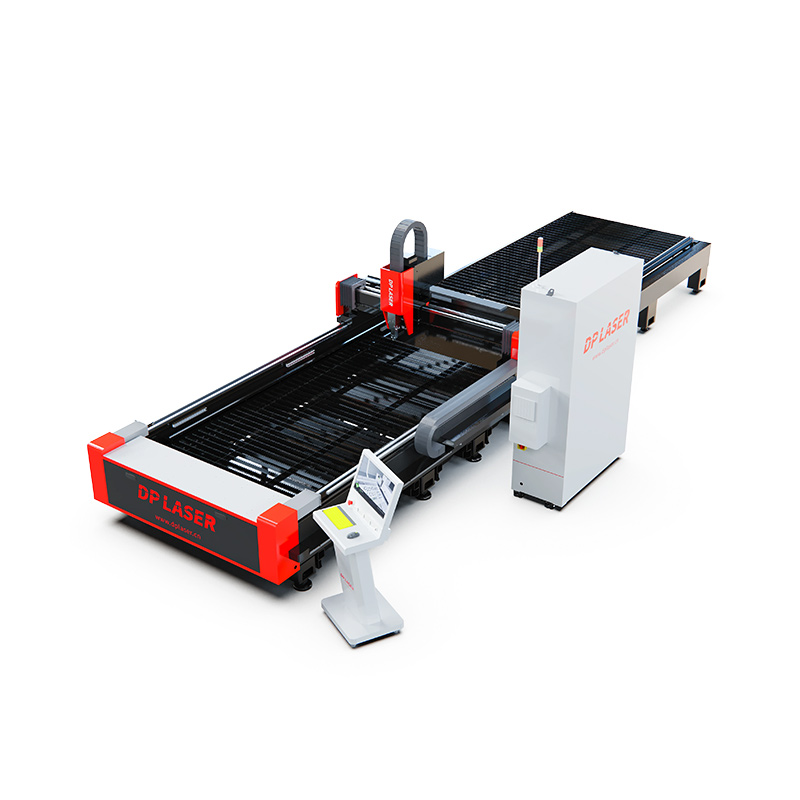
Hardware capabilities mean very little without competent operators. Moving from traditional cutting tools to high-speed fiber requires serious adjustment. Older CO2 lasers operate much slower and use different gas delivery methods. This transition requires a complete shift in operator logic.
Traditional machine operators often rely on sight and sound to monitor cuts. Fiber lasers move far too rapidly for manual intervention. Operators must learn to trust the machine parameters. On-site, hands-on training proves absolutely critical here. It minimizes initial scrap rates significantly. It also prevents costly accidental cutting head crashes.
A dedicated laser cutting equipment supplier ensures seamless software integration. They connect the machine directly to your existing ERP systems. They also configure your CAD/CAM nesting software perfectly. This focus maximizes material yield optimization. It establishes vital anti-collision programming protocols. Modern software utilizes advanced techniques like common-line cutting and micro-jointing. These features drastically reduce material waste and cycle times.
Safety training remains a strict legal and ethical requirement. Training sessions must cover complex interlock systems thoroughly. You must ensure strict Class 1 enclosure compliance following industry standards like IEC 60825-1. Operators must learn safe material handling practices. High-speed automated pallets move rapidly. They pose significant pinch-point hazards if operators ignore safety protocols.
Best Practice: Select two dedicated operators for primary training. Rotate them through both software programming and machine operation roles.
Common Mistake: Treating software training as an afterthought. Poor nesting practices negate the speed advantages of a new fiber laser.
Every piece of industrial equipment goes down eventually. When this happens, remote diagnostics serve as your immediate first step. You must evaluate the remote access capabilities of your vendor carefully before purchasing.
Modern machines connect securely to vendor support centers. Technicians troubleshoot software issues quickly from afar. They can often clear sensor faults or tweak cutting parameters without requiring a costly site visit. This remote capability restores production in minutes rather than days.
Assess their local spare parts inventory rigorously. Find out exactly where they stock critical components. You need quick access to cutting heads, servo motors, and fiber cables. Relying on overseas shipments introduces unacceptable operational risk. Minor part failures should never halt your production lines for weeks.
Define the guaranteed response time for on-site technician dispatch. Understand their regional Field Service Engineer coverage density. Compare this density directly against your facility location. A vendor might boast fifty technicians nationwide, but if none live within your state, response times will suffer.
| Support Feature | Standard SLA Expectations | Premium SLA Expectations |
|---|---|---|
| Remote Diagnostics | Response within 4 to 8 hours | Immediate or within 1 hour |
| On-Site Dispatch | 48 to 72 hours based on availability | Guaranteed within 24 hours |
| Preventative Maintenance | Once annually (Basic Inspection) | Bi-annually (Full Calibration) |
| Spare Parts Shipping | Standard ground shipping included | Overnight air shipping included |
A true equipment partner supports your growth over the entire lifespan of the machine. They do not disappear once the initial invoice clears. Long-term profitability requires proactive maintenance and strategic scaling.
Regular preventative maintenance prevents catastrophic hardware failures. Routine optical alignments keep your cut quality pristine. Scheduled chiller flushes remove damaging scale buildup from cooling lines. Regular axis calibration ensures dimensional accuracy over years of heavy use. You should evaluate their structured PM tiers carefully. Ask for a detailed checklist of what their technicians inspect during routine visits.
Production needs inevitably grow over time. Your equipment should scale alongside your expanding business. Look for modular upgrade options from your supplier. Automated sheet loaders dramatically increase daily throughput by eliminating manual material handling. Part-sorting systems reduce manual labor requirements downstream. Tower storage integration enables true lights-out manufacturing over weekends.
Seek out partners prioritizing continuous operational improvement. They should provide periodic software updates to enhance machine efficiency. They offer parameter library enhancements whenever you introduce new alloys to your shop floor. They conduct advanced application training for your seasoned operators. This ongoing education pushes your team to master complex cutting techniques.
Best Practice: Schedule your first major preventative maintenance visit six months after installation. This catches early alignment shifts caused by machine settling.
Common Mistake: Ignoring minor sensor warnings. Operators often bypass warnings to maintain production, leading to severe component damage.
Selecting an industrial partner remains a critical exercise in risk management. The right partner consistently minimizes implementation friction from day one. They accelerate operator competency rapidly through structured training programs. They provide the ultimate safety net required to maintain high throughput in demanding environments. Viewing this purchase merely as a hardware transaction guarantees future operational headaches.
Take concrete actions before issuing a Request for Proposal (RFP). Request a detailed SLA draft immediately to review response time guarantees. Ask for specific references from facilities matching your exact production profile. Demand a validated time-study using your most complex parts. Review all utility and foundation requirements before placing any deposits. These proactive steps secure a resilient and profitable manufacturing future.
A: Industry standard for initial remote diagnostics is 2 to 4 hours. For critical down-machine situations requiring an on-site engineer, 24 to 48 hours is standard. This timeframe assumes they have a localized service network in your region.
A: A hybrid approach works best. Basic software and parameter training can occur off-site or virtually. However, hands-on operational training must occur on your specific machine, within your facility, cutting your actual parts.
A: Warranties are often tiered. The fiber laser source typically carries a 2-to-5-year warranty from the source manufacturer. The machine frame, motors, and cutting head may have varying 1-to-2-year terms. Always require an itemized warranty breakdown.


