
Views: 0 Author: Site Editor Publish Time: 2026-07-17 Origin: Site


High-tolerance manufacturing demands leave zero room for thermal distortion or edge deviation. Cutting accuracy sets a strict baseline for profitability in today’s competitive industrial sectors. Legacy methods and older CO2 systems frequently struggle in modern applications. They fail when processing highly reflective metals and often leave rough burrs requiring secondary finishing. Modern fiber technology fundamentally shifts these baseline precision standards. You can now achieve unparalleled edge quality and tight dimensional accuracy across various sheet metals. This article breaks down the mechanical and technological mechanisms driving this precision. We explore how a cnc fiber laser cutting machine achieves superior accuracy on the shop floor. You will also discover an objective framework for evaluating equipment specifications before procurement. Understanding these critical variables ensures your manufacturing process remains highly competitive and consistently reliable.
Inaccurate cutting directly harms your bottom line. We call this the Cost of Poor Quality. When parts deviate from strict tolerances, you waste valuable time and expensive raw materials. Shop floors lose hundreds of hours annually trying to rework bad cuts. Poor precision forces assembly teams to force-fit mismatched components. This bottleneck delays delivery schedules and damages client relationships. Fixing an inaccurate cut after the fact costs exponentially more than doing it right the first time.
High precision eliminates the need for downstream deburring, edge-milling, or grinding. Parts drop from the cutting bed ready for immediate bending or welding. This direct-to-assembly workflow accelerates your overall time-to-market. You no longer need to staff secondary finishing stations or maintain extra grinding equipment. Removing these manual steps drastically reduces labor costs and eliminates human error during finishing.
Superior kerf control directly impacts your material utilization. A highly precise beam creates an incredibly narrow cut path. This allows you to use aggressive nesting software effectively. You can pack parts millimeters apart on a single sheet.
You must define ROI beyond simple cutting speed. Fast but sloppy cuts hold zero value. True success relies on the percentage of parts passing strict QA tolerances on the first run. A slightly slower machine delivering a 99% first-pass yield always outpaces a faster machine generating a 10% reject rate. Profitability hinges entirely on predictable, flawless repetition.
Older CO2 lasers rely on fragile mirror alignments to bounce the beam toward the cutting head. Slight vibrations disrupt these mirrors and destroy accuracy. Fiber delivery systems solve this issue completely. They contrast this old method through solid-state fiber optic delivery. The fiber cable maintains beam integrity directly from the diode to the cutting head. The beam never deviates, guaranteeing a perfectly round and consistent cutting profile.
The core advantage lies in the physics of the 1.064-micrometer wavelength. This specific wavelength creates an intensely microscopic focal spot. A smaller spot size results in exponentially higher energy density. The beam penetrates metal faster while leaving a much narrower kerf width. The energy remains hyper-focused rather than scattering across the surface. This focus prevents wide, jagged cuts and ensures smooth, mirror-like edge quality.
Heat is the enemy of precision. Faster cutting speeds and concentrated energy mean less heat transfers to the surrounding metal. You successfully minimize the Heat-Affected Zone. Keeping the surrounding metal cool prevents thermal distortion and material warping. You also eliminate the risk of micro-cracking in thin materials. Intricate geometries remain perfectly flat and dimensionally stable after cutting.
No sheet metal is perfectly flat. Variations happen constantly. Advanced capacitive sensors solve this by driving active height control. The cutting head dynamically adjusts to microscopic variances in sheet metal flatness in real-time. It moves up and down automatically. The system maintains a perfect focal point across the entire metal surface. This constant adjustment prevents the beam from widening or losing penetration power.
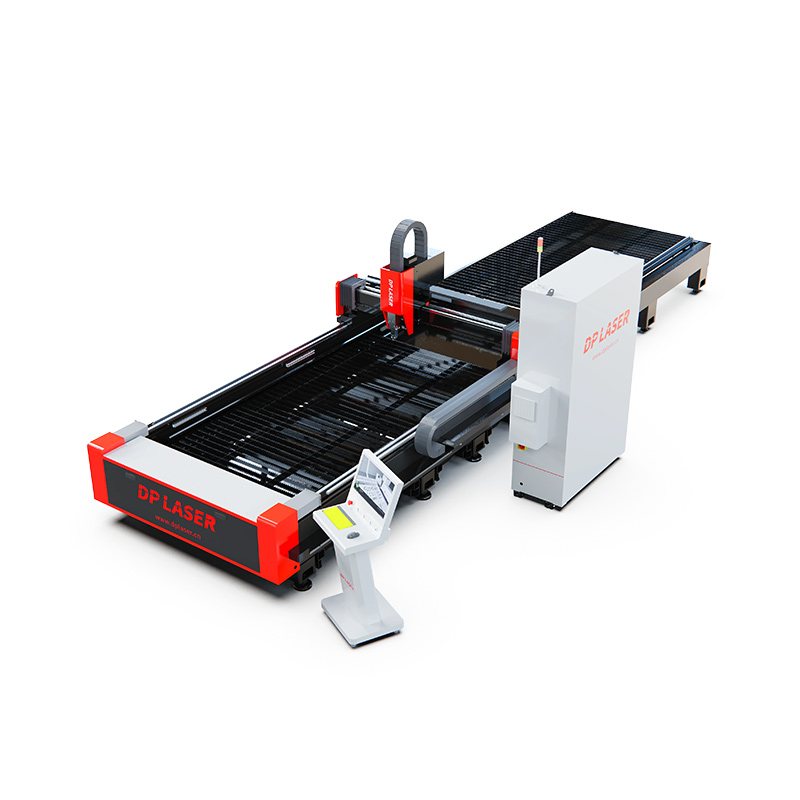
When assessing high-end cnc laser cutting equipment, you must separate two crucial metrics. Positioning accuracy defines how closely the laser head reaches a specific programmed coordinate. Repeatability defines how consistently it hits that exact same coordinate across thousands of cycles. Industry standards dictate strict numbers. A truly high-end machine should boast a positioning accuracy of ±0.03mm. Furthermore, it must offer a repeatability of ±0.02mm for long production runs.
The machine bed heavily dictates long-term accuracy. Heavy acceleration creates massive kinetic energy. A weak frame vibrates and transfers this energy to the cutting head. You must assess the underlying chassis construction carefully.
| Feature | Cast-Iron Beds | Welded Steel Beds |
|---|---|---|
| Vibration Dampening | Excellent absorption of high-speed kinetic energy. | Moderate absorption; vibrations can travel to the gantry. |
| Thermal Stability | Resists thermal expansion during long, hot shifts. | Prone to subtle thermal warping over time. |
| Long-Term Deformation | Maintains geometric integrity for decades. | Internal welding stresses can release, altering alignment. |
| Ideal Application | High-tolerance aerospace and medical device cutting. | General fabrication and low-tolerance structural steel. |
You must evaluate the mechanical drivers powering the machine axis. The standard industry approach utilizes rack and pinion systems. These work well but inherently contain microscopic mechanical backlash. For extreme high-tolerance requirements, linear motor drives win. Linear motors provide friction-free precision. They eliminate mechanical backlash entirely, translating directly into flawless micro-movements on complex parts.
Hardware cannot function without brilliant software. Advanced CNC controllers calculate millions of micro-movements per second. They execute precise corner ramping to prevent overheating on sharp angles. The software automatically applies kerf compensation based on material thickness. The controller handles these complex calculations without causing any mechanical stuttering. Smooth interpolation ensures the laser head never hesitates during intricate vector paths.
Even perfect equipment struggles against terrible raw materials. Poor-quality sheet metal introduces massive variables. Highly stressed metal will warp violently upon cutting, regardless of machine quality. As the laser slices through, internal stresses release. Unevenly coated materials also cause erratic beam absorption. You must source high-quality, stress-relieved metals to guarantee consistent precision.
Environmental control remains non-negotiable. Machines expand and contract based on ambient temperature. You need robust industrial chillers regulating the laser source and cutting head. Additionally, you must manage your shop floor climate. A machine operating at 95°F will absolutely not hold the same tight tolerances as one running at a stable 72°F. Temperature swings ruin repeatability.
Microscopic contamination destroys beam geometry instantly. A single speck of dust on a protective lens scatters the laser. You lose focus and edge squareness immediately.
Technology cannot replace human expertise entirely. You need highly skilled operators managing the machine parameters. Operators must correctly set focal lengths for different material grades. They must adjust gas pressures precisely to blow away molten metal efficiently. They also dial in exact speed parameters based on specific alloys. A poorly trained operator will ruin a cut just as quickly as a broken machine component.
Never base your procurement decision on a manufacturer's pre-cut showroom samples. Those samples run under perfectly optimized, controlled conditions. You must demand a custom test cut. Use your facility's specific CAD files. Supply the vendor your actual material inventory from your shop floor. This forces the machine to prove its worth against your daily reality.
Do not trust the vendor's basic calipers. Once you receive the custom demo parts, verify them rigorously. Utilize coordinate measuring machines (CMM) or optical comparators. You must measure the precise tolerances of these demo parts against the stated machine specs in the brochure. Look for edge squareness, hole roundness, and exact dimensional adherence.
Machines inevitably drift over years of heavy operation. Evaluate the vendor's service level agreement closely. You need explicit guarantees for recalibration services. Check the specific laser source warranties. Ensure immediate local availability of replacement optics and drive components. A highly accurate machine becomes useless if you cannot get recalibration support during a critical production run.
A: Laser cutting operates faster and remains highly precise for 2D sheet metal profiles. It features zero tool wear, guaranteeing identical cuts over thousands of cycles. However, CNC machining is strictly required for complex 3D depth, intricate threading, and highly specific blind-hole tolerances. Lasers excel at rapid profile cutting, while mills excel at volumetric material removal.
A: The standard kerf width for a fiber laser typically ranges from 0.1mm to 0.3mm. This width varies significantly based on the specific material thickness, the lens focal length, and the chosen nozzle size. Thinner materials cut with smaller nozzles produce the narrowest possible kerf.
A: Fiber lasers require minimal mechanical recalibration compared to older CO2 systems because they lack moving mirrors. However, to maintain peak accuracy, operators must perform daily and weekly checks. You must inspect nozzles, clean protective lenses, and verify beam alignment regularly. Annual professional calibration checks are recommended.
A: Yes, pushing beyond optimal parameters sacrifices precision. While fiber lasers are incredibly fast, excessive speed limits energy absorption and gas flow efficiency. Cutting too fast for a specific thickness results in heavy edge striations, dross accumulation, and a severe loss of edge squareness.


