
Views: 0 Author: Site Editor Publish Time: 2026-07-12 Origin: Site


Fabricators face intense compounding pressures today. Shrinking lead times, tighter tolerances, and rising energy costs squeeze profit margins relentlessly. Legacy cutting methods often stand as the primary production bottleneck. Relying on outdated equipment restricts your ability to scale operations efficiently. Upgrading to solid-state laser technology represents a significant CapEx decision. It requires shifting your facility’s fundamental focus. You move away from mechanical force and manual handling. Instead, you adopt optical precision and software-driven automation. This shift fundamentally alters how parts flow through your shop. This guide breaks down exactly how replacing legacy systems translates to measurable operational and financial improvements. We will explore the specific mechanisms driving faster production cycles. You will also learn the practical realities of implementing this technology seamlessly onto your active production floor. It ensures you maximize your return on investment quickly.
Older technologies carry steep hidden costs. CO2 lasers and mechanical turret punches demand constant attention. They require frequent consumable replacements. Operators must routinely swap out expensive resonator gases like helium and high-purity nitrogen. You must also perform highly specialized maintenance regularly. Realigning delicate mirrors consumes hours of productive shift time. Furthermore, legacy systems demand extensive electrical power draws during daily operations. Massive turbo blowers and vacuum pumps run continuously. These expenses silently drain your profitability over time. They inflate your overhead before you even cut a single part.
Secondary operations create massive workflow bottlenecks. Mechanical shearing often leaves sharp micro-burrs along material edges. Plasma cutting frequently generates significant dross on the underside of plates. Older cutting methods also produce large heat-affected zones (HAZ) around the cut profile. This extreme heat hardens the metal edge unpredictably. Operators must then perform intense manual grinding. They must clean these edges thoroughly before welding or powder coating can begin. This extra manual labor inflates your cost per part drastically. It also delays downstream assembly steps.
Reflective materials pose another severe limitation for traditional fabricators. Many shops routinely turn away high-margin copper or brass work. Legacy CO2 beams simply cannot handle these metals safely. The 10.6 µm wavelength reflects strongly off copper surfaces like a mirror. The beam often bounces off the material surface. It then travels backward up the delivery path. This back-reflection severely damages internal machine optics and sensors. Rejecting these lucrative jobs limits your overall revenue potential. It forces you to concede market share to better-equipped competitors.
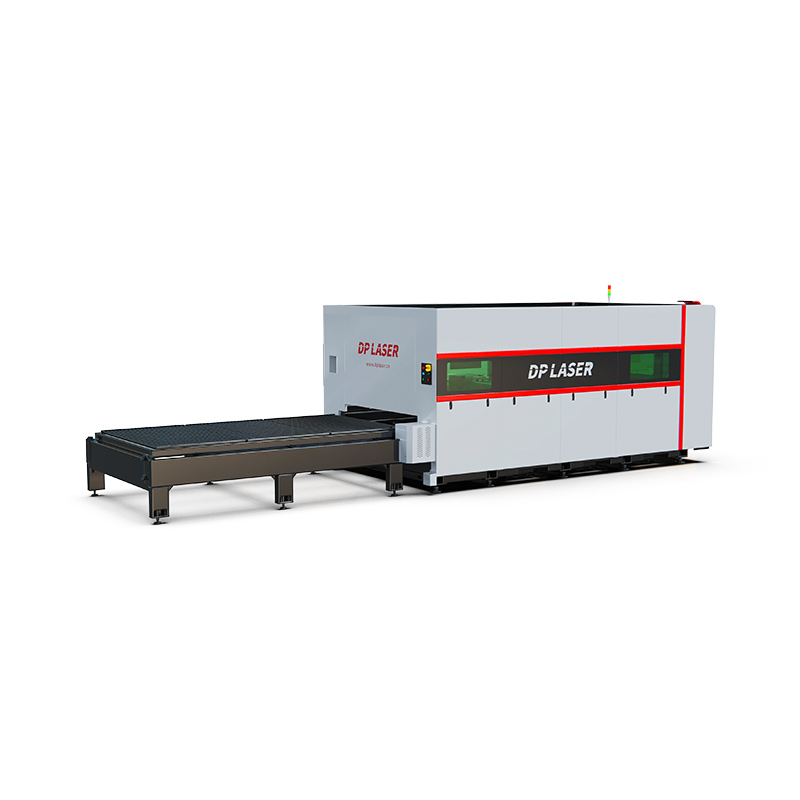
A modern metal fiber laser cutting machine utilizes a highly concentrated 1µm wavelength. Solid metal absorbs this specific wavelength instantly. The machine transfers thermal energy into the sheet with incredible efficiency. You will see massive speed improvements in materials under 1/4" (6mm) thick. Production rates often skyrocket by 300% in these thin-gauge applications. However, these speed advantages diminish steadily as material thickness exceeds 1". At greater thicknesses, cut quality relies more on assist gas pressure. Raw beam power becomes slightly less critical for clearing molten material. Therefore, you must align your expectations with your primary material gauges.
Solid-state systems achieve incredibly narrow kerf widths. The cut gap often measures just 0.1mm across. This microscopic precision allows for highly complex, high-density part nesting. You can pack nested parts tightly together. This strategy maximizes material usage and reduces raw scrap. The rapid cutting process also drastically reduces the heat-affected zone. It minimizes material warping during complex geometric cuts. You directly eliminate the need for post-cut deburring. Parts exit the machine completely flat and clean. They move immediately to the press brake or welding station.
Best Practice: Utilize common-line cutting in your nesting software. This technique shares a single cut line between two parts. It reduces overall laser travel time and saves significant material.
Fabricators are rapidly shifting toward high-pressure nitrogen cutting. Nitrogen displaces oxygen inside the active cut zone. This creates clean, oxide-free edges on your finished parts. Oxide-free edges easily accept powder coating immediately. You bypass expensive chemical stripping or mechanical sanding completely. Conversely, oxygen cutting uses an exothermic reaction. It requires less pressure but leaves a dark oxide layer. We highly recommend auditing your gas consumption early. High-pressure nitrogen delivers perfect edges but consumes much larger gas volumes daily.
Common Mistake: Relying on standard liquid cylinders for high-pressure nitrogen cutting. Cylinders often freeze up under high flow rates. This drops the cutting pressure and ruins the part edge.
Upgrading your equipment requires clear financial justification. Solid-state lasers boast exceptional wall-plug efficiency. They operate at roughly 30% to 40% overall electrical efficiency. Older CO2 lasers typically hover around a mere 10% efficiency rate. This massive leap translates directly to substantial monthly utility savings. You draw significantly less power from the grid to generate the exact same wattage. Furthermore, this high efficiency generates far less waste heat. You can utilize much smaller water chillers. Smaller chillers further reduce your daily electrical footprint.
Solid-state technology completely removes moving parts from the light-generation process. You no longer need to rebuild expensive turbo blowers. You eliminate loud vacuum pumps entirely. The system uses a flexible fiber-optic cable to deliver the beam. There are no delicate beam path mirrors to align manually. Removing these legacy components eradicates dozens of potential failure points. Your maintenance staff can finally focus on proactive machine care. They stop fighting constant emergency breakdowns. Your uptime percentage increases dramatically as a direct result.
You need a structured framework to measure the payback period accurately. Do not base your calculations solely on raw cutting speed. Raw speed often paints an incomplete picture.
Following these steps reveals the true financial impact. A modern machine transforms your entire cost structure. It rapidly pays for itself through aggregate operational savings.
Selecting the perfect machine requires rigorous internal evaluation. Avoid the common trap of assuming more power is always better. Frame your power selection around your primary material thickness. Look closely at the materials you process 80% of the time. Buying massive wattage for thin gauge work wastes precious capital. You must align the machine's capabilities directly with your core product lines.
| Laser Power (kW) | Primary Material Focus | Optimal Application Scenario | Key Operational Benefit |
|---|---|---|---|
| 3kW - 6kW | Thin to Medium Gauge (Up to 1/4") | HVAC, Enclosures, Light Brackets | High-speed processing on thin sheets with exceptionally low power draw. |
| 8kW - 12kW | Medium to Thick Plate (1/2" to 1") | Structural Components, Heavy Machinery | Rapid piercing times and excellent edge quality on thicker plates. |
| 15kW+ | Extra Thick Plate (1" and above) | Shipbuilding, Heavy Agriculture | Replaces plasma cutting entirely; offers supreme edge quality on heavy gauge. |
Assess positioning speeds and acceleration limits carefully. Look specifically at the machine's G-force ratings. High wattage is completely wasted if the chassis cannot keep up physically. The machine's axis movements must match the laser's rapid cutting speed. Complex geometries require continuous, aggressive direction changes. Rack and pinion systems offer excellent durability for standard work. However, linear magnetic drives often provide the intense acceleration needed today. They maximize the potential of high-power laser sources on intricate part profiles.
Best Practice: Ask the OEM for the machine's simultaneous positioning speed. This metric combines X and Y axis speeds. It represents true real-world movement capability much better than single-axis numbers.
Evaluate the OEM software package rigorously before purchasing a sheet metal laser cutter. Look for intelligent automatic nesting features. Ensure the system includes robust collision avoidance protocols. If a cut part tips upward, the cutting head must sense it immediately. It should retract instantly to prevent catastrophic damage. Fly-cutting capabilities drastically reduce pierce times on perforated grids. You must also assess the physical scalability of the machine chassis. You may want to add automated pallet changers later. Tower storage systems can enable full lights-out manufacturing eventually. Ensure the baseline machine supports these future hardware additions natively.
Buying the machine represents only the first step. Successful integration requires thorough facility preparation beforehand. These advanced electronic systems demand stable, clean power drops. Voltage fluctuations can severely damage delicate internal components. You may need to install dedicated isolation transformers. You must also provide climate-controlled environments for the water chiller and laser source. Drastic temperature swings cause internal condensation. Moisture destroys expensive optical lenses instantly.
Bulk assist gas logistics represent another major operational shift. High-volume continuous cutting burns through standard gas rapidly. You must transition your facility to bulk liquid nitrogen tanks. Some high-volume shops invest heavily in on-site nitrogen generation systems. This ensures a constant, uninterrupted gas feed. It keeps your high-speed cutting cell running smoothly.
Do not underestimate the looming skills gap on your floor. Your team is moving from traditional manual machine operation. They are transitioning to managing a high-speed, CNC-driven automated cell. They must learn advanced programming and automation management quickly. Prioritize robust, hands-on training programs during the installation phase. Your operators must understand alarm codes, lens cleaning procedures, and focal adjustments.
Highlight the critical importance of OEM service level agreements (SLAs). You want guaranteed response times for unexpected hardware downtime. Remote diagnostics allow certified technicians to troubleshoot software issues instantly from afar. Local technician availability remains crucial for severe hardware repairs. Ensure your vendor provides comprehensive local support infrastructure.
Before shortlisting your final machine choices, take deliberate action. Request a comprehensive time-study from potential vendors. Send them your specific nested part files directly. Ask them to perform a live test-cut of these exact parts. This process verifies real-world cycle times accurately. It proves edge quality definitively before you sign any contracts. It guarantees the selected equipment performs exactly as promised on your actual production materials.
A: It depends heavily on the machine's wattage rating. A standard 4kW machine easily handles up to 3/4" mild steel. High-power 12kW systems can reliably cut 1.5" to 2" steel. However, be aware of diminishing returns. Pierce times and assist gas consumption increase significantly at these maximum thicknesses. Always match your wattage to the material you process daily.
A: For flat profiling and hole cutting, yes. A laser handles these tasks much faster. However, if parts require 3D forming, tapping, louvers, or extrusions, a punch press remains essential. Many modern fabricators utilize both technologies. Some invest in hybrid machines to cover all operational requirements efficiently.
A: Routine tasks are minimal compared to legacy systems. Your focus shifts primarily to changing protective cover windows and replacing copper nozzles daily. You must also perform annual chiller fluid and filter maintenance. The solid-state laser source itself requires virtually zero internal maintenance over its entire operational lifespan.


