
Views: 0 Author: Site Editor Publish Time: 2026-07-23 Origin: Site


Shopping for industrial equipment often brings immense frustration. You ask for a simple price, and vendors constantly reply, "It depends." Industry pricing opacity makes budgeting incredibly difficult for fabricators and business owners alike. Buying this equipment is not just another capital expenditure. You are actively solving a major production bottleneck. We want to cut through the noise and give you transparent baseline prices. This article maps out the comprehensive financial picture you must consider before signing a purchase order. You will learn to build a skeptical, ROI-driven framework for evaluating vendors. We break down the real numbers, from upfront hardware expenses to hidden installation fees. You will finally understand exactly what drives a fiber laser cutting machine price.
We must separate these machines into distinct production tiers. Buyers often compare apples to oranges during the quoting process. Understanding specific categories helps you align equipment capabilities alongside your operational budget.
| Production Tier | Power Range | Max Mild Steel Thickness | Expected Price Range |
|---|---|---|---|
| Entry-Level / Light Production | 1kW – 3kW | Up to 1/4" | $20,000 – $50,000 |
| Mid-Range / Commercial Fabrication | 4kW – 8kW | Up to 3/4" | $60,000 – $150,000 |
| High-Power / Industrial Automation | 10kW – 30kW+ | 1" and above | $200,000 – $500,000+ |
Light-duty systems usually demand an investment between $20,000 and $50,000. These machines offer excellent value for highly specific applications. They excel at processing thin sheet metal efficiently. You can comfortably cut up to 1/4" mild steel. However, you will experience slower cutting speeds compared to higher-wattage alternatives.
Target buyers include prototyping shops and low-volume fabrication facilities. Many businesses transition from traditional plasma or waterjet systems using this tier. It provides an affordable entry point into precision metalworking. You gain exceptional edge quality without needing massive upfront capital.
Commercial-grade fabrication machines generally cost between $60,000 and $150,000. This tier represents the industry standard for most mid-sized manufacturers. You gain the ability to cut thicker materials rapidly. These machines handle up to 3/4" mild steel and 1/2" stainless steel easily. They maintain high production speeds consistently throughout varied shifts.
Many systems in this category include basic shuttle tables. Dual pallet changers allow operators to load raw material while the machine simultaneously cuts another sheet. Target buyers are typical job shops requiring fast turnaround times. You need reliable, daily operation to hit strict production quotas.
Industrial automation systems command prices from $200,000 to well over $500,000. You are paying for extreme cutting speeds and thick plate processing capabilities. These massive systems pierce thick metals in fractions of a second. They often feature fully automated load and unload systems.
Many installations include integrated tower storage for raw materials. High-volume contract manufacturers operating on 24/7 schedules buy these machines primarily. They require maximum throughput to remain competitive in crowded markets. The immense power output directly translates into massive daily part yields.
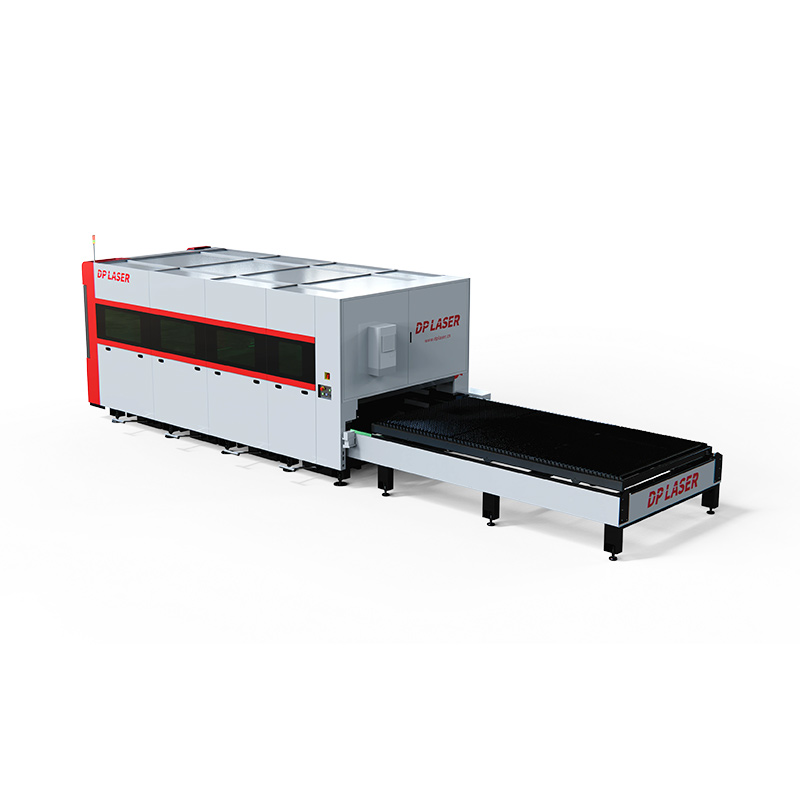
Several distinct hardware choices heavily influence the initial quote. You must evaluate these internal components carefully before finalizing any purchase decision.
The laser source acts as the engine of your equipment. Premium sources from companies like IPG Photonics dominate the market. They carry a significantly higher initial price tag. However, they offer proven beam stability and extensive global support networks. Budget-friendly alternatives exist and reduce initial costs. You must view this as a reliability versus upfront capital decision. A cheaper source might fail earlier, wiping out initial savings.
Manufacturers build machine frames differently based on price points. Some use heavy cast iron beds. Others utilize lighter welded steel frames. Cast iron provides superior vibration dampening during rapid movements. Heavy, thermally stable frames prevent micro-vibrations during extreme acceleration. This stability ensures precise cut accuracy over a 10-year lifespan. Welded steel beds cost less to manufacture. They suit lighter production schedules perfectly.
Cutting heads dictate piercing times and overall consumable longevity. Auto-focus heads adjust focal lengths dynamically during operation. They reduce manual operator intervention and speed up piercing cycles considerably. Manual focus heads cost less but require more operator skill. Proprietary heads from brands like Precitec deliver superior internal optics and advanced cooling. Generic heads reduce the baseline initial invoice substantially but may degrade faster.
The physical footprint of the bed changes the price directly. A standard 4x8 flatbed costs less than a 5x10 or 6x12 model. Larger beds require heavier frames and longer motion systems. Add-ons drastically alter the final equipment invoice. Adding a rotary tube cutter transforms the equipment into a dual-purpose machine. This flexibility requires additional servo motors and complex software logic. Adding these features significantly increases the overall laser cutting machine cost.
Many buyers only secure financing for the machine itself. This mistake causes severe cash flow problems later. You must budget for several crucial implementation and operation phases.
Direct overseas imports look incredibly appealing on paper. You can easily save tens of thousands of dollars initially. However, you must evaluate the long-term risk profile objectively.
Imagine saving $40,000 on an unbranded import system. Six months later, a proprietary servo motor fails. You must translate your initial savings into the cost of 14 days of machine downtime. Waiting for an overseas part stops your entire production line. Premium brands stock critical parts locally. They minimize downtime and keep your business running smoothly.
Software ecosystems vary wildly across brands. Many imports rely on standard CypCut controllers. These are functional and widely understood across the industry. However, premium European or US controllers offer advanced nested software efficiency. Better nesting software saves raw material continuously. It optimizes toolpaths to reduce idle movement. Over several years, material savings easily outpace the initial software premium.
Paying a premium for established brands acts as a vital risk-mitigation strategy. You secure local technician dispatch when things go wrong. Comprehensive warranties protect your investment against catastrophic hardware failures. Premium vendors provide proactive maintenance training for your operators. They teach your team how to clean optics safely. Proper training prevents expensive accidental damage.
You must move away from comparing static sticker prices. Successful fabricators utilize dynamic financial models instead. Understanding your true return on investment changes how you view equipment pricing.
Calculate your return on investment based on the actual cost-per-part. Factor in the machine speed and exact gas consumption. Measure the labor reduction achieved by faster cutting cycles. A $150,000 machine cutting twice as fast as a $50,000 machine often yields a higher ROI. It reduces hourly labor burdens and increases daily billing capacity.
Many shops buy more machine than they actually need. We strongly warn against buying a 12kW machine for thin gauge work. A well-equipped 4kW machine maximizes profitability on thinner materials. High-wattage machines consume more electricity and burn through expensive optics faster. Match the wattage directly to your actual daily material processing needs.
Never buy a machine based on a glossy brochure. Instruct buyers to demand live, time-studied sample cuts. You must provide your own CAD files and your own material grades. Ask the vendor to record the entire process. This step verifies piercing times, edge quality, and gas usage objectively. It exposes exaggerated marketing claims before you sign a binding contract.
A: Hourly operating expenses typically range from $5 to $20+. This fluctuation depends heavily on your laser wattage and chosen assist gas. Nitrogen cutting costs more due to high gas volume requirements. You must also calculate electricity rates, consumable wear, and routine maintenance elements into this hourly figure.
A: Yes, financing is standard practice. Many buyers utilize operating leases or capital leases to preserve cash flow. US buyers frequently leverage Section 179 tax deductions. This allows you to deduct the full purchase price of qualifying equipment during the current tax year, improving early ROI.
A: A basic 1000W model typically runs between $15,000 and $30,000. While highly affordable, it possesses strict limitations for industrial metalworking. It struggles with metals thicker than 1/8 inch. It serves best in prototyping environments or light-duty signage fabrication rather than heavy commercial manufacturing.
A: CO2 lasers often feature lower upfront purchase prices. However, fiber lasers drastically outperform CO2 in electrical efficiency and cutting speeds. Fiber systems utilize a zero-maintenance solid-state beam path, eliminating costly mirror alignments and internal gas replacements. Over a five-year span, fiber lasers win decisively on long-term operating costs.


