
Views: 0 Author: Site Editor Publish Time: 2026-07-10 Origin: Site


Metal workshop owners face a constant tug-of-war. You need faster production cycles to stay competitive. Yet, you also deal with limited floor space and strict budgets. Bringing fabrication in-house controls lead times beautifully. However, traditional flatbed lasers consume massive square footage and demand steep upfront investments. You might wonder if a smaller system can genuinely handle industrial-grade work without choking your cash flow.
A small fiber laser cutting machine—typically fully enclosed, delivering 1kW to 3kW of power with a 1300mm x 900mm working area—might be the perfect solution. This article provides an objective framework for evaluating these compact units. We will explore their true capabilities, hidden facility requirements, and performance limits. You will learn exactly how to decide if this equipment matches your daily production demands.
Outsourcing parts initially saves capital. Eventually, it drains your profits. The tipping point occurs when third-party vendors dictate your schedule. If delayed shipments cost you clients, you need a change. You must weigh the monthly cost of external cutting against a new equipment loan. A compact metal laser cutter shifts the balance quickly. It lets you take back control of your deadlines.
Floor space economics play a massive role in this decision. Standard industrial flatbed lasers measure 4x8 or 5x10 feet. They dominate your shop floor. They often require you to reorganize your entire workflow. Conversely, a compact enclosure often needs less than 50 square feet. You can slot it right into a spare corner. You preserve your valuable assembly areas while upgrading your capabilities.
These machines fit a very specific production profile. They excel in high-mix, low-volume (HMLV) environments. If your shop produces bespoke brackets, intricate jewelry, or custom instrument enclosures, this tool shines. You get instant iteration. You do not have to wait two weeks for a prototype. Your engineers can design a part, cut it, test it, and modify it within the same afternoon.
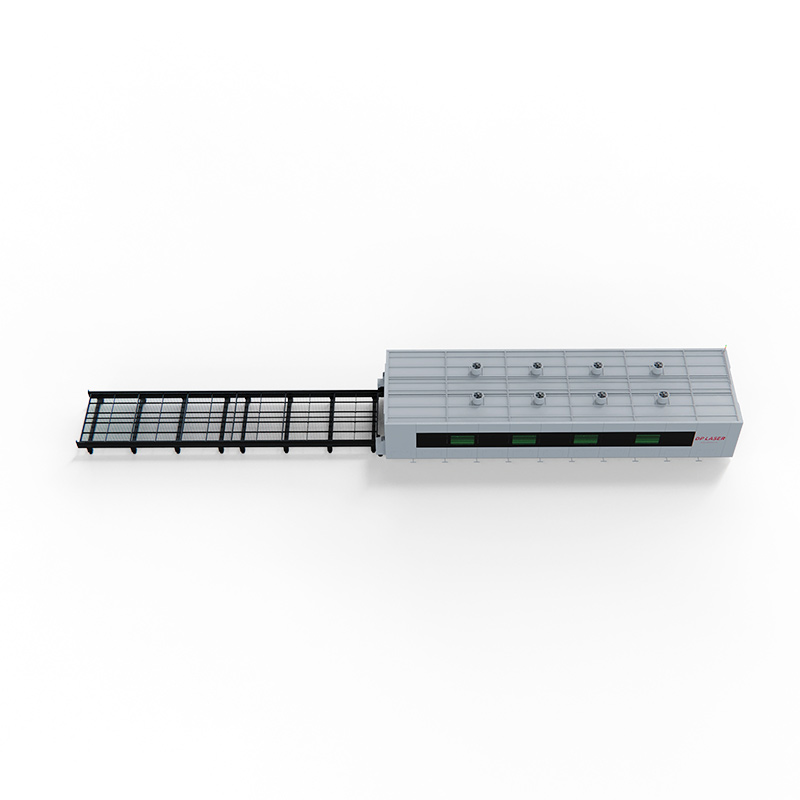
Small footprint does not mean weak performance. However, you must align your expectations with physics. The power source directly dictates your maximum material thickness. If you misunderstand this relationship, you will face daily bottlenecks.
If you choose a 1kW source, stick to thin sheets. It handles 3mm stainless steel perfectly. It cuts up to 6mm carbon steel reliably. If you step up to a 2kW or 3kW source, your range expands. You can tackle 6mm stainless and 12mm carbon steel. However, cutting at these maximum limits reduces your feed rates significantly. You cannot run production jobs at maximum capacity all day.
Cutting Capacity Reference Chart
| Power Output | Max Stainless Steel | Max Carbon Steel | Optimal Speed Zone |
|---|---|---|---|
| 1kW | 3mm | 6mm | 1mm - 2mm |
| 2kW | 5mm | 10mm | 2mm - 4mm |
| 3kW | 6mm | 12mm | 3mm - 6mm |
Reflective materials introduce real challenges. Aluminum, copper, and brass reflect the laser beam. This reflection can bounce back and destroy the laser source. You need specific protections built into the hardware. Cutting brass requires high power densities. If you process reflective metals daily, a low-wattage system will frustrate you.
Precision remains incredibly high across the board. You get clean edges on thin materials. Yet, as you approach the maximum rated thickness, problems arise. The machine slows down. Dross can build up on the bottom edge. You might spend extra time deburring these parts manually. Keep your daily production tasks in the optimal speed zone for the best results.
The laser source is the heart of your machine. Brands matter here. IPG represents the gold standard for reliability and support. A premium laser source degrades much slower. You maintain consistent cutting speeds year after year. Raycus and MAX offer excellent budget-friendly alternatives. Your choice impacts warranty terms and long-term lifespan.
Pay close attention to the cutting head. Manual focus heads require physical adjustment when you change materials. This slows down your operators. An auto-focus cutting head adjusts dynamically. It boosts operational efficiency. It prevents human error during rapid material changeovers.
Your machine must play nicely with your existing files. Industry-standard software like CypCut dominates this space. It handles CAD imports and part nesting seamlessly. Nesting efficiency saves raw material. The software calculates the tightest arrangement for your parts. This minimizes scrap metal. Over a year, this material saving adds directly to your bottom line.
If you transition from plasma or CNC routing, the learning curve matters. CypCut offers an intuitive interface. Operators adapt quickly. They can usually run basic jobs within a few hours of training.
Laser safety is non-negotiable. A Class 1 fully enclosed cabin protects your staff from stray radiation. It shields their eyes completely. It also keeps your shop floor clean by containing sparks and debris.
You must also verify CE or FDA certifications. These badges prove the machine meets strict safety standards. They keep you compliant with local regulations. Insurance companies often demand these certifications before they cover your new asset.
A compact machine still hides secondary space requirements. You cannot just clear a 50-square-foot box and call it a day. Auxiliary equipment demands real estate.
You need a water chiller to cool the laser source. You must install a dedicated fume extractor. You also need space for an air compressor or large gas cylinders. These peripherals easily double the actual footprint of the installation. Plan your shop layout accordingly.
Electrical requirements trip up many small shops. You cannot plug these machines into a standard wall outlet. They demand stable voltage. Most require true 3-phase power. Single-phase setups rarely support industrial lasers. You might need to pay an electrician for a facility upgrade before the machine arrives.
Finally, consider your assist gas logistics. You use Oxygen to cut carbon steel efficiently. You use Nitrogen to achieve clean, oxide-free edges on stainless steel and aluminum. Nitrogen gas flows at higher pressures than oxygen. It rapidly clears molten metal from the kerf. This high pressure means you consume nitrogen much faster. You must plan for cylinder storage. You also have to calculate the recurring delivery costs for these gases.
Financial planning goes beyond the sticker price. You must evaluate the complete investment picture. A cheap upfront price tag can hide expensive monthly bills.
Your Initial Capital Expenditure (CapEx) includes the base machine. You must also add freight shipping, rigging, and installation fees. Do not forget initial operator training costs. Proper training reduces costly mistakes during the first few months of operation.
Your Operating Expenses (OpEx) will recur monthly. You must buy consumables regularly. Protective lenses, copper nozzles, and ceramic rings degrade over time. Utility costs also add up. Calculate your local electricity rate per hour. Add your assist gas flow rates to this calculation.
To build your ROI model, track your current monthly outsourcing bills. Compare them against your estimated in-house cost-per-part. Include operator labor in your formula. Many high-mix shops achieve a full payback period in under two years. Once the machine pays for itself, every part you cut generates pure profit.
Never buy a machine based purely on a specification sheet. You must validate the vendor's claims. Sales brochures paint a perfect picture, but your shop environment is messy and demanding.
First, request custom sample cuts. Send the manufacturer your exact CAD files. Mail them the actual materials you use in your shop. When they send the parts back, inspect the edge quality closely. Check for dross. Measure the dimensional accuracy. This proof-of-concept ensures the machine handles your specific workflow.
Second, evaluate their service agreements. Local tech support is crucial. Ask about their spare parts inventory. Verify their warranty terms. Minimizing downtime keeps your shop profitable. A broken machine sitting in the corner costs you money every hour.
Use this final decision matrix to finalize your choice:
If you answer yes to these questions, you are ready to make your move.
A small fiber laser cutting machine is not a compromised tool. It is a highly specialized asset. It performs perfectly in precision-focused, space-constrained environments. You gain control over your lead times while saving valuable floor space.
You must match the exact wattage to your typical material thickness. Pushing a low-power laser beyond its limits only creates bottlenecks. Keep your expectations grounded in reality. Plan carefully for installation logistics, power upgrades, and assist gas usage.
Are you ready to bring your fabrication in-house? Take the next step today. Schedule a consultation with a trusted vendor. Request a custom sample cut using your own part files. Evaluate your facility carefully so you can install your new equipment without unpleasant surprises.
A: A typical 2kW machine handles up to 12mm carbon steel and 6mm stainless steel. However, edge quality and cutting speeds degrade significantly at this maximum limit. For daily production, you should stay comfortably below the maximum rated thickness.
A: No. Practically all industrial fiber lasers require stable 3-phase power. Single-phase power is extremely rare in this category. It is typically limited to very low-wattage, hobby-grade desktop units. Always consult an electrician to verify your facility's power supply before purchasing.
A: Yes. A fully enclosed machine traps dangerous fumes and toxic metal dust. You must connect it to a dedicated industrial fume extractor. This ensures you comply with OSHA and local safety regulations while protecting your workers' respiratory health.
A: It varies heavily by usage. Protective windows usually require weekly inspections and frequent replacements to prevent expensive lens damage. Cutting nozzles wear out based on your material type and assist gas pressure. Keep a steady inventory of both to avoid unnecessary downtime.


