
Views: 0 Author: Site Editor Publish Time: 2026-07-24 Origin: Site


Balancing a large capital expenditure against equipment reliability naturally generates buyer skepticism. You might fear buying a budget model only to discover you financed a continuous money pit. However, rapid advancements across the laser industry have dramatically lowered the entry barrier. High-quality in-house metal fabrication is now highly accessible to smaller job shops, custom fabricators, and growing side businesses. We created this guide to provide you a financially rigorous, hype-free framework. You will learn exactly how to determine if an entry-level machine securely aligns with your immediate business goals. We explore essential volume thresholds, feature trade-offs, and critical component evaluations. You will understand exactly what these machines can achieve and where they fall short. By the end, you can confidently decide whether bringing metal cutting production into your own facility makes real economic sense.
Relying heavily on external laser cutting services frustrates many growing businesses. You constantly face long lead times. You lose valuable profit margins on every single part. External vendors often demand high minimum order quantities. These vendor constraints routinely stall your internal production schedule. Bringing production into your own facility solves these core operational problems.
You need a clear cost-benefit analysis framework. First, calculate your true average monthly outsourcing bill. Consider a typical shop spending $3,500 monthly on external metal cutting. Compare this figure against the monthly financing cost of your own equipment. Add the estimated monthly operating expenses like electricity and assist gas. If your outsourcing bill exceeds these combined internal costs, you securely reach the financial break-even point.
In-house capabilities offer massive intangible benefits beyond pure math. You gain the distinct ability to rapidly prototype new designs. Engineers can test and tweak parts on the exact same day. You maintain strict quality control over every single cut edge. Your product time-to-market decreases dramatically. You no longer wait three weeks for a busy third-party shop.
Production volume strictly dictates your financial viability. Track your realistically required cutting hours per week. Most fabrication shops justify an entry-level machine at just 10 to 15 hours of weekly cutting. At this moderate volume, the machine entirely pays for its monthly overhead. Any additional cutting time generates direct bottom-line profit. You effectively stop paying retail premiums for basic fabrication services.
Before making a purchase, you must properly understand the current market category. An economic fiber laser cutting machine typically operates at considerably lower wattages. Expect power levels ranging between 1kW and 3kW. These machines usually feature manual material loading systems. They utilize standard bed sizes, frequently measuring 4x8 feet or 5x10 feet.
You get excellent precision on thin-to-medium gauge sheet metal. The operating costs remain remarkably low during daily production. These specific models maintain relatively small floor footprints. They fit easily into cramped shop spaces or large home garages.
However, you must accept certain operational trade-offs. You will experience noticeably slower piercing times on thick steel plates. You will entirely lack automated pallet changers. Operators must manually load and unload heavy metal sheets. These budget systems include basic standard software suites. They do not offer premium enterprise CAD/CAM integration. You must consciously adapt your workflow accordingly.
We highly recommend these machines for specific business models. Custom fabrication shops benefit immensely from the rapid flexibility. HVAC contractors easily process thin galvanized ductwork daily. Signage businesses can quickly cut intricate metal lettering. High-margin side-hustles generate excellent weekend returns. These environments match the machine's core capabilities perfectly.
Here is a clear capability mapping for budget laser models.
| Feature Category | Standard Expectation | Common Limitations |
|---|---|---|
| Laser Power | 1kW to 3kW Source | Struggles on plates thicker than 1/2 inch |
| Material Handling | Manual loading bed | No automated pallet changers |
| Software Integration | Standard basic CAM suite | Lacks advanced ERP nesting features |
| Floor Footprint | Compact, single-table design | Requires manual sheet lifting clearance |
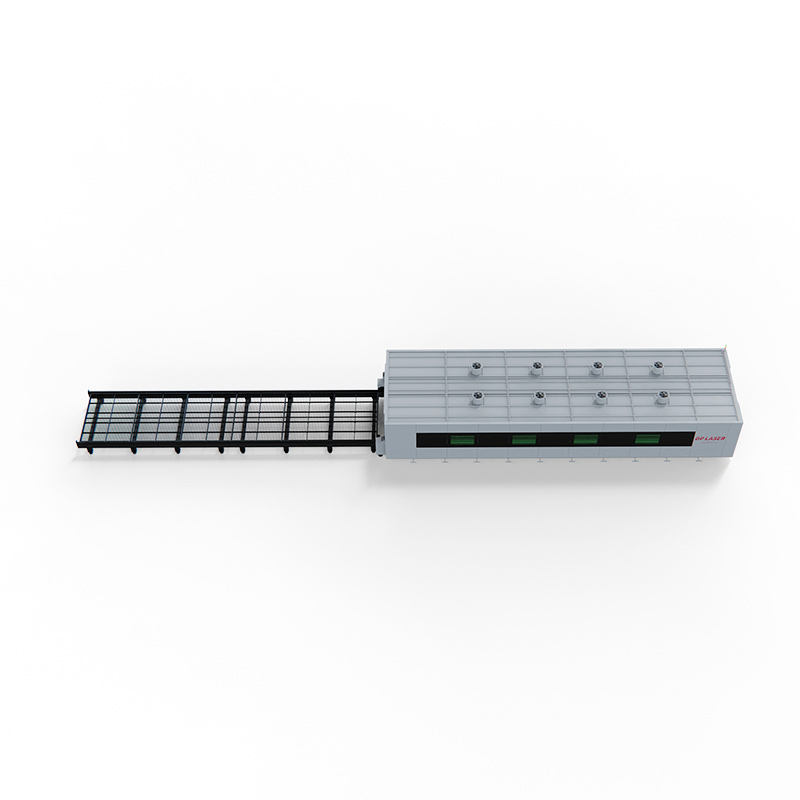
You must rigorously break down costs beyond the initial purchase price. This approach ensures highly realistic financial expectations. Capital expenses cover the machine itself. Operational expenses run continually throughout the machine lifecycle. You must budget carefully for both categories.
Facility readiness introduces several hidden upfront costs. Your shop needs adequate electrical infrastructure upgrades. Most industrial machines strictly require dedicated 3-phase power. You must install proper ventilation and exhaust systems. Fume extraction keeps your workspace completely safe and legally compliant. You must also allocate dedicated floor space for the industrial water chiller. These essential preparations require upfront cash capital.
Monthly consumables heavily drive your recurring costs. An affordable fiber laser cutter consumes assist gases rapidly during operation. You must carefully choose between Oxygen, Nitrogen, or Compressed Air. Oxygen cuts thick mild steel slowly but effectively. Nitrogen provides perfectly clean edges on stainless steel but costs significantly more. Compressed air requires a dedicated high-pressure compressor setup. You must also regularly buy replacement protective lenses. Operators routinely replace worn copper nozzles. Daily lens cleaning is entirely mandatory.
Labor implications significantly impact your final bottom line. You must pay directly for proper operator training. Budget machines often require considerably more manual intervention. Operators spend valuable time manually loading sheets. They must manually sort the finished cut parts. You must factor these daily labor hours into your profitability models.
Buyers consistently face a very difficult purchasing dilemma. Should you buy a brand-new budget machine? Or should you purchase a 10-year-old premium brand model? Both paths present highly distinct financial risks.
We strongly advocate for new economic machines. They provide active, comprehensive manufacturer warranties. You get highly accessible, standardized replacement parts. Most utilize highly standardized IPG, Raycus, or MAX laser sources. Local technicians can easily source these exact components. Modern models feature highly user-friendly control software. New operators learn the digital interface quickly. Predictable uptime strictly protects your monthly cash flow.
Used premium equipment carries severe hidden technical risks. Older machines often suffer from severely degraded fiber optics. Fixing a broken premium laser source easily costs tens of thousands. You might inherit obsolete, entirely proprietary software. Finding direct manufacturer support often becomes extremely difficult. You rely entirely on scattered third-party repair technicians.
Here is our practical final decision matrix. Buy a completely new budget machine if you need predictable daily uptime. Active warranties protect your growing business from sudden catastrophic repair bills. Buy a used premium machine only under strict conditions. You must have an experienced in-house maintenance engineer. You must also secure a reliable external source for legacy electronic parts. Otherwise, the unexpected downtime will completely destroy your profit margins.
Choosing the absolute correct machine requires diligent, thorough evaluation. You must look far past the shiny brand name.
Component verification stands as your highest purchasing priority. Check the specific brand of the internal laser source. Evaluate the main cutting head manufacturer carefully. Inspect the quality of the servo motors driving the heavy gantry. Verify the rigidness of the linear guide rails. High-quality internal components strictly ensure long-term cutting stability.
Post-sale support determines your actual daily machine uptime. Discuss local technical support thoroughly. Import risks can completely ruin your capital investment. A budget machine is only cost-effective when actively running. You need crucial replacement parts shipped immediately. You need direct technician support operating in your exact time zone. Ask vendors directly for clearly defined Service Level Agreements.
Scalability matters heavily for your future business plans. Evaluate your clearly projected growth over the next three to five years. Can this specific machine comfortably handle increased order volumes? Avoid buying a slow unit causing an immediate production bottleneck. Ensure the equipment aligns perfectly with your long-term expansion schedule.
Take a highly actionable next step before buying. Do not simply sign a purchase order blindly.
An entry-level machine proves highly worthwhile under the correct business conditions. Your specific business model should focus on low-to-medium daily production volumes. You should process primarily thin-metal or medium-gauge sheets. You must highly value fast project turnarounds. If these parameters apply, your new investment will generate excellent financial returns.
We must issue a firm final warning. Never prioritize the absolute lowest initial price over dedicated post-sale support. Buying a completely unsupported machine is the absolute fastest way to ruin your profitability. Extended vendor downtime rapidly eliminates any minor savings gained at purchase. Prioritize highly responsive equipment vendors.
Take immediate positive action today. Request a custom return-on-investment calculation directly from your chosen supplier. Download the detailed machine specification sheets immediately. Contact the dedicated sales team to discuss your specific material applications. Proper, thorough planning ensures a highly profitable machinery upgrade.
A: Yes, but within strict limits. A typical 2kW machine comfortably cuts mild steel up to 1/2 inch. Aluminum reflects more light, reducing maximum thickness to about 1/4 inch. Speeds drop significantly on thicker plates. You must manage expectations regarding edge smoothness and processing time on heavy materials.
A: Absolutely. Many side-hustles thrive by targeting high-margin niche products. Custom fire pits, automotive brackets, and decorative signage sell well. If your monthly product profit comfortably covers the machine financing payments, the investment makes mathematical sense. Just ensure you have adequate garage or shop space.
A: Daily maintenance is straightforward but strictly mandatory. Operators must inspect and clean protective lenses daily to prevent burn-ins. You must check chiller fluid levels weekly. Routine tasks involve replacing copper nozzles and aligning the cutting beam. Consistent basic upkeep prevents catastrophic component failures.
A: Compressed air is the cheapest long-term assist gas. It costs pennies per hour compared to expensive bulk Nitrogen or Oxygen. However, air cutting leaves a slight oxidized edge on the metal. It works perfectly for non-critical edge finishes or parts requiring subsequent powder coating.


