
Views: 0 Author: Site Editor Publish Time: 2026-07-30 Origin: Site


Buyers looking at a 1kw fiber laser cutting machine face a tough decision. You must balance industrial-grade metal fabrication needs against strict capital expenditure limits. Making the right equipment choice requires clear, actionable data. Unfortunately, manufacturers often confuse maximum severing thickness with reliable production thickness. This common misunderstanding frequently leads to bottlenecked workflows on the shop floor. You might also end up compromising edge quality or straining your equipment unnecessarily.
Our comprehensive guide delivers transparent, data-backed operational limits for these entry-level laser systems. We deeply explore material compatibilities, optimal production sweet spots, and highly realistic performance metrics. Understanding these strict operational boundaries ensures you maximize your production efficiency. You will gain the exact technical insights needed to confidently finalize your equipment shortlist. Let us break down exactly what this hardware can and cannot do.
You must understand the difference between production capabilities and extreme mechanical limits. Fabricators frequently misinterpret machine specification sheets. They assume a machine rated for 10mm steel can cut 10mm plates all day. This assumption causes severe scheduling delays and increases consumable waste.
We separate these metrics into two distinct categories. "Production Thickness" represents the ideal range for reliable daily output. In this zone, the machine delivers a clean edge, maintains high speeds, and requires zero secondary finishing. Conversely, "Maximum Thickness" represents the absolute severing limit. Cutting at this extreme limit means slow speeds, visible dross, and mandatory secondary grinding.
| Material Type | Production Sweet Spot | Maximum Severing Limit | Primary Challenge at Limit |
|---|---|---|---|
| Carbon Steel (Mild Steel) | 1mm – 6mm | ~10mm | Requires pure Oxygen; dross buildup |
| Stainless Steel | 1mm – 3mm | ~4mm – 5mm | Requires high-pressure N2; edge oxidation |
| Aluminum | 1mm – 2mm | ~3mm | High thermal conductivity melts edges |
| Brass & Copper | < 1mm | ~1.5mm – 2mm | Back-reflection risks damaging optics |
Mild steel is the most common material processed on these machines. The production sweet spot ranges solidly between 1mm and 6mm. Within this range, you enjoy rapid pierce times and smooth, slag-free edges. You can easily achieve high-volume output.
The maximum severing limit pushes up to about 10mm. Hitting this mark requires pure Oxygen as an assist gas. You must also perfectly optimize your focal settings. Even under optimal conditions, 10mm cuts proceed slowly. You will notice significant striations on the bottom edge. Operators usually reserve 10mm cuts for occasional prototyping rather than continuous production.
Stainless steel absorbs laser energy well, but it demands careful thermal management. The ideal production sweet spot falls between 1mm and 3mm. Operating in this range yields beautiful, medical-grade edges. You avoid warping the sheet entirely.
The maximum severing limit maxes out around 4mm to 5mm. Pushing a 1kW source this far requires high-pressure Nitrogen. This prevents unsightly oxidation and keeps the edge shiny. However, the slow travel speed dumps excessive heat into the material. Thin sections might warp, and the bottom edge often requires deburring.
Aluminum presents a unique challenge due to high thermal conductivity. It dissipates heat rapidly away from the cutting zone. The production sweet spot remains tight, ideally between 1mm and 2mm. In this narrow band, the laser vaporizes the metal before heat spreads.
The maximum severing limit rarely exceeds 3mm. This limit depends heavily on the specific aluminum alloy. For example, 5052 series aluminum cuts slightly better than the highly reflective 6061 series. You will almost certainly experience micro-burrs when pushing the machine to 3mm.
Highly reflective metals act like mirrors to a 1064nm fiber laser wavelength. The production sweet spot for brass and copper is strictly under 1mm. Cutting these materials requires extreme caution.
The maximum severing limit sits between 1.5mm and 2mm. Pushing beyond this invites disaster. The laser beam can reflect off the metal surface, travel back up the fiber optic cable, and destroy the laser module. You face a high risk of lens degradation without specialized anti-reflection protection hardware.
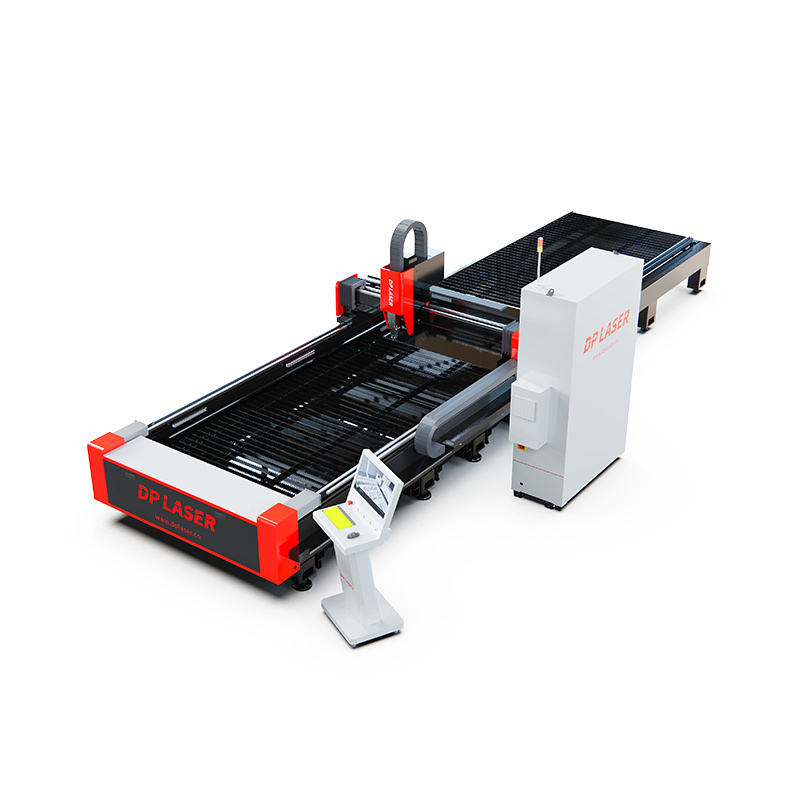
A 1kw laser cutter for metal never operates in a vacuum. The assist gas plays a monumental role in the cutting process. It heavily dictates the maximum capable thickness and the final edge finish. You must select the right gas to maximize the limited power output of a 1kW source.
Oxygen acts as an active participant in the cutting process. It does not merely blow molten metal away. It creates an exothermic reaction when it interacts with heated carbon steel. This chemical reaction generates additional heat.
Operators must carefully monitor Oxygen purity. Even a small drop in gas purity drastically reduces maximum cutting thickness.
Nitrogen serves a completely different purpose. It acts as an inert shield. It does not burn; it simply expels molten material forcefully from the kerf.
Compressed air provides a highly economical alternative for specific applications. Shop air consists roughly of 78% Nitrogen and 21% Oxygen. This blend offers a middle ground for entry-level fabrication.
It remains the most cost-effective solution for very thin materials (under 1.5mm). You bypass expensive gas cylinders entirely. However, you cannot simply hook up a standard shop compressor. You require a high-quality compressor paired with professional desiccant dryers. Any moisture or oil in the airline will instantly contaminate the protective lens. This contamination destroys the optics and halts production.
Selecting between power levels requires honest operational analysis. You must evaluate your daily material mix rather than focusing solely on maximum power ratings. A 1kW machine offers phenomenal value when deployed correctly, but it becomes a bottleneck if misapplied.
The 1kW power tier shines in highly specific manufacturing environments. You should confidently select this power level if your workflow matches these criteria:
Higher power systems become necessary when your material mix shifts toward thicker plates. Consider upgrading to a 2kW or 3kW system under the following circumstances:
You must evaluate operational expenses beyond the initial sticker price. A 1kW system boasts a substantially lower initial capital expenditure. This makes it highly attractive for startups and small job shops.
However, slower cutting speeds on thicker metals change the math. If you routinely cut 6mm steel, the 1kW laser moves slowly. This increases the labor time spent per part. It also means the assist gas flows longer per part. Over thousands of parts, higher operational costs (labor plus gas) might outpace the initial savings. Match the machine strictly to your high-volume material thickness to ensure optimum profitability.
Installing industrial laser equipment requires careful facility planning. You cannot simply plug these machines into a standard wall outlet. Understanding the physical and environmental requirements ensures a smooth, safe rollout.
Buyers must choose between compact open configurations and fully enclosed systems. Each format serves a distinct operational style.
Open systems save massive amounts of floor space. They allow operators to load sheet metal easily from multiple angles. However, they require strict safety protocols. The Class 4 laser beam poses severe eye hazards. You must isolate the cutting area with approved laser-safe curtains. Operators must wear certified personal protective equipment (PPE) at all times.
Fully enclosed systems feature a heavy-duty protective housing and safety interlock doors. They protect the surrounding shop floor from scattered radiation. These enclosures consume more floor space but dramatically improve overall facility safety.
Your shop must meet specific electrical and environmental prerequisites before installation.
Many shop owners assume CNC lasers run themselves. While modern software simplifies the process, human oversight remains vital.
These 1kW machines are relatively forgiving on thin materials. However, operators still require dedicated training. They must learn how to adjust focal lengths precisely for different material thicknesses. They must master nozzle centering routines to ensure perfectly straight cuts. They also need to understand assist gas pressure adjustments. Proper training prevents massive consumable waste and protects the cutting head from accidental collisions.
A 1kW fiber laser is a highly capable, high-ROI tool provided you apply it to its primary strength. It absolutely dominates thin-gauge metal fabrication up to 6mm. It delivers pristine edge quality and rapid production speeds at a fraction of the cost of higher-powered systems.
You must respect its physical limitations regarding maximum thickness and reflective materials. Pushing the machine past its design parameters leads to poor part quality and costly downtime. We strongly advise running sample cuts with your specific material grades before finalizing any purchase. Physical proof always outweighs specification sheets.
Take the next logical step in your procurement journey. Request a comprehensive cut-time study tailored to your exact CAD files. Send your toughest material samples to the manufacturer for a live demonstration. Real-world testing guarantees you invest in the perfect tool for your shop floor.
A: No. Fiber lasers operate at a 1064nm wavelength. This specific wavelength passes right through transparent or organic materials without absorbing. To cut non-metals like wood, acrylic, or leather, you need a CO2 laser, which operates at a 10,600nm wavelength.
A: Consumable lifespan depends heavily on piercing frequency and material thickness. Copper nozzles typically last a few days to a week under continuous use. Protective lenses can last several weeks to a few months, provided operators maintain proper gas pressure and prevent spatter from contaminating the glass.
A: No, standard shop environments work fine for daily operation. However, maintenance tasks demand extreme cleanliness. When swapping protective windows or checking fiber cable connections, you must work in a dust-free environment. Even microscopic dust particles can cause the optics to burn up under the intense laser heat.
A: Yes, it handles 1/4" mild carbon steel quite well when using pure Oxygen. You will get a respectable edge finish. However, it is borderline for 1/4" stainless steel. When cutting stainless at this thickness, cutting speeds plummet, and the edge quality decreases notably due to excessive heat buildup.


