
Views: 0 Author: Site Editor Publish Time: 2026-07-31 Origin: Site


Investing in modern laser equipment represents a major capital expenditure for any metal fabrication shop. Over-specifying your machine wastes precious budget, while under-specifying creates immediate production bottlenecks. You need reliable equipment, but translating manufacturer specification sheets into shop-floor reality proves difficult. Theoretical limits rarely match day-to-day performance, leaving many buyers confused about actual material capabilities.
We will bridge the gap between marketing claims and realistic cutting realities. You will learn why a maximum sever thickness differs entirely from a profitable production thickness. Ultimately, this comprehensive guide helps you determine exactly what materials and profiles a 2kW system can handle efficiently. You can then make an informed, data-driven decision for your manufacturing floor.
Many metal fabrication shop owners face a similar turning point. Outsourced laser cutting costs heavily erode profit margins. Relying on external suppliers introduces frustrating lead-time delays. Alternatively, you might currently rely on legacy CO2 lasers. These older systems consume massive amounts of electricity and require constant maintenance. You might also use high-definition plasma cutters. Plasma handles thick plates well but leaves messy edges on thin sheets. Operators then spend hours grinding and cleaning parts before welding.
Investing in a 2kw fiber laser cutting machine directly addresses these common manufacturing bottlenecks. However, you must define what success looks like for your facility. A successful deployment typically means maintaining a 90% utilization rate on sheet metal thinner than 8mm. It means reducing your production lead times by half. It also requires keeping your electrical and assist gas overhead costs manageable.
We position the 2kW power tier as the ideal "entry-level industrial" standard. It delivers enough continuous power for demanding, multi-shift production schedules. It cuts thin sheets rapidly and cleanly. Yet, you must respect its physical limitations. It is not a heavy plate processor. If your core business involves churning out thick structural steel brackets all day, this power tier will fall short. If you mostly process thin-to-medium enclosures, brackets, and panels, this system becomes your most profitable asset.
Manufacturers often list impressive maximum numbers on their brochures. We must separate these theoretical maximums from profitable reality. "Optimal Production Thickness" refers to materials you can cut fast, cleanly, and profitably. "Maximum Sever Thickness" refers to pushing the machine to its absolute limit. Severing cuts slowly, leaves rough edges, and should only occur occasionally.
| Material Type | Optimal Production Thickness | Maximum Sever Thickness | Primary Assist Gas |
|---|---|---|---|
| Carbon Steel (Mild Steel) | 1mm to 10mm | Up to 16mm | Oxygen (O2) |
| Stainless Steel | 1mm to 4mm | Up to 6mm | Nitrogen (N2) |
| Aluminum & Alloys | 1mm to 3mm | Up to 6mm | Nitrogen (N2) |
| Reflective Metals (Brass/Copper) | 1mm to 3mm | Up to 3mm | Nitrogen (N2) / Air |
Understanding these thresholds ensures you get the most out of your 2kw laser cutter for metal without destroying your operational budget.
Carbon steel remains the most common material processed on these machines. The optimal production range sits comfortably between 1mm and 10mm. Within this range, the machine moves rapidly. Edge quality remains superb, requiring almost zero secondary cleanup. Operators can nest parts tightly and rely on consistent output.
You can push the machine to a maximum sever thickness of 16mm. To achieve this, you must use Oxygen as an assist gas. The Oxygen creates an exothermic reaction, essentially burning away the metal while the laser beam guides the cut. However, expect significantly slower cutting speeds. Parts cut at 16mm will show visible striations along the edge. You should only cut 16mm steel occasionally.
Stainless steel presents a different set of thermal challenges. The optimal cutting thickness ranges from 1mm to 4mm. In this zone, the machine produces bright, oxide-free edges. You must use high-pressure Nitrogen to blow away the molten metal and prevent oxidation.
The maximum limit reaches up to 6mm. Cutting 6mm stainless requires massive volumes of high-pressure Nitrogen. As you approach this maximum thickness, gas consumption costs increase sharply. The speed drops drastically. If you cut 6mm stainless steel continuously, your assist gas expenses will quickly eliminate your profit margins.
Aluminum is highly thermally conductive. It absorbs and dissipates heat rapidly. The optimal cutting range spans from 1mm to 3mm. You achieve fast speeds and clean edges here.
The maximum thickness caps out at roughly 6mm. Because aluminum transfers heat so quickly, intricate parts can easily warp during the cutting process. Operators require careful parameter tuning to avoid heat-induced distortion. You must adjust the laser frequency, focus position, and cutting speed to manage the heat-affected zone.
Brass and copper introduce significant risks to laser optics. These reflective metals bounce the laser beam back toward the source. The optimal and maximum thicknesses both sit between 1mm and 3mm.
Historically, back-reflection easily destroyed expensive laser sources. Modern 2kW systems utilize protective isolators to absorb stray reflections. Even with these safety measures, cutting thick copper remains highly inefficient at this power level. The energy reflects rather than melting the material. Stick to very thin reflective sheets if you must process them.
Wattage determines cutting speed, but the relationship is not linear. As material thickness increases, cutting speed drops exponentially. A 2kW machine slices through 2mm mild steel at blistering speeds. When you increase the thickness to 8mm, the speed plummets. When you reach the 16mm maximum limit, the machine practically crawls.
Assist gas economics dictate your daily operating expenses. Oxygen works wonderfully for thick mild steel. The exothermic chemical reaction assists the cutting process, meaning you only need low gas pressure. Nitrogen, used for stainless steel and aluminum, relies purely on kinetic energy. It requires high volume and high pressure to physically blow the molten material out of the kerf.
Running your machine at its maximum thickness limit wastes enormous amounts of gas. High-pressure Nitrogen delivery drains tanks rapidly. The longer the cutting head lingers over a thick sheet, the more gas you consume. This dynamic destroys profitability on thick-plate jobs.
Edge quality expectations also shift dramatically near the maximum limits. Parts cut within the optimal range drop out of the skeleton cleanly. Parts cut near the maximum thickness will likely exhibit dross and slag on the bottom edge. Rough striations will appear on the sidewalls. Your team will need to manually deburr and grind these parts. Secondary labor adds hidden costs to every single piece.
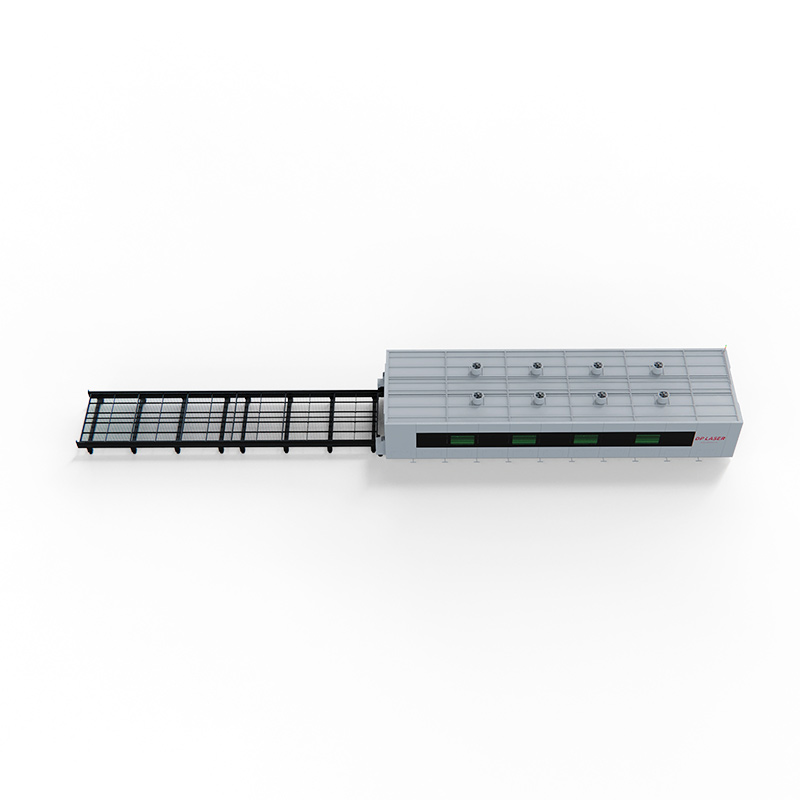
Many buyers underestimate the physical footprint of industrial equipment. The main cutting bed only represents a portion of the required space. A complete 2kW installation demands room for auxiliary components. You need a dedicated water chiller to keep the laser source and cutting head cool. You must install a robust dust collector. If you opt for an automatic pallet changer to increase throughput, the footprint doubles. Evaluate your floor space carefully before signing a purchase order.
Electrical and infrastructure prerequisites demand strict attention. These machines require stable 3-phase power. Voltage fluctuations can damage sensitive electronic components. You also need heavy-duty ventilation. Vaporizing metal produces hazardous fumes. Proper exhaust compliance and industrial fume extraction systems remain strictly non-negotiable for operator safety.
We must dispel the "plug-and-play" myth entirely. Modern control software has improved significantly over the past decade. However, operators still need rigorous training. They must understand how to adjust focus positioning manually. They need to master nozzle centering techniques. They must tune gas pressures based on material variations. An untrained operator will quickly produce bad parts and waste expensive materials.
Safety compliance protects your workforce. The intense 1064nm wavelength of a fiber laser can cause instant, permanent eye damage. Your machine requires a fully enclosed Class 1 laser safety housing. You must ensure all viewing windows feature the correct Optical Density (OD) rating for your specific laser source.
Choosing the correct power tier requires an honest assessment of your current and future production needs. You must analyze your actual job routing history, not just your aspirational goals.
When 2kW is the Right Choice:
When to Scale Up (3kW, 4kW, or higher):
If you decide a 2kW system fits your profile, you must validate the decision. Follow these critical next-step actions before finalizing any purchase:
A 2kW fiber laser stands as a highly capable production tool for thin-to-medium sheet metal. It transforms fabrication shops by drastically reducing lead times and eliminating outsourced processing fees. However, buyers must respect its optimal production limits. Relying on maximum spec-sheet claims leads to frustrating bottlenecks and wasted money.
Base your purchasing decision on overall shop profitability. Combine the initial capital expenditure, the daily operating expenses (like assist gas and electricity), and the secondary labor costs required for edge cleanup. Do not buy based on wattage alone. A lower-powered machine running efficiently outpaces a high-powered machine running idle.
Audit your current material usage over the last six months. Calculate the exact percentages of material thicknesses passing through your shop. If your historical data proves the 80/20 rule—where 80% of your work is under 8mm thick—a 2kW system offers the perfect balance of capability and value.
A: No. Fiber lasers use a 1064nm wavelength. This specific wavelength passes straight through transparent materials like acrylic without cutting them. It also causes severe fire hazards when applied to organic materials like wood. You must use a CO2 laser to safely and effectively cut wood, plastics, and acrylics.
A: The "2kW" designation refers strictly to the optical laser beam output. The total electrical draw of the entire system is much higher. When you include the water chiller, servo motors, exhaust fans, and control systems, the total power consumption typically ranges from 15kW to 20kW during active cutting.
A: Yes, 1/2-inch (approximately 12.7mm) carbon steel falls within the maximum sever limit. You must use Oxygen as an assist gas. However, cutting speeds will remain very slow, typically between 0.8 and 1.2 meters per minute. The edge quality will likely show dross, requiring manual cleanup. Avoid continuous high-volume production at this thickness.


