
Views: 0 Author: Site Editor Publish Time: 2026-07-25 Origin: Site


Purchasing a fiber laser cutter represents a massive capital expenditure for any fabrication shop. You cannot treat it as just a simple capacity upgrade. It requires strict financial justification to ensure long-term profitability and sustainable business growth.
Manufacturers often promise incredibly rapid returns on these powerful machines. However, actual financial performance depends heavily on your specific production environments, shift structures, and hidden daily operating costs. You risk tying up crucial cash flow in underutilized assets unless you properly map out these operational variables.
This comprehensive guide provides a highly realistic framework to calculate your exact equipment payback timeline. We actively avoid inflated marketing claims and focus purely on verifiable production math. By the end, you will know exactly how to measure and optimize your machine's true profit potential. You will learn how to identify hidden bottlenecks and align machine capabilities accurately against your actual daily order volumes.
Manufacturers need reliable benchmarks before committing capital. Understanding the baseline for your fiber laser cutting machine expected roi payback period requires looking at industry averages. Most modern systems pay for themselves within one to three years. They significantly outpace legacy CO2 lasers or standard CNC routers. Those older technologies often take three to five years to amortize fully.
Your operating schedule heavily impacts this timeline. We call this the shift multiplier. Running a machine for eight hours a day yields a standard return curve. Adding a second shift effectively halves your amortization period. The equipment generates revenue while fixed capital costs remain static.
Payback Schedule Estimates Based on Operating Hours
| Operational Model | Daily Running Hours | Estimated Payback Window |
|---|---|---|
| Single Shift | 8 Hours | 24 to 36 Months |
| 1.5 to 2 Shifts | 12 to 16 Hours | 14 to 20 Months |
| Round-the-Clock | 24 Hours | 8 to 12 Months |
Business models also dictate these expectations. Contract job shops prioritize versatility. They need rapid quoting capabilities to capture diverse bids. Their returns stem from winning new business. In-house original equipment manufacturers (OEMs) operate differently. They focus entirely on fixed-part cycle time reduction. OEMs see returns through highly predictable labor and energy savings over millions of identical parts.
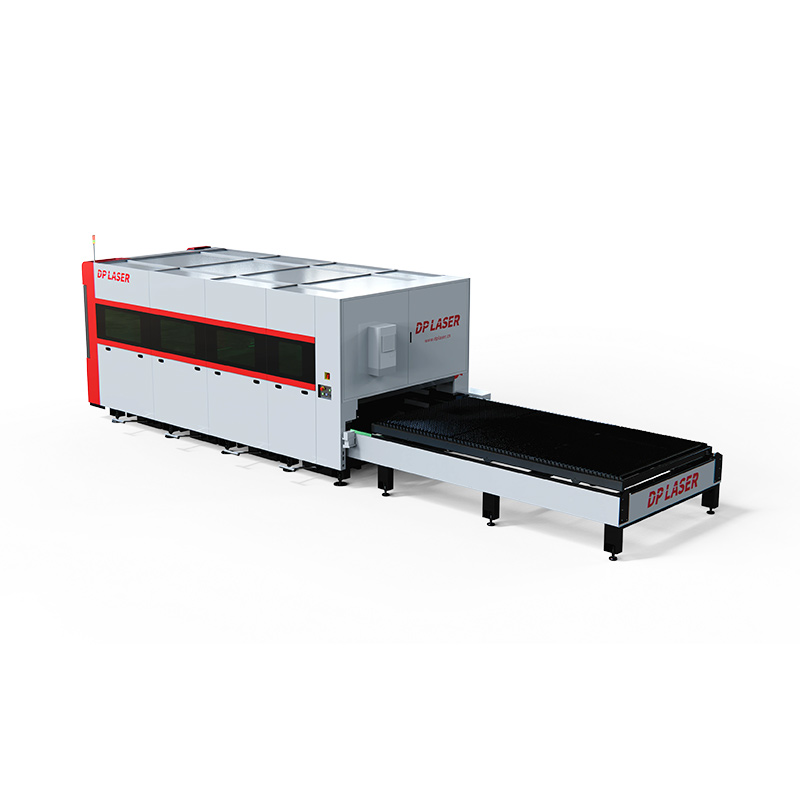
You need verifiable mathematical frameworks to justify this purchase. Emotion or rough estimates will not suffice. This four-step framework helps you calculate your precise laser cutting machine ROI by isolating real costs.
Buyers often focus solely on the sticker price. This is a dangerous mistake. You must calculate the entire landed cost of the equipment. Begin by logging the machine base price. Next, add inbound freight and rigging fees. Rigging heavy machinery into your facility can cost thousands. Finally, calculate necessary facility preparations. These include dedicated electrical drops, reinforced concrete pads, and specialized ventilation systems. All these elements form your true CapEx foundation.
You must understand what it costs to run the machine every hour. Start by determining local power consumption rates (kW/h). Fiber lasers draw significant power. Next, calculate assist gas costs. Nitrogen and Oxygen represent major recurring expenses. You also need to budget for consumable wear parts. Nozzles and protective lenses require regular replacement. Lastly, factor in scheduled preventative maintenance kits and technician visits.
New technology transforms your labor utilization. You must measure the value of increased parts-per-hour. A modern system might process parts three times faster than your old equipment. Consider the reduced need for operator intervention. Automated features allow one operator to run multiple work cells. You should also quantify eliminated downstream processes. Clean cuts often eliminate manual deburring entirely. This removes an entire labor step from your floor.
Now, you plug these variables into a standard financial equation. You divide your upfront costs by your new monthly financial gains.
Monthly savings represent the reduced labor and lower hourly OpEx compared to your previous methods. Monthly additional profit represents the margin from new capacity. Combining these gives you a realistic timeline.
Solid-state technology completely changed the fabrication industry. The underlying physics of these systems drive massive financial advantages. Understanding these drivers helps justify the initial capital outlay.
Wall-plug efficiency stands out as the primary driver. Solid-state fiber systems achieve greater than 30% energy efficiency. Legacy CO2 lasers hover around 10% efficiency. They waste massive amounts of electricity generating the beam. Fiber technology translates directly into immediate monthly utility savings. You pay significantly less per cutting hour.
Speed in thin-to-medium metals provides another massive advantage. Fiber optics process gauge materials rapidly. They cut up to three to five times faster than alternative methods. A machine blasting through 2mm aluminum at high speeds drastically lowers your cost-per-part. You can process more sheets per shift, billing more jobs daily.
Maintenance reductions further accelerate financial returns. Legacy machines require complex optical alignments. They rely on delicate mirrors and expensive turbine blowers. Solid-state technology eliminates these fragile components. The beam travels safely through an enclosed optical cable. This removes significant planned downtime from your equation. The machine stays powered on, actively producing revenue.
Even the best mathematical models fail if implementation falters. You must maintain operational realism. Certain hidden bottlenecks can destroy your profit margins if ignored.
The material handling bottleneck is the most common failure point. A high-speed laser processes sheets incredibly fast. It is only profitable if your loading and unloading automation can keep pace. Operators manually loading heavy steel sheets cannot match the cutting head. A machine waiting for material produces zero revenue per hour. You must invest in adequate handling systems.
Assist gas strategy also catches many shops off guard. Poor Nitrogen management eats directly into your profit margins. Relying on small dewars or individual cylinders becomes expensive quickly. Failing to consider a bulk gas installation or an onsite generation system inflates your hourly OpEx. You must negotiate bulk gas contracts early.
Finally, operator training and software integration cause temporary delays. You will experience a temporary dip in productivity during the learning curve. CAD/CAM software onboarding takes time. Operators need weeks to master nesting algorithms and parameter optimizations. Do not expect maximum throughput on day one. Budget for a realistic ramp-up period during your first quarter of ownership.
Selecting the exact equipment model is your final hurdle. Buyers often fall into specific traps during the specification phase. You must align equipment capabilities strictly with your production realities.
The "over-buying" trap ruins many financial models. Sales reps frequently push high-wattage systems. Purchasing a 12kW or 20kW system is not financially sound for everyone. If 80% of your work involves thin-gauge aluminum, maximum wattage is wasted. A 3kW or 6kW system often yields a much faster payback period for thin materials. It requires lower CapEx and consumes less power.
Evaluating Service Level Agreements (SLAs) is equally critical. You must factor in manufacturer support. A cheaper machine might look great on a spreadsheet. However, a seven-day service delay destroys your profit margins faster than anything else. A premium machine featuring 24-hour support guarantees protects your uptime. Uptime is the ultimate currency in fabrication.
Finally, balance future-proofing against immediate needs. You should assess whether to invest in modular machines. Some brands offer upgradable power sources or retrofittable automation add-ons. This allows you to control initial upfront costs while securing future scalability. You buy what you need today and upgrade when order volumes demand it.
Machine Specification Decision Matrix
| Production Profile | Recommended Wattage Range | Primary Financial Benefit |
|---|---|---|
| Thin-Gauge Sheets (Under 3mm) | 3kW to 6kW | Lowest CapEx, rapid payback. |
| Mixed Gauge (3mm to 12mm) | 6kW to 12kW | High versatility, broad job bidding. |
| Heavy Plate (Over 12mm) | 12kW to 20kW+ | Replaces plasma, fast thick cuts. |
Calculating the true financial return on new cutting equipment requires diligent analysis. It remains a highly controllable metric if evaluated with strict, realistic operational data. By mapping out specific capital expenses, operating costs, and true throughput gains, you eliminate guesswork. Avoid over-buying wattage you do not need. Always plan for material handling bottlenecks early.
Your next step is moving from rough estimation to exact figures. Stop relying on manufacturer averages. Request a custom cycle-time analysis using your specific DXF part files. Ask vendors to provide time studies based on your most common materials. Use interactive calculators to map your exact operational scenario before signing any purchase agreements.
A: Financing affects your monthly cash flow rather than pure amortization. A lease spreads the capital expense over several years. Often, the monthly operational cost savings and new revenue completely cover the monthly lease payment. This scenario allows the machine to essentially pay for itself out of newly generated cash flow, making it highly attractive for growing shops.
A: Used equipment offers lower initial capital costs, which theoretically shortens the payback timeline. However, you face higher risks. Optical degradation, lack of manufacturer warranty, and older software inefficiencies can increase daily operating costs. You might experience unplanned downtime. Always weigh the upfront discount against the potential for expensive emergency repairs.
A: Automation significantly increases your initial capital expense. However, it drastically reduces labor operating expenses. More importantly, it increases spindle-on time. Automation allows the machine to run continuously during breaks or unattended overnight shifts. In high-volume shops, this massive increase in daily throughput typically shortens the overall payback period despite the higher initial price tag.


