
Views: 0 Author: Site Editor Publish Time: 2026-07-20 Origin: Site


Investing in industrial manufacturing equipment represents a major financial commitment. You know firsthand how significant capital expenditures impact your operation. Profitability strictly depends on matching machine capabilities directly to your primary material types, plate thicknesses, and daily production volume. Overestimating your needs wastes valuable capital. Underestimating them limits your growth potential.
This guide bypasses polished marketing claims. We provide a realistic, engineering-focused breakdown of material compatibility. You must understand the true operational limitations of these machines. We also provide objective sizing frameworks to support your equipment evaluation. By the end of this article, you will understand exactly how to align equipment specifications to your daily fabrication demands.
You must understand the underlying physics to maximize your equipment. Wavelength dictates how different materials absorb thermal energy. A modern fiber laser cutting machine for metal operates at a wavelength of approximately 1.06µm. Metal surfaces absorb this incredibly short wavelength rapidly. Older CO2 technology uses a much longer 10.6µm wavelength. Metals naturally reflect most of that longer wave, heavily reducing overall cutting efficiency.
Because metals absorb the 1.06µm beam efficiently, you experience massive performance gains. The beam melts the metal rapidly. The delivery fiber also focuses the beam into an exceptionally tiny spot size. This concentrates the heat precisely where you need it. This combination translates to incredibly high cutting speeds on thin sheets.
You also gain superior energy usage. Fiber sources boast excellent wall-plug efficiency. They convert electrical input into optical power at rates often exceeding 30%. Older systems struggle to hit 10% efficiency. Finally, faster cutting speeds mean less heat lingers on your workpiece. You experience significantly reduced thermal distortion. Your finished parts stay flat, true, and ready for the next production stage.
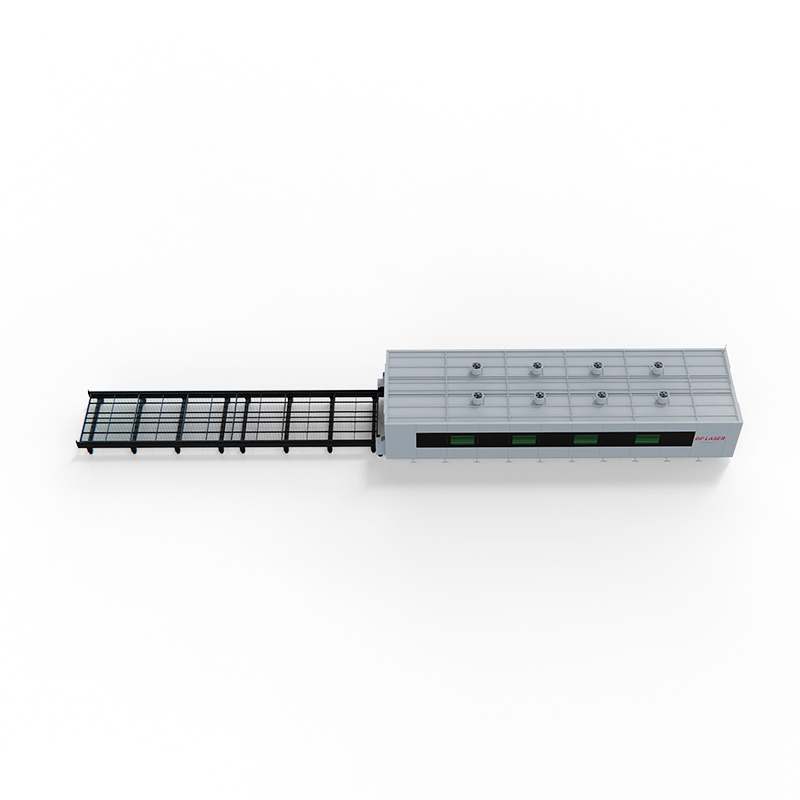
Let us examine how this technology handles specific industrial alloys. You need to understand material-specific realities, typical thicknesses, and expected edge quality before running production.
Carbon steel forms the structural backbone of general sheet metal fabrication. Fiber technology cuts it exceptionally well. You get excellent edge quality across a wide range of thicknesses. Operators rely on oxygen assist gas for processing thicker plates. Oxygen creates an exothermic reaction. This chemical reaction helps burn through the heavy steel effectively. For thinner sheets, high-pressure nitrogen serves as the ideal assist gas. Nitrogen rapidly blows away molten material. It leaves a clean, oxidation-free edge behind. This versatile setup yields production-ready parts immediately. It remains highly cost-effective for high-volume fabrication.
Stainless steel demands clean, corrosion-resistant edges for food, medical, or architectural applications. You achieve extremely high cutting speeds using nitrogen assist gas. The inert nitrogen prevents harmful oxidation during the melting process. This keeps the material's protective structural integrity intact. However, processing stainless steel requires precise focal point adjustments. If you misalign the focal position on thicker plates, you will generate heavy dross on the bottom edge. Operators must dial in their parameters carefully to ensure smooth parts.
Aluminum challenges many traditional cutting methods. Fortunately, fiber handles it brilliantly. You will see extremely fast processing speeds on thin sheets. However, aluminum has very high thermal conductivity. It dissipates heat quickly away from the immediate cut zone. This physical trait requires higher peak power to initiate the pierce cleanly. Without proper parameter tuning, thicker aluminum gauges become prone to micro-burrs along the bottom edge. Certain alloys, like 6061, require different feed rates than 5052 due to varying elemental compositions.
Cutting reflective metals once posed a severe risk to sensitive laser optics. Today, the technology has adapted. Modern machines handle brass, copper, and galvanized steel efficiently. You must ensure your equipment features robust back-reflection protection. Specialized optics and optical isolators prevent reflected beams from traveling backward. This protects your expensive delivery fiber from catastrophic damage. Keep in mind that copper absorbs heat rapidly. It requires significantly higher wattage per millimeter of thickness compared to standard carbon steel.
Table: Metal Capability Reference
| Material Type | Primary Assist Gas | Edge Quality Expectation | Processing Challenge |
|---|---|---|---|
| Carbon Steel (Thin) | Nitrogen | Excellent, paint-ready | None, highly optimized |
| Carbon Steel (Thick) | Oxygen | Smooth, slight oxidation | Requires precise pierce timing |
| Stainless Steel | Nitrogen | Clean, silver edge | Prone to dross if focus drifts |
| Aluminum | Nitrogen / Air | Good, occasional micro-burrs | High thermal conductivity |
| Copper / Brass | Nitrogen / Oxygen | Good | High reflectivity risks optics |
Trustworthy operation means knowing what your equipment cannot do. Pushing a sophisticated machine beyond its design limits causes expensive damage and unplanned downtime.
Fiber beams strictly process metals. You must never attempt to cut wood, acrylic, plastics, or fiberglass composites. The 1.06µm wavelength behaves unpredictably on non-metals. It often passes right through clear materials or aggressively burns organic matter. Cutting these materials creates severe, immediate safety risks. Wood ignites quickly under the intense heat. This creates a highly dangerous fire hazard inside your machine enclosure. Plastics melt rapidly and release highly toxic, corrosive fumes. These fumes will destroy your expensive optics and machine guideways.
Many buyers fall for the maximum thickness marketing trap. You must understand the critical difference between "maximum sever thickness" and "maximum production thickness." Sever thickness means the machine can barely push a hole through the plate. The resulting edge looks terrible, and the travel speed drags immensely. Production thickness refers to a clean, square edge cut at a highly profitable speed. You eventually hit a point of diminishing returns. Purchasing a massive 20kW machine just to cut 30mm steel occasionally makes little sense. Plasma or waterjet cutting often becomes far more viable at those extreme gauges.
Processing painted, oiled, or plastic-coated metals introduces hidden risks. The laser beam vaporizes the surface coating milliseconds before cutting the underlying metal. This rapidly coats your lower protective lens in sticky debris. Contaminated lenses heat up and crack quickly. Furthermore, certain PVC coatings release corrosive chlorine gas when burned. In reality, cutting coated material often requires dual-pass processing. The machine makes a fast first pass to vaporize the coating safely. It then makes a second pass to cut the metal. This approach keeps your optics clean but effectively doubles your cycle times.
Choosing the best metal laser cutting system involves comparing established manufacturing alternatives. This framework clarifies your final decision stage.
Fiber clearly wins on overall operational metrics. It requires no complex resonator gases and demands far less routine maintenance. You get incredible speed on thin sheet metals. Fiber also dominates when processing highly reflective alloys. CO2 still retains a slight edge for processing non-metals like thick acrylic or wood. CO2 can also produce a slightly smoother edge finish on very thick mild steel plates. However, the immense speed trade-off and high energy consumption make CO2 largely obsolete for standard metal fabrication.
Fiber technology provides vastly superior precision. You get a much smaller kerf width and exceptionally tight part tolerances. The finished edge usually eliminates any need for costly secondary grinding. Plasma takes a different approach entirely. It offers a significantly lower upfront capital cost. It provides better economics for very thick, heavy-duty structural steel plates. If your specific project does not require tight tolerances, plasma works quite well. For precision components, tight nesting, and clean edges, fiber remains unmatched.
When comparing these systems, evaluate these four criteria:
Procurement requires realistic equipment sizing. Do not buy more power than your facility practically needs. Use this framework based on proven power-to-thickness realities.
Base your final kilowatt choice on the specific material you cut 80% of the time. Do not size your machine merely for the 20% outlier jobs. You can always outsource those rare, excessively heavy plates to a local job shop. Over-sizing your machine drastically extends your return on investment timeline and wastes available floor space.
Let us summarize the core shortlisting logic. A fiber system represents the optimal choice for high-speed, tight-tolerance manufacturing. It easily conquers carbon steel, stainless steel, aluminum, and challenging reflective metals. You get unmatched efficiency, perfect edge quality, and lower energy usage when you size the machine correctly. You also avoid costly mistakes by respecting its strict metal-only limitations.
As a practical next step, conduct a thorough time-study analysis at your facility. Request actual sample cuts from manufacturers using your specific material grades and thicknesses. Compare the edge quality and cycle times objectively. Do this before finalizing your equipment specifications. Let real-world data guide your next major investment.
A: Yes, but it reduces cutting speed and increases heavy dross on the bottom edge. Vaporized rust also risks severe optic contamination. Surface preparation is highly recommended to achieve optimal production yields and protect your delicate cutting head.
A: Nitrogen is the standard choice because it produces a clean, oxide-free edge. However, highly compressed shop air is increasingly used for cost-efficiency on non-critical aluminum parts where minor edge oxidation remains perfectly acceptable.
A: Modern systems feature built-in back-reflection isolators. These advanced optical devices protect the delivery fiber and core optics. They effectively mitigate the historical risks associated with cutting highly reflective materials like pure copper and brass.


