
Views: 0 Author: Site Editor Publish Time: 2026-07-22 Origin: Site


Purchasing a fiber laser represents a major capital expenditure for any fabrication shop. This equipment directly dictates your production bottlenecks. It determines your final part costs. Treating this buying decision merely as a hardware transaction leads to severe operational friction. Investing in industrial cutting equipment means entering a long-term partnership. You rely on the vendor for machine uptime. You depend on them for maintenance and technical support. Making the wrong choice often results in catastrophic downtime. It creates hidden integration headaches.
This article provides a skeptical, evidence-based roadmap. We aim to help you identify reliable vendors and evaluate real-world machine capabilities. You will learn how to avoid unexpected integration hurdles. Read on to master the complex landscape of industrial laser procurement and ensure a successful integration onto your shop floor.
Finding the right equipment requires choosing the correct supply chain. When you evaluate a cnc fiber laser cutting machine for sale, you will navigate three main avenues. Each channel presents distinct advantages and specific operational trade-offs.
Purchasing directly offers the lowest initial purchase price. You also gain extremely high customization capability. You can specify exact gantry sizes and controller brands. However, international logistics introduce severe complexity. You must manage complex ocean freight schedules. Customs clearance requires specialized brokers. Time-zone differences cause frustrating technical support delays. Trying to troubleshoot a faulty drive at 2 AM via video chat is difficult. Furthermore, warranty enforcement carries much higher risk across international borders.
US-based brands or local integrators simplify the entire process. They handle pre-import clearance completely. They provide localized customer service. You get access to trained technician networks. Warranty claims remain straightforward and legally enforceable locally. These machines comply fully with local electrical and safety standards right out of the box. The primary trade-off is a higher upfront premium. You pay a markup for their domestic handling and robust support infrastructure.
Used brokers provide immediate machine availability. You skip long factory lead times completely. You also avoid the steep initial depreciation curve. However, you inherit an unknown machine history. Previous owners may have neglected routine rail lubrication. You might lack OEM software support or critical firmware updates. Warranties on used machines are usually short or completely non-existent.
| Sourcing Channel | Primary Advantage | Major Drawback | Best Suited For |
|---|---|---|---|
| Factory-Direct | Lowest upfront price | Difficult warranty enforcement | Experienced buyers with in-house techs |
| Domestic Distributors | Localized support & compliance | Higher initial premium | High-production shops needing strict uptime |
| Used Brokers | Immediate availability | Unknown maintenance history | Shops needing rapid capacity expansion |
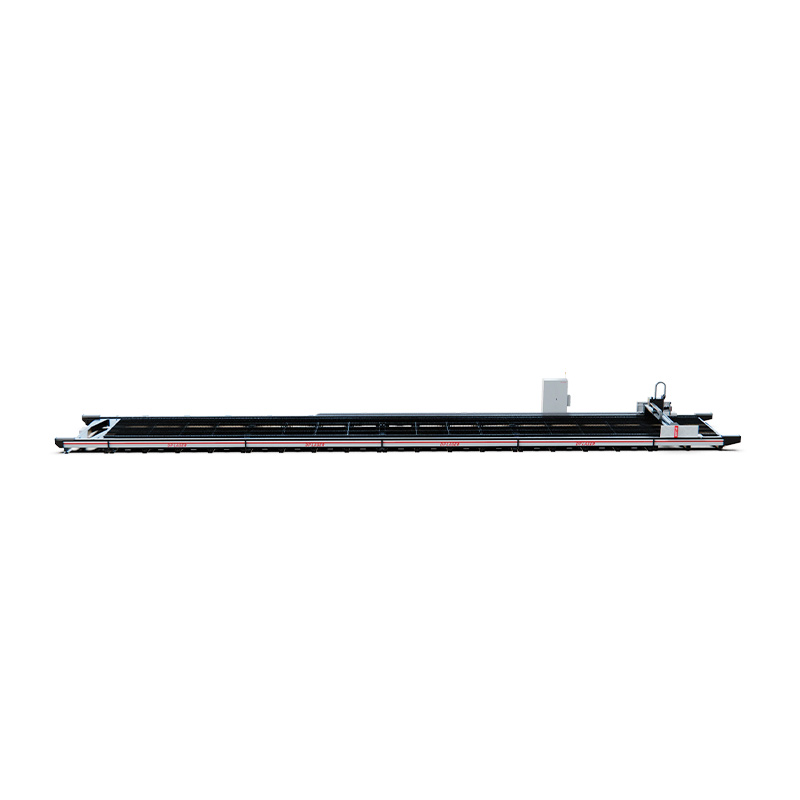
Technical specifications must align perfectly with your production goals. Do not rely on theoretical maximum limits. Evaluate parameters based on daily operational throughput.
Define your realistic cutting expectations early. A 2kW source handles standard thin sheet metal efficiently. It cuts fast and keeps operating costs low. Conversely, cutting thick plate steel requires 6kW or more. Always focus on production cutting speeds rather than absolute severance limits. Severance limits often leave terrible edge quality. This requires expensive secondary grinding operations. Size your wattage for the material you cut 80% of the time.
True machine reliability relies entirely on internal components. You must request a comprehensive Bill of Materials (BOM) before purchasing. Evaluate the laser source closely. IPG offers premium tier stability. Raycus provides an excellent value-to-performance ratio. Next, verify the chiller unit capacity. An underpowered chiller causes frequent thermal faults during long runs. Examine the cutting head brand. Precitec and RayTools represent industry leaders. Review the CNC controller architecture. CypCut serves as the industry standard for intuitive, stable operation. It handles complex nesting seamlessly.
Compare open-bed configurations with fully enclosed systems. Enclosed systems ensure strict safety compliance. They protect your operators from stray laser radiation. Next, analyze table exchange systems. Pallet changers allow you to load fresh material while cutting continues. They drastically improve cycle times. They optimize your operator workflow. Open-bed systems fit smaller budgets but require stricter manual safety protocols in the shop.
Deploying industrial cutting equipment goes far beyond unloading a truck. You must plan for complex logistical and facility requirements. Overlooking these steps causes massive installation delays.
Direct imports require understanding Incoterms intimately. Know the distinct difference between FOB and CIF shipping terms. CIF covers freight only to your destination port. FOB requires you to arrange all ocean shipping yourself. Once the machine arrives, you need professional riggers. They unload and position the massive gantry safely. Improper forklift lifting twists the frame. This ruins precision calibration permanently. Ask your vendor for specific lifting diagrams beforehand.
Your shop must support demanding environmental needs before the machine boots up. Common facility preparations include:
Daily operation requires constant physical inputs. You will frequently replace protective lenses. Copper nozzles take damage and require swapping. Ceramic rings degrade over time due to thermal stress. Assist gases deplete rapidly during continuous runs. You must keep a generous physical stock of these items locally. Running out of a ten-dollar nozzle halts a hundred-thousand-dollar machine.
A premium machine fails quickly without proper manufacturer backing. You must rigorously assess vendor support before signing any purchase order.
Evaluate the vendor's guaranteed response time closely. Do they offer 24-hour remote diagnostics? Ask for concrete proof of localized spare parts inventory. A single faulty Yaskawa servo drive can stall your entire production line. You cannot afford three-week shipping delays from overseas suppliers. Ensure they stock critical boards and motors domestically.
Distinguish between a simple manual hand-off and structured training. Real, multi-day operator training is completely essential. Technicians should teach your staff proper lens cleaning protocols. They must explain parameter tuning for different metals. They should cover daily maintenance routines. Proper training prevents expensive accidental head collisions. It empowers your team to troubleshoot minor issues independently.
Never take glossy marketing claims at face value. Request real vendor references. Specifically ask for fabrication shops running similar material volumes. Call these references directly. Ask them about actual machine uptime. Inquire about the vendor's service responsiveness during emergencies. Real-world feedback exposes weaknesses that sales brochures hide.
Finalizing your equipment purchase requires structured testing and solid legal agreements. When choosing a cnc laser cutter for sale, rely on hard data. Do not trust generic performance brochures.
Follow a strict protocol for sample testing. Do not accept generic, pre-cut sample displays.
Explore typical equipment financing structures thoroughly. Capital equipment loans often feature flexible terms. U.S. buyers should review Section 179 tax deductions. This tax code often allows you to deduct the full purchase price of qualifying equipment immediately. It improves your cash flow drastically. Consult your accountant to maximize these benefits.
Make sure your final purchase order is perfectly airtight. It must explicitly list the full machine BOM. Detail the exact warranty terms and durations. Clearly define all installation responsibilities. Mandate strict timeline guarantees for delivery and commissioning. Leave zero room for assumptions regarding rigging or initial calibration.
Finding the best equipment source depends entirely on your internal maintenance capabilities and risk tolerance. Sacrificing robust post-sale support for upfront savings remains a critical error in high-production environments. You must thoroughly vet machine components and demand rigorous sample tests. Document your exact production bottlenecks before contacting suppliers. Next, request custom sample cuts from at least three different vendor categories to compare real-world performance objectively.
A: Prices vary significantly based on wattage, enclosure type, and origin. Entry-level 1.5kW overseas models start around $20,000. These are typically open-bed systems. Conversely, domestic or European high-wattage, fully enclosed systems easily exceed $250,000. Upgraded components, advanced pallet changers, and integrated automation drastically increase the final price.
A: Fiber lasers excel at cutting metals like steel, aluminum, and brass. They offer exceptional energy efficiency and require minimal maintenance since they lack internal mirrors. CO2 lasers are better suited for non-metals like wood, acrylic, and plastics. However, CO2 systems consume more power and require frequent optic alignments.
A: Yes, in most commercial settings. Enclosures ensure compliance with FDA/CDRH safety classes. Fiber lasers operate at a wavelength highly damaging to the human eye. Enclosures feature specialized safety glass to protect operators. Additionally, fully enclosed systems integrate better with fume extraction units to remove toxic metal dust.
A: Most industrial fiber lasers rely on specialized control software like CypCut. This serves as the industry standard for intuitive operation. The software handles nesting, parameter adjustments, and machine control. You will also need standard CAD/CAM software to design parts and export them as DXF or DWG files for integration.


