
Views: 0 Author: Site Editor Publish Time: 2026-07-17 Origin: Site


Fabrication shops handling thin metals constantly battle microscopic margins of error. Precision matters immensely when processing delicate sheets under five millimeters thick. Procurement managers face frustrating daily challenges on the shop floor. Thermal distortion, severe material warping, and sluggish secondary finishing create massive production bottlenecks. Legacy methods simply cannot keep up anymore. CO2 lasers, stamping presses, and fine plasma often cause unintended material damage. They also slow down production schedules significantly. Modern solid-state fiber optics have completely disrupted this outdated dynamic. This technology brings unprecedented speed and accuracy. This guide explores exactly how upgrading your equipment transforms operational economics. We break down crucial performance metrics and exact facility requirements. You will learn the specific evaluation criteria needed for smart procurement. Ultimately, you will discover exactly why investing in a high precision fiber laser cutting machine for thin metals creates the ultimate competitive advantage for your manufacturing business.
Modern manufacturing demands ruthless efficiency to maintain healthy profit margins. Fiber lasers deliver an overwhelming economic advantage specifically tailored for thin gauge materials. The fundamental physics of solid-state laser generation allow extreme energy density. This density translates directly into superior processing speeds. You can finish large part batches in a fraction of the historical time.
Fiber technology holds a massive, non-linear speed advantage on materials under three millimeters thick. These modern systems process sheets two to five times faster than equivalent CO2 platforms. The focused beam slices through thin carbon steel and stainless steel almost instantly. Rapid traverse speeds mean the cutting head jumps between geometries without hesitation. High-speed processing directly drives down the overall cost-per-part. Your shop can complete multiple client orders in a single shift.
Utility bills represent a massive monthly overhead for any fabrication facility. Wall-plug efficiency measures how much electrical input actually becomes usable cutting energy. Fiber setups boast remarkable wall-plug efficiencies ranging from 30% to 40%. Older CO2 models struggle to reach a mere 10% efficiency. This stark difference slashes your monthly power consumption drastically. You draw less electricity from the grid while outputting significantly more finished parts. Energy savings compound rapidly over months of heavy production.
Traditional laser systems require constant, expensive upkeep to remain functional. They rely on complex internal mirrors and specialized resonator gases. Operators must frequently align these optics and rebuild internal turbines. Fiber optics completely eliminate these fragile components. The beam travels safely through a simple, flexible fiber-optic cable. You no longer purchase costly resonator gas mixtures. Turbine maintenance vanishes from your maintenance schedule entirely. Daily operating costs become highly predictable and reliably lower. You only worry about basic consumable items like protective windows and cutting nozzles.
Heat management dictates the final quality of any cut sheet. Thin materials react poorly to excessive thermal input. They warp, bow, and lose structural integrity easily. A high-quality laser system controls thermal dynamics perfectly. It preserves the flat profile of your raw material.
A specialized laser concentrates immense energy into a microscopic focal spot. This highly targeted delivery strictly limits the surrounding Heat-Affected Zone (HAZ). Energy vaporizes the cut line before heat can spread outward. It prevents frustrating sheet warping during rapid processing cycles. Delicate thin gauge metals remain perfectly flat from start to finish. You can confidently process highly sensitive aerospace shims or intricate medical brackets. The structural metallurgy of the base material remains completely unchanged.
Extremely narrow kerf capabilities redefine what engineers can actually design. The cutting line remains incredibly thin. This narrow gap allows fabricators to achieve complex, intricate geometries. Sharp internal corners and tiny localized holes become routine tasks. High-density nesting algorithms utilize these tight tolerances perfectly. Software packs parts mere millimeters apart on the raw sheet. You maximize material utilization and waste significantly less expensive metal per run.
Clean edges depend entirely on proper beam delivery and gas flow. Assist gas integration plays a critical role here. High-pressure gas blows away molten material instantly as the beam cuts. It leaves a pristine, completely dross-free finish behind. You eliminate the heavy labor costs tied to secondary grinding. Workers no longer spend hours performing manual deburring. Parts move directly from the machine bed to the bending or welding stations. This seamless flow drastically improves your overall factory throughput.
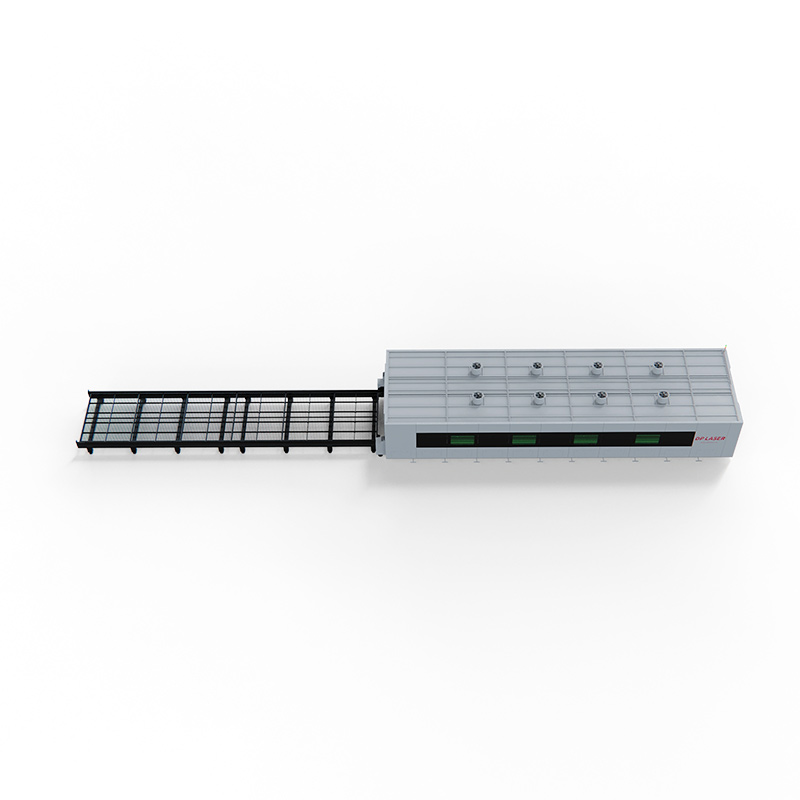
Non-ferrous materials historically posed a massive danger to automated laser equipment. Legacy systems simply could not handle highly reflective surfaces safely. The industry has now moved past these severe limitations. Modern technology allows you to process previously "forbidden" metals safely and profitably.
Older CO2 beams operate at a 10.6-micron wavelength. Reflective metals act like mirrors against this specific light frequency. The beam bounces off the sheet and travels backward into the machine. This back-reflection destroys expensive internal optics instantly. Fiber technology solves this dangerous problem permanently. It operates at a much shorter 1.06-micron wavelength. Non-ferrous metals absorb this specific wavelength rapidly instead of reflecting it. The beam penetrates the surface immediately, initiating a safe and stable cut.
Different metals require specific processing approaches. Understanding these capabilities expands your shop's versatility.
In-house capability for reflective thin metals opens lucrative new contract bidding opportunities. You no longer need to outsource specialized brass or copper jobs. You can seamlessly take on demanding aerospace components. Electronics housings and sensitive medical enclosures become highly profitable niches. Expanding your material repertoire directly increases your potential client base. You position your fabrication shop as a comprehensive, single-source supplier.
Procurement requires looking far past the basic marketing brochures. Machine specifications must align perfectly with thin sheet dynamics. Evaluating the hardware correctly ensures you do not overspend on unnecessary features. Focus strictly on mechanical agility and software intelligence.
Buyers frequently harbor a dangerous misconception about laser equipment. They assume maximum raw laser power (kW) equals better performance. For thin materials, high axis acceleration matters far more than pure wattage. A 2G to 3G acceleration rating directly reduces cycle times. High deceleration speeds dictate how quickly the head stops and pivots between intricate geometries. A nimble 3kW machine with 3G acceleration will easily outperform a sluggish 6kW machine on a 1mm steel sheet. Do not buy unnecessary wattage.
The cutting head acts as the central nervous system of the operation. Auto-focusing capabilities remain absolutely essential for fast material changeovers. Capacitive height sensing automatically detects minute sheet undulations. It adjusts the focal point dynamically as the head travels over uneven surfaces. This real-time adjustment stops fatal head crashes. Built-in collision protection mechanisms save heavy repair bills. If a tipped part obstructs the path, a magnetic breakaway mount immediately protects the expensive optics.
High traverse speeds require extreme structural stability to maintain accuracy. You must evaluate the underlying frame architecture rigorously.
| Frame Type | Vibration Dampening | Suitability for High G-Force | Longevity & Accuracy |
|---|---|---|---|
| Cast Iron Bed | Excellent | Ideal for 2G+ acceleration | Maintains micron-level precision indefinitely |
| Heavy-Welded (Stress-Relieved) | Very Good | Strong performance for most thin metals | Highly stable if thermally treated properly |
| Lightweight Tube Steel | Poor | Prone to shaking at high speeds | Loses tolerance over time |
Cast iron or heavy-welded frames provide a rigid foundation. Stress-relieved beds prevent microscopic vibrations during aggressive directional changes. You maintain strict micron-level accuracy across the entire working area. A premium thin metal laser cutting machine always features a thermally treated, high-mass frame to anchor the rapid movements.
Hardware needs equally intelligent software to perform efficiently. Advanced nesting algorithms optimize material yield automatically. Look closely at software suites offering micro-jointing capabilities. Micro-joints keep tiny cut parts attached to the skeleton, preventing them from tipping into the slats. Common-line cutting features allow two adjacent parts to share a single cut path. This shared path saves significant material and speeds up the overall job dramatically. Excellent software transforms a good machine into a highly profitable system.
Bringing advanced optical equipment into a heavy industrial environment requires serious preparation. You cannot simply plug the machine into the wall and start cutting. Successful deployment requires planning gas logistics, enforcing safety protocols, and training your workforce effectively.
Clean cuts demand robust and reliable gas setups. Nitrogen setups prevent oxidation, leaving a perfectly clean, weld-ready edge. Compressed air offers a highly economical alternative for less critical parts. Both methods require careful logistical planning.
Safety remains non-negotiable when dealing with Class 4 invisible laser beams. Standard compliance requires fully enclosed Class 1 safety housings. These enclosures feature specialized optical density (OD) viewing windows. They protect operators from stray radiation effectively. Rapid cutting generates toxic metallic dust and harmful aerosols. Localized fume extraction systems must pull these particulates directly out of the cutting zone. Furthermore, establishing strict Laser Safety Officer (LSO) protocols ensures your facility passes all regulatory inspections. Proper safety measures protect your workforce and your liability.
A technological leap brings an inevitable learning curve. Shop floor operators often feel intimidated by new, complex CNC interfaces. Address this adoption risk proactively. Emphasize the absolute need for comprehensive vendor-provided training programs. Operators must master HMI (Human-Machine Interface) controllers quickly and confidently. They need to learn how to make specific parametric adjustments. Material batches vary in composition and surface quality. A trained operator knows exactly how to tweak the focal position, gas pressure, and cutting speed to maintain perfect edge quality. Investing in your operators guarantees maximum machine uptime.
Upgrading your fabrication floor fundamentally shifts how you compete in the modern manufacturing landscape. Precision optical equipment completely removes the agonizing bottlenecks associated with legacy processing methods. For thin metal fabrication, precision fiber lasers transition quickly from being a daunting capital expense into a definitive competitive moat. They deliver unmatched velocity, eliminate expensive secondary rework, and handle highly reflective metals safely. By focusing on acceleration physics rather than just raw wattage, you optimize your exact production needs.
Take proactive next steps to ensure a flawless procurement process. Do not rely solely on generalized marketing videos. Demand a rigorous time-study from your shortlisted vendors. Provide them with your specific CAD files and exact material grades. Request physical sample cuts to inspect the edge quality personally. Verify the kerf accuracy and dross levels before signing any purchase orders. Careful evaluation guarantees your new equipment will dominate production schedules for years to come.
A: The ideal sweet spot ranges between 1.5kW and 4kW for materials under 5mm. Buying wattage beyond 4kW for thin sheets often wastes capital. Higher wattage does not significantly increase speed on thin gauge materials. Prioritize high machine acceleration (G-force) instead of over-investing in unnecessary raw power.
A: Yes, they excel at processing galvanized and coated steels. Operators must utilize specific parameter adjustments to succeed. High-pressure nitrogen assist gas is required to blow the vaporized zinc away quickly. This prevents the coating from bubbling, flaking, or leaving stubborn dross along the bottom edge.
A: Compressed air drastically lowers the hourly operating cost by eliminating expensive nitrogen purchases. However, the oxygen present in compressed air causes slight oxidation along the cut edge. If the part requires subsequent painting or high-stress welding, nitrogen remains superior for providing a pristine, weld-ready finish.
A: The cutting head requires minimal but strict routine maintenance. Operators must replace the lower protective window whenever pitting or dust accumulates. Copper nozzle centering routines should be performed daily to ensure a perfectly straight beam path. Capacitive sensor calibration ensures the auto-focus maintains accurate distance over the sheet.


