
Views: 0 Author: Site Editor Publish Time: 2026-07-17 Origin: Site


Cutting highly brittle, thermally sensitive material like glass presents a massive engineering challenge. You must sever the material without inducing catastrophic fracturing. Traditional mechanical scoring cannot always handle this immense pressure safely. As industries shift from traditional mechanical methods to advanced technologies, production demands escalate rapidly. Electronics, automotive displays, and medical devices require extreme micro-precision continuously. Manufacturers need solutions surpassing older methods because flawed edges compromise structural integrity immediately. We will demystify the complex physics behind laser glass cutting techniques. You will explore an objective framework for evaluating different equipment types. This guide helps align machine configurations directly against your specific production requirements. Precision manufacturing demands flawless execution every single time. You need to know exactly how different optical wavelengths interact. This comprehensive analysis will guide your equipment selection process effectively.
Two Primary Mechanisms: Glass laser cutting relies on either thermal stress cleaving (using heat to guide a controlled crack) or cold ablation/filamentation (using ultrashort pulses to vaporize material without heat transfer).
Machine Selection Dictates Edge Quality: CO2 lasers are cost-effective but often require post-processing; UV and Ultrashort Pulse (USP) lasers offer zero-taper, chip-free edges for high-end applications.
ROI is Application-Dependent: The high initial CapEx of a specialized laser glass cutting machine is justified by the elimination of consumable tooling, reduction in scrap rates, and removal of secondary polishing steps.
Post-cut edge quality directly impacts the structural integrity of glass. Understanding the fundamental cutting mechanism remains critical for production planning. It helps you accurately predict daily scrap rates. It also determines your secondary post-processing needs. We will examine two primary physical approaches below.
This method uses intense localized heating. A laser beam rapidly heats the designated cutting path. Rapid cooling immediately follows this heating phase. Manufacturers usually deploy a liquid or gas jet for this sudden cooling. This extreme temperature drop creates a highly controlled micro-crack. The laser beam then guides this crack along the desired path continuously.
Reality check: This thermal approach leaves a microscopic edge bevel. It works best for straight lines rather than complex curves. You will find it highly effective for thicker architectural glass panels.
Picosecond or femtosecond lasers utilize a strictly cold approach. They emit light pulses incredibly fast. They fire faster than heat can actually transfer into surrounding areas. This process relies heavily on a phenomenon called filamentation. The laser beam modifies the glass structure at a microscopic level. It creates a vertical line of microscopic voids through the material. A slight thermal or mechanical separation then finishes the cut cleanly.
Outcome: It creates micro-crack-free, perfectly perpendicular edges. This result is ideal for ultra-thin displays. It perfectly handles complex geometric shapes found in modern electronics.
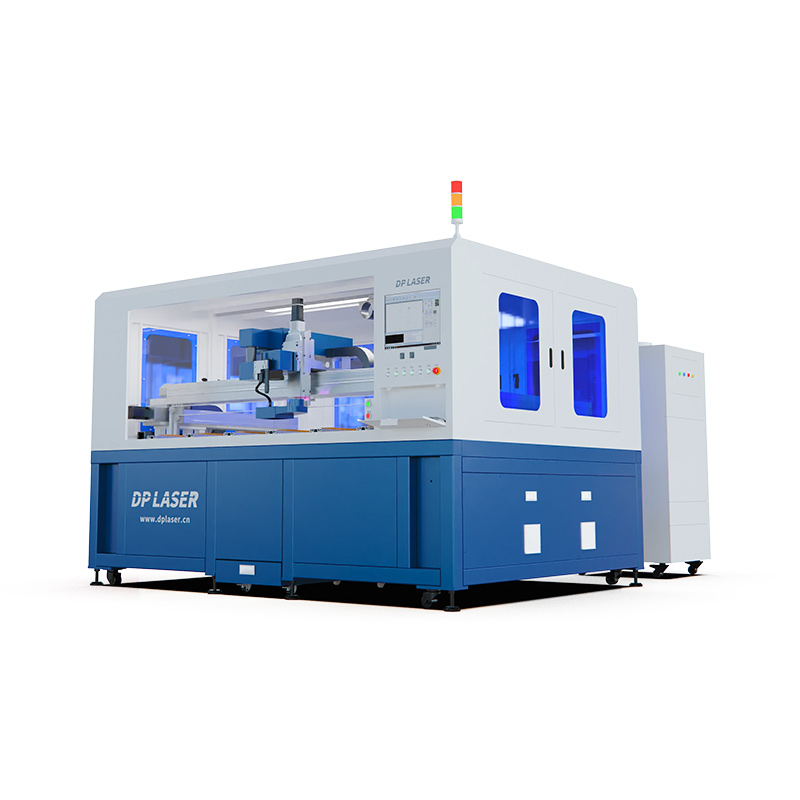
Selecting the right Glass Laser Cutting Machine dictates your final edge quality. The market offers distinct categories based on laser source technology. You must match the technology directly to your specific application. Below is a breakdown of the primary systems available.
These systems utilize carbon dioxide gas mixtures. They generate a 10.6 µm infrared wavelength. Glass absorbs this specific wavelength exceptionally well.
Best for: Thick glass, automotive glass, and simple geometric cuts.
Pros: You benefit from lower initial equipment costs. High market availability makes sourcing easy. They operate reliably over long shifts.
Cons: They carry a higher risk of micro-chipping. You often need secondary edge-grinding to smooth the final product.
These machines operate in the ultraviolet or ultrashort pulse regimes. They use picosecond or femtosecond pulse durations. They prevent thermal damage entirely.
Best for: Consumer electronics like smartphone screens. They excel at semiconductor wafers and medical wearables. They easily process ultra-thin glass under 2mm.
Pros: You get exceptional geometric precision. They leave a minimal heat-affected zone (HAZ). They eliminate costly post-polishing steps completely.
Cons: Initial capital expenditure is significantly higher. They also require highly precise environmental control inside your facility.
Some facilities require highly adaptable solutions. Hybrid systems utilize specialized optical components. They use Spatial Light Modulators to shape the beam dynamically. They adjust beam profiles for specific glass compositions. You can easily switch parameters between borosilicate and standard quartz.
| Technology Type | Optimal Thickness | Edge Quality | Ideal Application |
|---|---|---|---|
| CO2 Thermal Cleaving | 3mm - 15mm | Good (May require polishing) | Automotive, Architectural |
| UV / USP Ablation | 0.1mm - 3mm | Excellent (Zero taper, no micro-cracks) | Smartphones, Wearables |
| Hybrid Optical Systems | Variable | Very Good (Composition dependent) | Specialty Medical Devices |
You must map machine features directly to your desired outcomes. Proper evaluation ensures smooth facility integration. It also guarantees consistent production yields over time. We will explore the critical dimensions below.
Do not simply look at laser wattage. You must examine the optical delivery system closely.
Beam Quality & Optics: Look for customizable beam shaping capabilities. Bessel beams ensure uniform energy distribution. They penetrate evenly across the entire glass thickness. This creates a uniform cut top to bottom.
Automation & Handling: Glass breaks easily during loading. Evaluate integrated robotic loaders carefully. Vacuum tables prevent mechanical stress during positioning. Touchless handling reduces surface scratches significantly.
You must assess cutting speed in millimeters per second. Compare this speed against your required daily cycle times. USP lasers process complex curves incredibly fast. They often outpace traditional CNC waterjets on intricate patterns. Evaluate how quickly the machine handles cornering algorithms. Rapid acceleration improves overall throughput dramatically.
Laser safety extends beyond protective eyewear. You must prepare your building infrastructure accordingly.
Fume & Dust Extraction: Ablating glass creates hazardous silica micro-particles. High-grade HEPA extraction systems are entirely non-negotiable. They ensure facility compliance. They also protect worker respiratory health.
Vibration Isolation: Micro-machining glass requires a highly stable environment. Your facility floor must remain free of heavy low-frequency vibrations. Forklift traffic can ruin focal point accuracy. Consider optical tables or granite machine bases.
Purchasing the equipment only represents the first step. You must navigate several operational hurdles successfully. Understanding these risks prevents costly production delays. We outline the most common pitfalls below.
Many users attempt to cut glass using standard engraving lasers. This operational trap results in immediate shattering or melting. Standard systems lack the specialized optics needed for clean cuts. They merely fracture the surface layer unreliably. You cannot force an engraver to perform precision severing.
Advanced equipment demands strict climate controls constantly. Temperature fluctuations ruin focal point accuracy rapidly. Humidity shifts affect beam delivery lenses. You must maintain stable ambient conditions year-round. Dedicated cleanrooms often provide the best operating environments.
Detail the lifecycle elements thoroughly before purchasing. Laser sources and chiller units need regular professional servicing. Specialized focusing lenses require careful daily cleaning. These maintenance routines differ vastly from traditional diamond-tipped tools. You must stock appropriate optical cleaning supplies continuously.
Upgrading to a sophisticated laser glass cutting machine requires operators trained in photonic parameters. They must understand pulse width and frequency adjustments. They need to manage peak power settings accurately. Simple mechanical feeds and speeds no longer apply here. You must invest in comprehensive workforce training immediately.
Assign dedicated technicians specifically for daily optical cleaning.
Monitor chiller fluid conductivity levels weekly.
Isolate the machine from nearby stamping presses or heavy machinery.
Deciding between traditional mechanical cutting and laser technology requires objective analysis. You must weigh material limitations against production volumes. We provide a logical framework for this decision.
Lasers do not solve every manufacturing problem. Sometimes older methods remain superior.
Choose waterjets for high-volume architectural glass.
Use CNC when edge micro-cracks are acceptable.
Stick to mechanical cutting when framing covers the rough edges entirely.
Use waterjets when cutting glass thicker than 10mm. Laser efficiency drops off rapidly beyond this depth.
Certain applications demand photonic precision exclusively. You should invest in laser technology under specific conditions.
Invest when manufacturing ultra-thin glass under 3mm.
Choose lasers when dealing with complex interior cutouts.
Upgrade when scrap costs from mechanical breakage exceed machine amortization.
Transition when eliminating secondary polishing frees up massive production bottlenecks.
Do not rely on brochures alone. Request a rigorous Proof of Concept (PoC) first. Ask the manufacturer for sample cuts on your specific glass substrate. Inspect these samples under a microscope carefully. Audit your facility infrastructure beforehand. Check chiller and extraction compatibility early in the process. Ensure your electrical panels handle the increased load.
A laser glass cutting system is not a one-size-fits-all tool. It remains a highly specialized piece of equipment. The market divides primarily between thermal cleaving and cold ablation technologies. Each serves entirely different manufacturing purposes. You must understand these physical differences clearly.
Investment viability hinges on matching the source to the job perfectly. You must align the laser type with your required edge tolerances. CO2 models handle thicker, simpler shapes economically. USP models dominate the ultra-thin, high-precision electronics sector flawlessly.
We encourage you to schedule a technical consultation soon. Submit your specific material samples for baseline testing. Conduct a rigorous cycle-time analysis using real-world geometry. This systematic approach guarantees a successful technology integration.
A: Standard CO2 lasers primarily engrave by fracturing the surface. To actually cut, specific power thresholds, focal lenses, and thermal-shock assist gases are required.
A: It depends on the machine. CO2 thermal cuts often require minor polishing. Ultrashort pulse (femtosecond/picosecond) lasers typically leave a finished, stress-free edge.
A: While specialized CO2 lasers can cleave glass up to 10-15mm, cold ablation (USP) is generally optimized for ultra-thin glass between 0.1mm and 3mm.
A: Lasers offer higher precision, zero mechanical tool pressure, and a smaller footprint, but waterjets handle extremely thick, multi-layered, or laminated glass more effectively.


