
Views: 0 Author: Site Editor Publish Time: 2026-10-29 Origin: Site


The scale of modern manufacturing is shrinking at an unprecedented rate. Production demands constantly push material limits on the factory floor. We see this daily in the engineering sector. From microscopic internal components in microelectronics to the sleek curved displays of advanced smartphones, tolerances are tighter than ever. Traditional mechanical cutting tools rely heavily on friction and physical force. They simply can no longer keep pace with these stringent geometric requirements. When tasked with processing fragile or highly heat-sensitive materials like ultra-thin glass or semiconductor wafers, older legacy methods fail. They frequently result in unwanted micro-fractures, severe edge chipping, and catastrophic material failure.
Furthermore, conventional thermal methodologies often induce localized melting, warping, and burning. This renders delicate parts completely unusable and destroys production yields. Enter the picosecond laser. This transformative, non-contact technology offers ultra-high-precision processing for the most demanding industrial environments. In this comprehensive guide, we will explore exactly how precise this advanced equipment truly is. We will compare it to older systems on the market and demonstrate why it remains the undisputed gold standard for achieving flawless, factory-ready cuts.
Ultra-Short Pulses: Operating at one-trillionth of a second, this technology enables a phenomenon known as cold ablation. The beam vaporizes material instantly before residual heat can spread.
Micron-Level Precision: Advanced optical systems routinely achieve cutting accuracies and focused spot sizes down to single-digit micrometers.
Zero Heat-Affected Zone: Unlike traditional thermal lasers, ultra-short pulse systems leave virtually no melted edges, warping, or micro-cracks. They preserve material integrity completely.
The Premier Glass Tool: It is widely considered the ultimate solution for processing brittle substrates. This makes it a critical asset for consumer electronics and medical device manufacturing.
Superior Edge Quality: When evaluated against older nanosecond technologies, picosecond systems demonstrate vastly superior dimensional accuracy. They completely eliminate the need for secondary edge polishing.
To truly grasp the precision of this machinery, one must first understand the physics governing its light pulses. A picosecond is a unit of time equal to exactly one-trillionth of a standard second. In the realm of industrial optics, the pulse duration directly dictates how a laser interacts with a target substrate. It determines the official classification of the equipment. A highly calibrated Picosecond Laser Cutter emits concentrated light in these unfathomably fast bursts. This fundamentally alters the mechanics of material separation.
The defining characteristic and core operational advantage of this specific technology is a process known as cold ablation. In traditional laser processing, a continuous beam heats the substrate until it melts and eventually boils away. Conversely, an ultra-short pulse is delivered so rapidly that the peak power reaches extraordinary levels almost instantaneously. This intense burst of optical energy breaks molecular bonds on contact. It turns the solid material directly into a gaseous plasma state. Because this rapid vaporization occurs much faster than the thermal relaxation time of the material, the surrounding areas remain completely unaffected by destructive heat bleed.
In photonics, shorter pulses universally equate to significantly less thermal damage. Continuous wave lasers heat materials slowly. Longer-pulse lasers, such as millisecond or microsecond systems, cause residual heat to bleed deep into the surrounding molecular lattice. By utilizing a pulse duration in the picosecond range, manufacturers prevent this thermal transfer entirely. This precise energy delivery preserves the structural integrity of microscopic components. Operators achieve much cleaner material separation without the warping, burring, or discoloration typical of older methodologies.
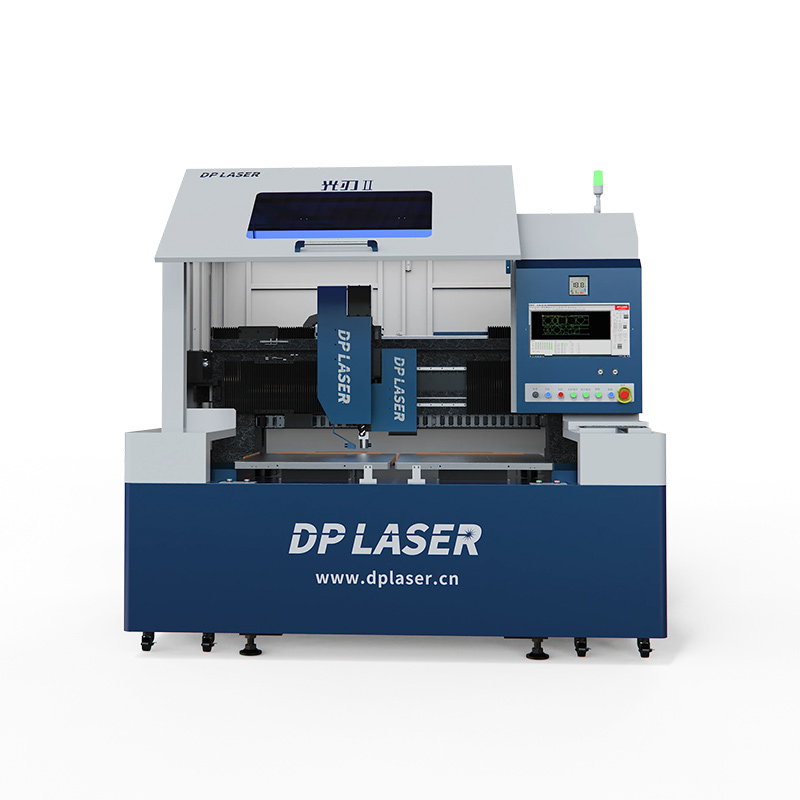
When facility managers and procurement engineers evaluate precision, they look beyond marketing claims. We focus heavily on empirical data and exact physical measurements directly from the shop floor.
The exactness of any optical system begins with its beam focus. Through advanced beam-shaping optics, these machines focus their energy into an incredibly tight spot size. This often measures just 10 to 20 micrometers, a mere fraction of the width of a human hair. Specifically, the mechanical positioning accuracy of top-tier industrial platforms routinely hits plus or minus 2 micrometers. This exactness depends on the integration of non-contact linear motors and a heavy-duty mechanical gantry. Such extreme mechanical and optical alignment allows operators to execute highly complex microscopic geometric patterns that would be physically impossible to achieve with mechanical routers.
In metallurgy and materials science, the Heat-Affected Zone is the localized area that has not been melted but has had its internal microstructure altered by thermal exposure. A large thermal zone ruins dimensional tolerances by inducing warping, edge melting, or localized burning. Because of the cold ablation mechanism, a high-end Precision Laser Cutter reduces this zone to less than 5 micrometers. In many temperature-sensitive polymers or ultra-thin metals, it reduces the zone to virtually zero. Material separation occurs exactly where the focused beam interacts with the surface. This ensures absolutely no collateral thermal damage to the adjacent substrate.
Standard thermal cutting often creates a tapered edge. This V-shaped cross-section is caused by the beam losing energy density as it penetrates deeper into the material profile. This tapering drastically reduces the geometric accuracy of the final manufactured part, especially in thicker substrates. However, by utilizing specialized Bessel beam modules and precise layer-by-layer energy delivery, picosecond systems modify the spatial distribution of the light. This creates perfectly straight, perpendicular, and smooth vertical edges. The equipment eliminates the tapering effect entirely and ensures components fit together with zero tolerance issues.
Facility procurement teams frequently weigh the benefits of different ultra-short pulse systems. The most common industry comparison pits modern picosecond technology against its immediate predecessor.
A typical Nanosecond Laser Cutter operates with pulse durations measured in billionths of a second. While they are fast and highly effective for surface marking, a nanosecond pulse is still roughly one thousand times longer than a picosecond burst. Due to this comparatively longer duration, nanosecond systems still rely heavily on a photothermal process. They must melt and expel the material, inevitably leaving residual heat behind on the production part.
When objectively comparing edge quality, the difference between the two technologies is stark. We can break down the performance metrics directly.
| Feature | Nanosecond Laser | Picosecond Laser |
|---|---|---|
| Pulse Duration | 10-9 seconds (Billionths) | 10-12 seconds (Trillionths) |
| Material Removal | Photothermal (Melting/Boiling) | Cold Ablation (Instant Vaporization) |
| Edge Quality | Prone to micro-cracks and burrs | Flawless, smooth, zero micro-cracks |
| Post-Processing | Often requires grinding or polishing | None required |
| Ideal Materials | Standard metals, robust plastics | Ultra-thin glass, semiconductors, delicate polymers |
Because nanosecond lasers induce a thermal reaction, they frequently leave behind a recast layer of re-solidified material, slight metallic burrs, and microscopic cracks along the cut edge. In contrast, the picosecond system wins the ultra-precision showdown because it skips the melting phase entirely. By vaporizing the material instantly, it guarantees flawless, clean edges without inducing any structural micro-deformations.
It is true that picosecond technology requires a higher initial capital investment compared to nanosecond alternatives. However, the operational return on investment becomes undeniable when evaluating the entire production lifecycle. Because nanosecond lasers leave thermal damage, manufactured parts often require expensive secondary post-processing steps. These include mechanical sanding, chemical etching, or edge polishing. Picosecond systems completely eliminate these post-processing requirements, rendering them far more cost-effective for high-volume, high-precision manufacturing over time.
Glass processing represents one of the most demanding challenges in modern fabrication. It requires the highest level of technological finesse currently available on the market.
Glass is an inherently brittle, non-conductive material that is highly susceptible to thermal shock. Uneven heating or rapid cooling causes sudden expansion and contraction. This frequently leads to immediate, catastrophic shattering. Traditional mechanical cutting tools, such as diamond scoring wheels, induce physical stress that generates severe edge chipping and wear out quickly. Similarly, standard continuous-wave lasers create localized heat pools that cause glass panels to crack unpredictably during the separation phase.
The cold ablation mechanism prevents the severe thermal stress that ruins delicate glass components. When the ultra-short pulses strike the surface, the material is instantly vaporized layer by layer without transferring heat to the surrounding lattice. This prevents the glass from shattering during the active cutting process and stops the formation of invisible, structural micro-cracks entirely. Consequently, the resulting edges are incredibly strong, highly resistant to bending, and structurally sound for consumer use.
Due to its flawless edge quality, this technology is widely utilized as a highly reliable Glass Laser Cutting Machine in industrial settings. It is the standard tool for fabricating modern smartphone screens, smartwatch faces, optical camera filters, and the ultra-thin flexible glass required for advanced foldable displays. Furthermore, the technology serves as an exceptionally accurate Laser Glass Driller. In semiconductor packaging and microelectronics, manufacturers use it to drill microscopic holes rapidly into glass substrates without fracturing the delicate web of material between the closely spaced vias.
We must look at the current trajectory of advanced manufacturing to understand the immense value of this precision. Recent industry analyses highlight a massive paradigm shift toward ultra-fast laser processing. Global demand for miniaturized electronics, 5G communication components, and advanced medical wearables is skyrocketing. Consequently, manufacturers are finding that traditional thermal lasers can no longer meet the stringent dimensional tolerances required for next-generation products. Market data indicates a surging adoption rate of picosecond technologies, particularly in semiconductor advanced packaging and micro-LED display fabrication. This trend is driven not only by the need for smaller form factors but also by the push for sustainable manufacturing. Cold ablation produces less toxic off-gassing and requires fewer harsh chemical post-processing baths than traditional acid etching. Facilities upgrading to these ultra-fast systems position themselves at the very forefront of the next industrial revolution.
While highly regarded for transparent and brittle materials, the extreme precision of these lasers extends to a wide array of advanced industrial substrates.
In the modern semiconductor industry, cutting tolerances leave absolutely no room for error. Picosecond lasers are routinely deployed to dice delicate silicon wafers, process complex printed circuit boards, and isolate advanced microchips. Even a single micrometer of deviation or a tiny amount of thermal debris can short-circuit a highly expensive microelectronic component. These ultra-short pulse lasers ensure clean, debris-free cuts that protect integrated circuits, guaranteeing perfect production yields in strict cleanroom environments.
The medical device sector demands absolute perfection, as edge quality directly impacts patient safety and biocompatibility. Manufacturers rely on ultra-short pulse lasers to machine delicate cardiovascular stents, surgical blades, and complex micro-fluidic diagnostic chips. When processing specialized polymers or shape-memory alloys like nickel-titanium, the laser must not alter the metallurgical properties or leave hazardous burrs that could damage human tissue. The picosecond system handles these life-saving tasks flawlessly.
The renewable energy sector also relies heavily on ultra-short pulse technology for processing thin-film solar cells. Manufacturing highly efficient solar panels requires scribing, which is the selective removal of ultra-thin conductive layers with incredible accuracy. The exact depth control provided by picosecond pulses allows operators to ablate the necessary microscopic layers while leaving the sensitive underlying glass or polymer substrate completely undamaged. This directly increases the overall energy efficiency of the panels.
For facility managers and procurement engineers actively evaluating equipment, understanding the specific technical specifications that guarantee precision is critical. Not all systems are built to the same exacting standards. Here is what you need to verify on the specification sheet.
The precision of the cut is directly correlated to the optical quality of the laser beam. In optical physics, this metric is officially measured by the M squared factor. An M squared factor of 1.0 represents a theoretically perfect, diffraction-limited beam. When selecting a machine, engineers should look for a value as close to 1 as possible, typically under 1.2. A lower factor ensures the beam can be focused to the smallest possible spot size, maximizing energy density and cutting precision.
A flawless laser source is essentially useless if the mechanical platform vibrating beneath it is unstable. To maintain micron-level accuracy across a large work area, the mechanical architecture of the machine is paramount. Premium systems utilize heavy granite or marble bases to provide superior industrial vibration dampening on the factory floor. Additionally, they employ non-contact linear motors and high-resolution optical encoders on the X and Y axes. This ensures the physical movement of the cutting head matches the pristine exactness of the laser beam.
Modern high-precision manufacturing requires seamless integration between hardware and software. Advanced software compatibility allows engineers to import complex micro-geometries directly into the machine interface without translation errors. Furthermore, integrated machine vision systems are absolutely essential. These setups use high-resolution cameras to scan the material, identify microscopic alignment markers, and automatically adjust the laser path to compensate for any slight material shifting. This guarantees absolute accuracy on every single production cycle.
Industrial equipment purchases must always be justified by a strong return on investment and long-term operational benefits.
High-precision lasers significantly reduce material scrap rates by virtually eliminating thermal damage and micro-cracking during production. More importantly, they remove expensive and time-consuming secondary finishing processes, such as polishing rough glass edges or deburring metal parts. Skipping these steps massively increases overall production speed. This yield rate improvement easily justifies the higher initial price tag, drastically lowering the total cost of ownership over the operational lifespan of the machine.
Consumer electronics, aerospace components, and medical devices are constantly shrinking in size and increasing in complexity. The industrial demand for ultra-high precision will only continue to grow exponentially in the coming decade. Investing in this advanced technology future-proofs your manufacturing capabilities, ensuring your facility is fully equipped to handle the next generation of microscopic components. This forward-thinking approach keeps your manufacturing business highly competitive in a rapidly evolving global market.
Selecting a reliable equipment manufacturer is a critical business decision that extends far beyond the initial purchase. Look for suppliers that offer comprehensive custom material testing services, allowing you to verify the cut quality on your specific substrates before committing. Ensure they provide robust warranties, highly reliable technical support, and specialized machines designed specifically for your industry needs. A dedicated supplier partner ensures long-term operational success and sustained precision on the factory floor.
Ultimately, a picosecond laser cutter provides unmatched industrial precision, measuring its accuracy in micrometers and its speed in trillionths of a second. By harnessing the power of cold ablation, this technology easily handles the most delicate materials without inducing thermal damage or micro-fractures. From ultra-thin glass and silicon wafers to temperature-sensitive polymers, it is vastly superior to older thermal methods. This makes it an indispensable asset for modern fabrication facilities. If you are ready to elevate your production line, increase your yield rates, and eliminate costly post-processing, visit DP Laser to explore our advanced portfolio of ultra-fast laser systems. Contact our engineering team today to request a customized quote, or send in a material sample to witness this incredible, flawless precision firsthand on your own products.
While incredibly precise, these ultra-short pulse lasers are generally optimized for thin materials and micro-processing tasks. They excel at surface texturing, thin-film ablation, and cutting delicate substrates. For processing very thick structural steel plates or heavy industrial metals, high-power fiber lasers or plasma cutters remain the more appropriate and efficient choice.
The system utilizes ultra-short bursts of light to execute a process called cold ablation. Instead of melting the material, the intense optical energy vaporizes the glass layer by layer instantly. This rapid phase change prevents the severe thermal shock and uneven expansion that typically causes brittle materials to shatter or crack.
Both are officially classified as ultra-short pulse industrial lasers. A femtosecond laser is even faster, operating at quadrillionths of a second, and offers slightly higher precision for the most extreme micro-machining applications. However, picosecond lasers generally provide a much better balance of high precision, faster overall material removal rates, and lower capital cost for standard industrial manufacturing environments.
In the vast majority of industrial manufacturing scenarios, absolutely no post-polishing is required. The cold ablation process ensures the cut quality is exceptionally high and the resulting edge remains perfectly smooth and free of micro-cracks. This completely eliminates the need for secondary grinding or polishing, saving significant time, labor, and operational costs.
Depending on the optical setup and laser power, these systems typically excel at cutting ultra-thin glass from 0.03 millimeters up to 3 millimeters thick. Specialized Bessel beam cutting heads can handle thicker substrates by modifying the focal depth, though processing speeds will adjust accordingly based on the material thickness.
The kerf width, which is the amount of material removed during the cut, is exceptionally narrow. It often ranges between 2 and 10 micrometers depending on the specific material and beam focus. This minimal material loss is crucial for maximizing yield on highly expensive semiconductor wafers and precious metals.


