
Views: 0 Author: Site Editor Publish Time: 2026-07-21 Origin: Site


Purchasing a fiber laser involves incredibly high stakes. It acts as a major capital expenditure for any fabrication shop. This investment directly impacts production bottlenecks, operational efficiency, and overall profitability. You simply cannot afford to make a poor hardware choice. Many business owners mistakenly focus solely on the initial sticker price. They ignore how the machine integrates into their daily floor operations. We suggest shifting your focus entirely. Stop searching for a mythical, universal solution. Instead, focus on finding the exact system engineered for your specific environment.
You must closely match the hardware to your unique material types. Consider your daily processing volumes and your facility's physical capabilities. A properly matched system eliminates secondary processing like deburring. It also reduces operator fatigue and stabilizes your production schedule. Taking a systematic approach guarantees better outcomes. This guide provides a vendor-neutral, evidence-based framework. You can use it to evaluate any system available on the current market. We will help you identify the best cnc fiber laser cutting machine for your needs. Following these steps ensures a completely ROI-positive investment. We bring years of real-world fabrication experience into this analysis. Our guidelines reflect widely accepted industry standards for modern metalworking equipment.
Define your primary success criteria first. Why do you actually need this equipment? Many shops want to bring outsourced cutting in-house. This strategy regains total control over production lead times. Outsourcing limits your agility. Relying on external suppliers leaves you vulnerable to their scheduling delays. Bringing cutting operations in-house transforms your workflow. It allows you to offer rapid turnaround times to your own clients. Others need to replace an aging plasma or CO2 table. Older technologies often struggle to meet modern tolerance requirements. You might simply be scaling an existing laser department to handle overflow. Knowing your core goal prevents scope creep during the buying process.
We recommend following a structured approach to document your needs. Here are the core evaluation steps:
Next, document your exact material scope. Write down the specific metal alloys you process. Carbon steel, stainless, aluminum, and brass require radically different processing parameters. Identify your maximum sheet thicknesses. Separate the thicknesses you cut daily from those you see occasionally. Do not buy a high-power machine just for a rare half-inch plate job. Subcontracting rare thicknesses often makes more financial sense.
Finally, clarify your typical batch sizes. Do you run high-volume production or high-mix prototyping? Continuous runs demand automated sheet loading systems. High-volume runs benefit greatly from pallet changers. A shuttle table swaps a finished sheet for a raw sheet in seconds. This ensures the laser beam spends more time cutting and less time waiting. Conversely, custom jobs need flexible, rapid-setup capabilities. High-mix environments benefit from highly accessible machine beds. Operators need quick access to swap out small remnant sheets. Match your automation level strictly to your daily workflow patterns.
Wattage directly dictates what materials you can process successfully. Most industrial machines range from 1.5kW to over 12kW. We see a nonlinear relationship between power, cutting speed, and edge finish. Doubling the wattage does not automatically double your production speed. Higher power significantly improves piercing times on thick plates. However, thin sheet metal cuts extremely fast even on lower power settings.
Edge finish heavily depends on your assist gas strategy alongside wattage. Oxygen creates an exothermic reaction. This burns through mild steel effectively at lower wattages. However, it leaves a thin oxide layer on the cut edge. You must mechanically remove this oxide layer before powder coating or painting. Nitrogen cutting relies entirely on the laser's raw thermal energy to melt the metal. The high-pressure nitrogen simply blows the molten material away. This process requires significantly more wattage. The benefit is a perfectly clean, weld-ready edge straight off the machine bed. You must calculate if eliminating grinding justifies the higher wattage investment.
Laser source reliability remains absolutely paramount. Reputable brands like IPG, Raycus, and nLIGHT dominate the industry standard. Each brand offers distinct advantages in specific wattage ranges. Always scrutinize the warranty expectations carefully. The laser source represents the most expensive component in the chassis. Demand comprehensive coverage for diode failures or fiber optic cable degradation.
| Laser Wattage | Optimal Mild Steel Thickness | Optimal Stainless Steel Thickness | Primary Application |
|---|---|---|---|
| 1.5kW - 2kW | Up to 12mm | Up to 5mm | HVAC, light sheet metal fabrication |
| 3kW - 4kW | Up to 20mm | Up to 10mm | General job shop production |
| 6kW - 8kW | Up to 25mm | Up to 16mm | Heavy machinery parts, rapid nitrogen cutting |
| 10kW+ | 30mm+ | 25mm+ | Shipbuilding, thick plate processing |
Review these common mistakes buyers make regarding power capability:
Work envelope dimensions matter immensely. Standard bed sizes typically measure 4x8 feet or 5x10 feet. Compare these standard dimensions directly against your locally available raw material sheets. Buying a 4x8 foot bed causes major headaches if your supplier only stocks 5x10 foot sheets. Measure your shop floor space carefully. Remember to leave adequate room for loading equipment, forklifts, and safety enclosures.
Evaluate your facility's physical foundations as well. Heavy-duty laser cutters require stable, level concrete slabs. A standard six-inch shop floor might not support a massive cast-iron gantry system safely. Vibration from neighboring equipment, like punch presses, can also affect cut accuracy. Placing your laser cutter in a dedicated, isolated zone improves long-term reliability.
Frame weight directly influences final cut quality. A heavy machine frame absorbs destructive vibration better. Gantry construction also plays a vital role in accuracy. Manufacturers typically use cast iron, welded steel, or aviation aluminum. Stability prevents edge striations on your final parts.
| Material Type | Weight Class | Vibration Dampening | Acceleration Potential |
|---|---|---|---|
| Aviation Aluminum | Lightweight | Moderate | Extremely High |
| Welded Steel | Heavy | High | Moderate |
| Cast Iron | Very Heavy | Excellent | Low |
Address your tube cutting needs early in the process. Many fabricators process both flat sheets and structural tubes. Tube processing adds another layer of complexity. You have three main equipment options. You can buy a dedicated tube laser. You can choose a flatbed equipped with a rotary attachment. Alternatively, a standalone flatbed might suffice entirely. Rotary attachments save valuable floor space. However, if you process square, round, or rectangular tubing daily, a dedicated tube laser provides automatic bundling and superior throughput.
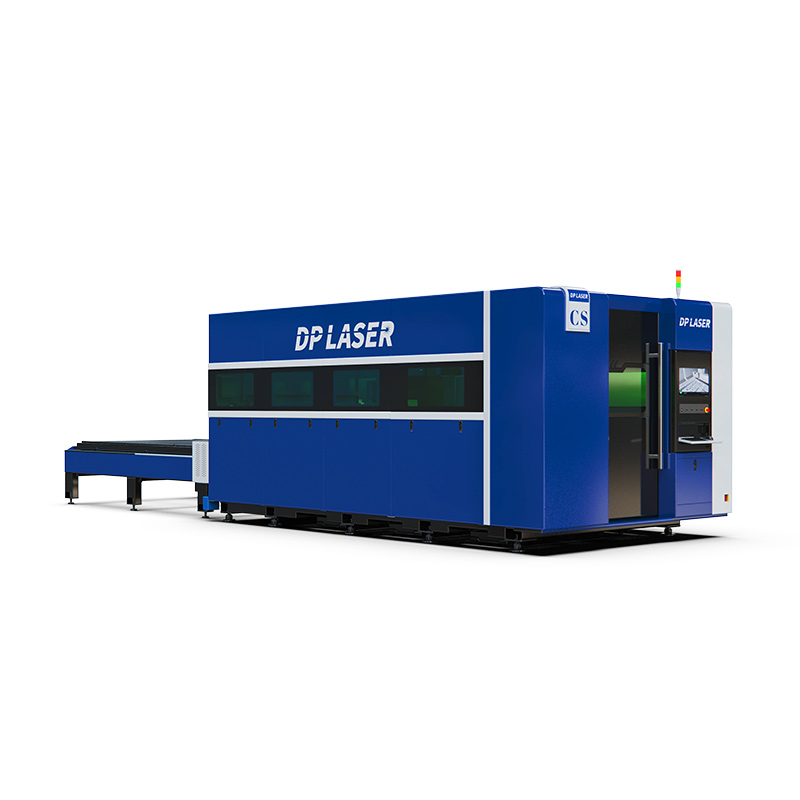
A modern cnc metal laser cutter relies heavily on its software ecosystem. Evaluate the control software interface carefully. Popular options include CypCut and various proprietary OEM solutions. Operators interact with this interface daily. Setting up cut parameters must feel highly intuitive. Adjusting lead-ins, micro-joints, and piercing strategies should take seconds. Clunky interfaces cause frustrating operational delays and increase setup times.
Assess the platform's nesting efficiency thoroughly. Advanced nesting algorithms pack parts tightly together. This tight packing minimizes scrap metal generation. Reducing scrap heavily cuts material waste costs over a fiscal year. Good software automatically manages common-line cutting. It also optimizes the cutting path to reduce head travel time. These small efficiencies compound into massive time savings across hundreds of jobs.
Modern control platforms also integrate directly with your broader ERP systems. This Industry 4.0 connectivity provides real-time visibility into machine uptime. Shop managers can track precisely how long specific jobs take to process. They can monitor scrap percentages and identify operator inefficiencies remotely. Solid CAD/CAM integration means your engineering department can push files directly to the machine console seamlessly.
Detail the expected training timeline. The best hardware will underperform if operators struggle to learn the controls. Overly complex systems pose significant adoption risks for your workforce. Straightforward, vendor-provided training remains an absolute necessity. Choose systems featuring comprehensive parameter libraries. Built-in material libraries allow new operators to start cutting quickly. They can simply select "mild steel 6mm" and let the software handle the technical variables. We recommend asking the vendor for a software demo prior to purchase.
Never underestimate the importance of reliable aftermarket support. Compare localized domestic support against direct-import machines. Importing a machine directly often yields significant upfront cost savings. However, this route carries critical risks. You might face extended downtime and severe language barriers during emergencies. Localized support networks typically offer rapid on-site assistance. We highly recommend factoring these operational risks into your final decision.
Define acceptable SLA terms before signing anything. Service Level Agreements protect your production schedule. Look for strict guarantees on technician dispatch times. Ask about their domestic parts warehousing capabilities. Waiting three weeks for an imported replacement sensor paralyzes a fabrication shop. Reputable vendors keep critical consumables and spare motors readily available locally. They understand machine downtime directly impacts your revenue.
Investigate their remote diagnostic capabilities. Many modern systems allow technicians to log into your machine via the cloud. They can troubleshoot software faults or sensor errors without ever stepping foot in your shop. This drastically reduces repair times. Consider purchasing a preventative maintenance contract alongside the machine. Regular check-ups from certified technicians prevent catastrophic failures. They calibrate the cutting head, check fiber alignments, and ensure the chiller operates efficiently.
Review the fine print on all warranties. You must separate the warranty of the laser source from the rest of the machine. The chassis, servo motors, and cooling systems usually carry different coverage terms. The laser source might have a robust three-year warranty. The water chiller might only carry a basic one-year guarantee. Understand exactly who pays for labor and travel during a warranty claim. Clear warranty terms prevent unexpected billing surprises later.
In summary, finding the ideal system requires careful alignment. The equipment must perfectly match your specific material mix. It must fit seamlessly within your facility constraints and budget limits. Avoid buying extraneous capabilities you will never actually use. Focus heavily on machine reliability, software usability, and proven vendor support. These specific factors determine long-term operational success.
We recommend shortlisting two or three highly qualified vendors. Ensure these suppliers explicitly meet your required wattage specifications. Verify their local support criteria thoroughly before engaging further. Comparing a narrow shortlist prevents analysis paralysis. It also creates a healthy competitive bidding environment.
Finally, demand hard evidence before signing a purchase order. Request a custom time-study from your shortlisted vendors. Send them your most difficult part file. Ask them to perform a physical cut-sample using your specified material. Inspect the edge quality closely and verify the actual cycle times. This practical test proves whether the machine truly meets your demanding production standards.
A: A 2kW machine comfortably cuts mild steel up to 12mm. It cuts stainless steel up to 5mm and aluminum up to 5mm. Edge quality remains excellent on thinner sheets but deteriorates near the maximum thickness limits. For consistent high-quality edges on 16mm steel, upgrading to 3kW or higher is recommended.
A: Yes, fiber lasers dominate modern metal fabrication. They cut thin metals significantly faster than CO2 counterparts. Fiber systems also use less electricity and require minimal maintenance. They lack the complex mirror alignments and gas blowers found in older CO2 machines. CO2 remains useful primarily for non-metals.
A: No, fiber lasers are designed strictly for metals. Their specific wavelength is absorbed efficiently by metals but passes directly through most non-metals. Attempting to cut wood, clear acrylic, or plastic with a fiber laser is highly unsafe. It causes severe fire hazards and will not produce a clean cut.
A: Daily maintenance is relatively straightforward. Operators should check the chiller water levels and monitor temperature readings. Inspecting the protective window inside the cutting head is crucial to ensure it remains free from dust. Finally, lightly clean the nozzle tip and check the automated lubrication systems.


