
Views: 0 Author: Site Editor Publish Time: 2026-07-14 Origin: Site


Upgrading metal fabrication capabilities to high-wattage outputs—such as 12kW, 30kW, or even 60kW+—traditionally required a massive capital expenditure reserved for enterprise-level operations. Mid-sized shops often struggled to justify this immense financial burden. Today, Chinese laser manufacturers have disrupted this monopoly. They offer equipment matching legacy Western brands in cutting speed and raw output but at a fraction of the initial cost.
However, evaluating these machines requires looking far past the initial sticker price. Buyers frequently encounter anxiety regarding long-term reliability and aftermarket support. You must understand how to verify build quality and assess operational efficiency accurately. This guide provides an objective framework for inspecting structural integrity, calculating daily operating expenses, and mitigating aftermarket risks. You will learn exactly how to vet manufacturers and ensure your equipment upgrade delivers a highly profitable, reliable return on investment.
Industry standards for metal fabrication once hovered comfortably around 4kW to 6kW. Today, fabricators face tighter deadlines and demands for thicker material processing. Processing thick mild steel, heavy stainless steel, and aerospace-grade aluminum efficiently now demands 12kW, 30kW, or even 60kW+ systems. You cannot remain competitive cutting one-inch steel at sluggish speeds. High wattage changes the fundamental physics of the cut, vaporizing metal instantly and leaving pristine edges.
Legacy European and US brands price these high-wattage systems at an enormous premium. This pricing creates a severe capital expenditure (CapEx) bottleneck. Many growing shops cannot secure the financing required for a Western 30kW system. Top-tier Chinese manufacturers now offer a highly compelling alternative. A modern high power laser cutting machine built in China delivers identical cutting speeds. It provides the exact same piercing power as units costing three times as much.
Upgrading yields massive operational gains across your entire shop floor. You eliminate secondary processing completely. Operators no longer waste hours grinding dross off thick cut parts. You achieve incredibly fast piercing times on thick plates, reducing cycle times by up to seventy percent. Moreover, one single high-wattage fiber laser easily replaces multiple older plasma cutters or waterjet systems. This consolidation frees up valuable floor space. It drastically streamlines your entire production workflow and simplifies your material handling processes.
The laser source acts as the heart of your cutting system. You generally choose between Western laser sources like IPG or premium Chinese sources like Raycus and MAX Photonics. IPG remains the global gold standard for beam stability and longevity. Many buyers specify IPG sources for mission-critical aerospace applications. However, top-tier Chinese sources have closed the performance gap remarkably. Raycus and MAX now offer rigorous testing protocols and excellent power stability at high wattages.
You must address power degradation over time. Early generation Chinese sources suffered from rapid diode degradation. Premium modern sources now show minimal degradation curves, closely matching their Western counterparts. Warranties often differ slightly between regions. Ensure your vendor provides a solid, multi-year warranty explicitly covering module replacement. We recommend monitoring power output annually and keeping your chiller unit meticulously maintained to extend the source lifespan.
High-power applications generate immense, concentrated heat. Cutting heads require rapid autofocus, active water cooling, and smart sensing technology. Imported heads from German manufacturer Precitec dominate the ultra-high-power market. They handle 30kW+ continuous outputs flawlessly. Precitec heads represent a safe, highly reliable choice for extreme power levels.
However, domestic Chinese alternatives like BOCI and RayTools offer remarkable performance for 12kW to 20kW applications. They integrate advanced sensors to monitor collimating lens temperatures in real-time. This smart sensing prevents catastrophic optic failures during long cutting shifts. If a lens overheats, the cutting head automatically pauses the machine. This saves you thousands of dollars in replacement optics.
Structural integrity dictates your cutting precision over the long term. A high-wattage laser moves the gantry at blistering speeds. This rapid acceleration generates extreme g-forces. A flimsy machine frame will suffer from severe micro-vibrations, leading to jagged cuts and rapid mechanical wear. You need heavy-duty, thermally treated welded beds.
Top-tier Chinese builders understand this mechanical necessity. They construct massive welded beds and anneal them in enormous high-temperature furnaces. This thermal treatment relieves all internal welding stresses. It prevents the frame from warping or deforming over a decades-long lifespan. Cast iron frames also perform exceptionally well under high mechanical stress.
For motion systems, premium integrations remain non-negotiable. Expect Japanese servo motors from Yaskawa or Panasonic. They provide precise, high-torque control. European rack and pinion systems from companies like Alpha or Atlanta ensure smooth, repeatable positioning even at maximum acceleration.
| System Component | Western / Global Standard | Premium Chinese Equivalent |
|---|---|---|
| Laser Source | IPG Photonics (Germany/USA) | Raycus, MAX Photonics |
| Cutting Head | Precitec (Germany) | BOCI, RayTools |
| Motion Control | Beckhoff (Germany) | FSCUT / CypCut (China) |
| Servo Motors | Yaskawa (Japan) | Inovance (China) |
A lower upfront purchase price looks highly attractive on paper. However, you must evaluate long-term operating expenses strictly. Power consumption scales directly with your laser wattage. High-power systems draw massive electrical currents from your facility. You must factor this heavy electrical load into your hourly operating rate calculations.
Assist gas usage significantly impacts your daily bottom line. Cutting thick mild steel traditionally requires high volumes of oxygen. Nitrogen provides pristine, oxide-free edges on stainless steel and aluminum, but it consumes massive, expensive volumes at high pressures. Many modern fabricators now utilize high-pressure compressed air cutting. High-pressure air requires an initial heavy-duty compressor investment. However, it slashes daily gas expenses dramatically. Consumable wear rates also increase exponentially under high power. Copper nozzles and protective lenses degrade much faster under 30kW+ beams compared to legacy 4kW systems.
| Assist Gas Type | Primary Material Application | Edge Quality | Relative Operating Expense |
|---|---|---|---|
| Oxygen (O2) | Thick Mild Steel | Smooth, oxidized edge | Moderate |
| Nitrogen (N2) | Stainless Steel, Aluminum | Clean, paint-ready edge | High |
| Compressed Air | Thin to Medium Steel/Aluminum | Slight burr, minor oxidation | Very Low |
The financial return math becomes highly favorable when executed correctly. Significantly lower upfront CapEx drastically shortens your equipment payback period. Lower initial debt servicing effectively offsets slightly lower resale values compared to legacy Western brands. You achieve positive cash flow much sooner. This liquidity allows you to reinvest in material handling automation or hire better talent.
Standard software control systems drive these high-powered machines. CypCut and HypCut dominate the market. These systems offer exceptional nesting efficiency right out of the box. They minimize material waste effortlessly through advanced algorithms. Operator training remains straightforward. The software interfaces perfectly with standard Western CAD/CAM workflows. Operators simply import DXF or DWG files, apply toolpaths, and start cutting within minutes.
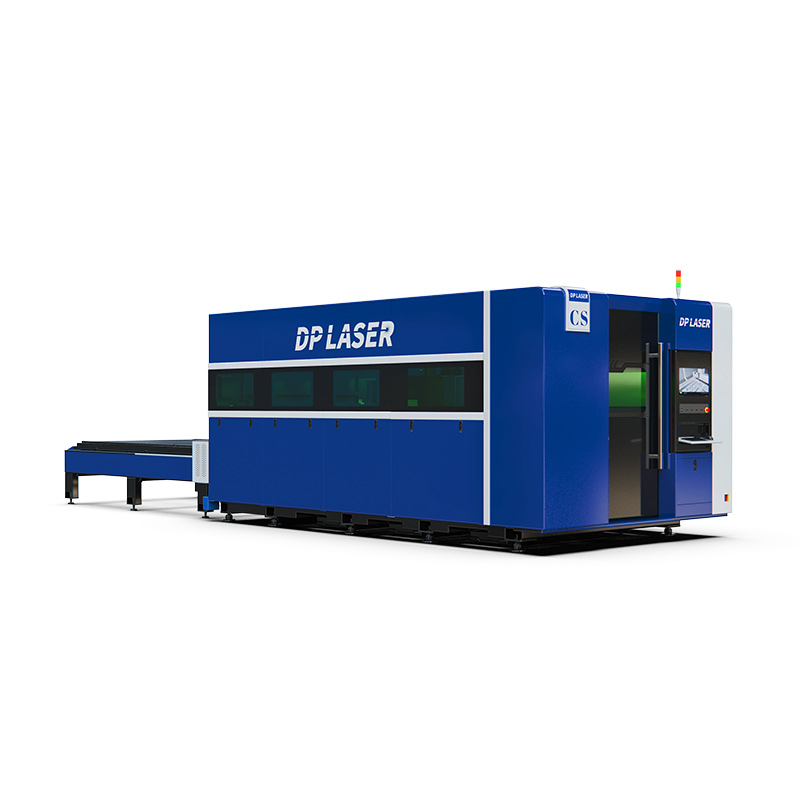
After-sales support remains the most common and justified buyer skepticism. A machine remains cost-effective only if unplanned downtime stays minimal. Evaluating the manufacturer's localized service network is critical. You must dig deep into their support infrastructure before signing any purchase order.
Installation and training require strict Service Level Agreements (SLAs). Clarify exactly who handles the heavy rigging and machine placement. A 30kW machine requires substantial concrete foundations and heavy crane lifts. Specify who provides operator training and for how many days. Establish guaranteed response times for phone and on-site technical support. A top-tier manufacturer of a china high power fiber laser cutting machine will detail these SLAs clearly in your final contract.
Expert Tip: Do not assume standard shipping applies to warranty replacement parts. Always clarify delivery timelines and freight responsibilities for warranty items. Force the vendor to commit to overnight shipping for critical components in writing.
Evaluating overseas vendors requires a highly structured approach. Use this three-step framework to separate reliable, enterprise-grade manufacturers from high-risk, low-tier suppliers.
Purchasing high-wattage cutting equipment fundamentally transforms your fabrication capabilities. A modern high-power Chinese fiber laser is no longer a compromise in quality. It represents a highly strategic financial decision, provided you exercise rigorous due diligence. You achieve massive productivity gains and eliminate costly secondary processes.
Your ultimate success hinges entirely on balancing component quality with verified, localized support. Do not simply chase the lowest sticker price. Focus on heavy-duty frame construction, reliable global components, and bulletproof service level agreements. We highly encourage you to define your thickest material requirements today. Reach out to shortlisted vendors, provide your toughest DXF files, and demand customized time-studies to prove their capabilities.
A: Yes, but you must specify your facility's voltage during the ordering process. US facilities typically use 480V 3-phase 60Hz, while Chinese equipment natively runs on 380V 50Hz. Reputable manufacturers resolve this by including appropriate step-up or step-down transformers. They also configure the machine's electrical cabinet to match your local phase and frequency requirements perfectly.
A: Absolutely. Industry-standard controllers like FSCUT and software like CypCut or HypCut offer full, natively translated English interfaces. They do not rely on poor automated translations. These systems fully support global measurement units, allowing operators to toggle instantly between imperial and metric dimensions based on your shop's drawing standards.
A: Standard structures offer 1 to 3 years of coverage. Claims process through local subsidiaries or authorized dealers. You must distinguish between factory-direct warranties and dealer-supported warranties. Factory-direct ensures the OEM covers the cost, while local dealers provide the actual labor and warehouse the replacement parts locally to avoid international shipping delays.
A: Yes, top-tier controllers offer broad I/O compatibility for third-party automation. Furthermore, most Chinese OEMs offer their own modular automation options. You can purchase integrated sheet loaders, robotic sorting arms, and vertical tower storage systems directly from the manufacturer, ensuring seamless software handshakes and hardware compatibility.


